

Canadian Naval Strategy
By Moderator, 21 October 2026
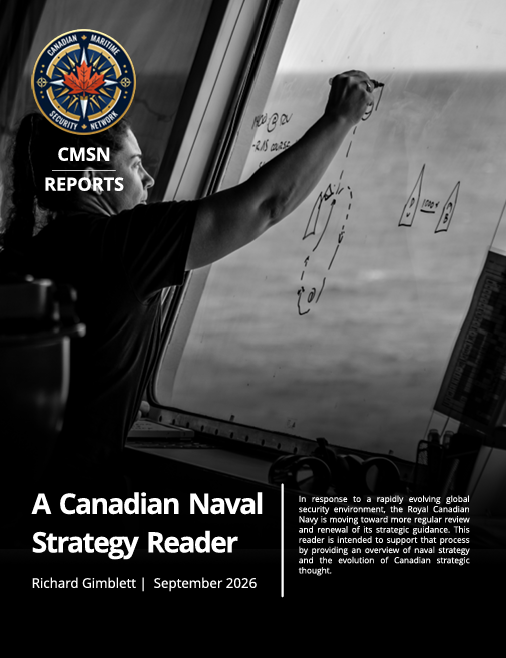
Everything you’ve always wanted to know about Canadian naval strategy … but were afraid to ask.
A useful new publication – “A Canadian Naval Strategy Reader: Concepts and Capstone Documents” – by Richard Gimblett examines Canadian naval strategy. Gimblett asks if it is time for the RCN to refresh its strategy, given changes in the world that have occurred since the last time a strategy was produced. He notes that many of the changes are outside Canada’s control, but there are some elements that, as he says, are within the RCN’s ability to manage, including: a new approach to foreign and defence policy, and willingness to increase defence spending; the revival of interest in the notion of Canada as a “middle power” which requires reflection on the RCN’s status ….; the amalgamation of the Canadian Coast Guard into the Department of National Defence (DND); and, the increased capabilities anticipated to be delivered. These all require a rethink of naval strategy.
Gimblett states that “It is not the intent of this monograph to suggest what a renewed Canadian naval strategy should look like or include. Rather, it aims to provide a framework for discussions surrounding any efforts to explore the issue.” His objective is to provide a monograph that “might serve as an educational instrument, establishing a shared foundation upon which staffs, politicians, academics, and the interested public can develop and assess any fresh strategy document. In this vein, it is not meant to be a definitive examination of the various aspects of the topic, but it instead aims to describe themes and point to sources to guide further research and analysis.”
Part 1 opens with a short discourse on the general nature of strategy...
Trending now:
- Canadian Naval Strategy
- The Future of Asterix
- Defence Crown Corporation: A Solution?
- Considering Arctic Amphibious Ships
- CNR sponsors: visit page
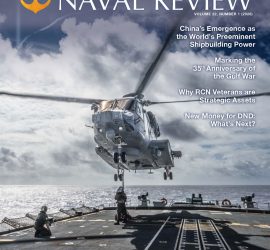
Preview CNR Next Issue: Vol. 22 No. 2 (2026)

Alas, summer is over. But it’s not just snow and sleet and ice coming in the future – the fall issue of CNR is coming too! A new issue will be out soon. Here is a preview of what’s in the issue.
In his Editorial “The Art of Naval Thought,” Brian Santarpia notes that “the RCN dedicates relatively little effort to professional education in the foundations of strategic thought,” and that this is unfortunate. To start off the line-up of interesting articles, we have the winning essay of the 2026 CNMT essay competition. The author, C.A.M. Al Wahi, won with an impressive essay entitled “Vulnerable Arteries: Protecting Critical Subsea Infrastructure and the RCN’s Mandate.” Our second article, “A Submarine-First Royal Canadian Navy?” argues that, as Canada’s main strategic asset, submarines should receive more focus in the RCN. Our third article, “Slow Procurement is Canada’s Greater Risk,” outlines problems and solutions in the military procurement process from the perspective of a Canadian company. The next article, “Of Hulls and Sailors: Why Fleet Recapitalization Depends on Personnel Generation,” focuses on the importance of ensuring there are enough trained personnel as a crucial element of naval capability. The final article discusses HMCS Sackville and the ship’s recommissioning ceremony in the spring.
We have a good selection of Making Waves commentaries. There is material about the future US Arctic Security Cutters, discussion of the importance of trained personnel, underwater surveillance in the Arctic, and suggestions about the design of Canadian amphibious forces.
And, of course, we have our regular columns. In “Allies of Necessity: Japan and South Korea,” “A View from the West” looks at the uneasy relationship between two key players in the Indo-Pacific region. “Dollars and Sense” examines the shift from austerity to abundance in defence, and “Warship Developments” updates us on Tomahawks and aircraft carriers.
No issue of CNR would be complete without the amazing photos! And there are many of them!
Stay tuned. In a few weeks, the issue will be available to people who are lucky enough to be subscribers! It’s not too late for you to subscribe. See here for the Table of Contents.
CNR resources
- CNR Archives
- Subject Index for CNR Articles
- Broadsides Forum - Join the Discussion
- Submissions to Canadian Naval Review
- Subscriptions - unlock access to all CNR materials
- Sponsor page
- Free CNR articles and PDF downloads
- Follow us on Bluesky and LinkedIn
- Donate to CNR
- Special offer
Read more: CNR Archives (75 magazines in PDF) and Subject Index
Looking for Books about Maritime Matters?
Over the last 20 years, Canadian Naval Review has published over 200 book reviews. These books cover a variety of topics but they all relate to maritime matters, history, or security and defence at sea. This is an amazing resource. Go through the list of reviews, pick out a few books that look interesting, read the reviews, and then order the books from your nearest bookstore or from the publisher. See the list of book reviews at https://www.navalreview.ca/book-reviews/