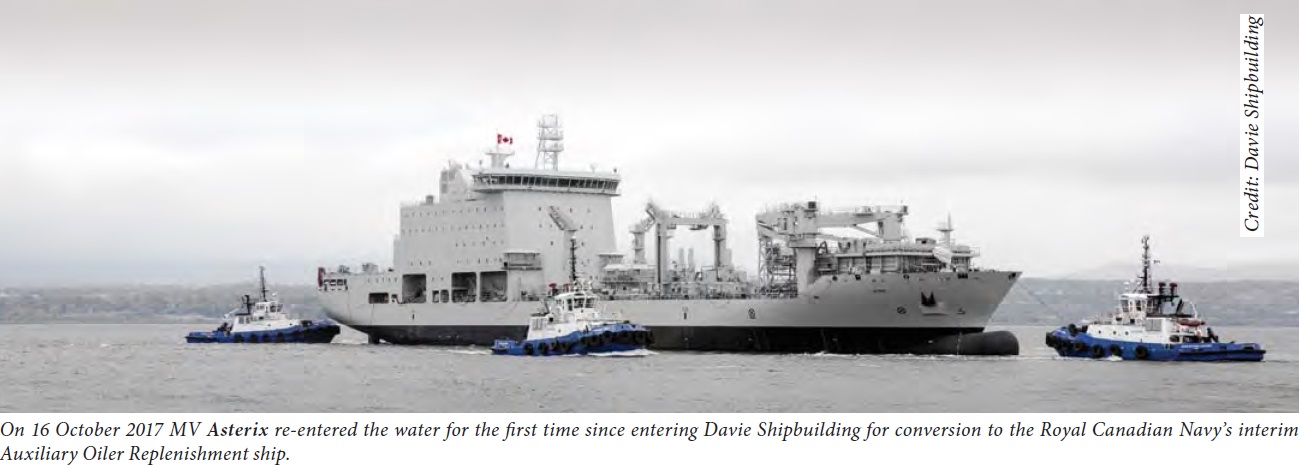
By Les Mader, 14 October 2026 At the attached YouTube video, Scott Taylor of Esprit de Corps magazine argues for the RCN’s continued use of the Asterix resupply vessel even […]
By David Dunlop, 27 August 2022 Because of delays of the Protecteur-class Joint Support Ship (JSS) project, the Canadian government is forking over another $187 million for the ‘rental’ of […]
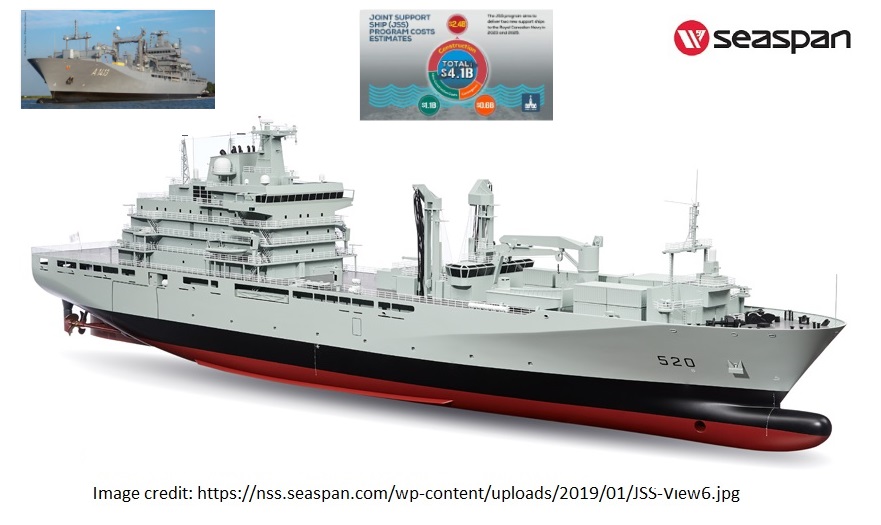
The recent Parliamentary Budget Office report on the Joint Support Ships (JSS) made it clear that the build will cost significant money, and noted the huge difference in cost (and […]
Procrustes, 26 November 2020. Through Access To Information (ATI) documents, the Canadian Press reports that the Canadian Navy has planned for some time to rely upon Chantier-Davies’ converted civilian container […]
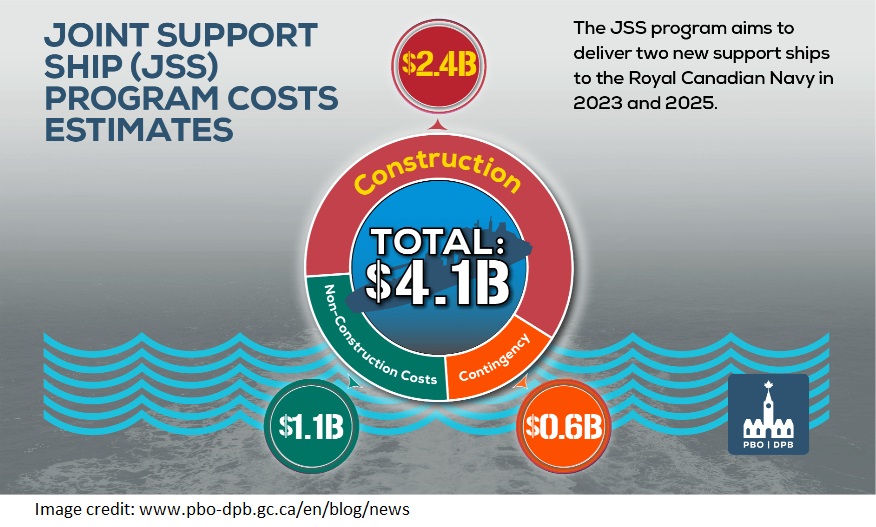
Procrustes, 22 November 2020. Following the Parliamentary Budget Office’s (PBO) release on 17 November of its cost analysis of the government’s Joint Support Ship (JSS) program, DND immediately issued a […]
Dan Middlemiss, 17 November 2020. Today, Canada’s Parliamentary Budget Officer released a detailed cost projection for the two supply ships for the Canadian Navy [1]. The PBO analysis compares the […]
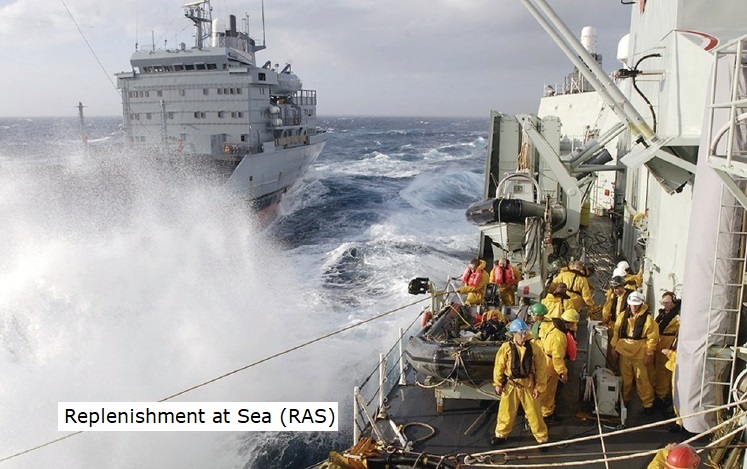
How do navies get fuel, ammo, food and spare parts when they’re at sea? Naval forces often have agreements with allied or friendly states that allow them to visit ports […]
The US Navy is expanding maintenance capability in the western Pacific to reduce the time and cost involved for a ship to return to a homeport. In addition to expanding […]
The world’s climate is changing. Without embarking on arguments about who or what is to blame, the point is that there is a problem facing Earth. In 2016 there were […]
Jon Rosamond, writing for IHS Jane’s Navy International, has an article entitled “Canada turns to Asterix for stop gap at-sea support.” The article was published on 04 October 2015. Rosamond […]
Cookie Consent
At Canadian Naval Review (CNR), we are committed to respecting your privacy. When visiting our website for the first time you can either “Accept all” cookies (including ‘non-essential cookies’) or “Customize” your cookie preferences, which allows you to make individual choices and get details on the cookies we use.
Contains information related to marketing campaigns of the user. These are shared with Google AdWords / Google Ads when the Google Ads and Google Analytics accounts are linked together.
90 days
__utma
ID used to identify users and sessions
2 years after last activity
__utmt
Used to monitor number of Google Analytics server requests
10 minutes
__utmb
Used to distinguish new sessions and visits. This cookie is set when the GA.js javascript library is loaded and there is no existing __utmb cookie. The cookie is updated every time data is sent to the Google Analytics server.
30 minutes after last activity
__utmc
Used only with old Urchin versions of Google Analytics and not with GA.js. Was used to distinguish between new sessions and visits at the end of a session.
End of session (browser)
__utmz
Contains information about the traffic source or campaign that directed user to the website. The cookie is set when the GA.js javascript is loaded and updated when data is sent to the Google Anaytics server
6 months after last activity
__utmv
Contains custom information set by the web developer via the _setCustomVar method in Google Analytics. This cookie is updated every time new data is sent to the Google Analytics server.
2 years after last activity
__utmx
Used to determine whether a user is included in an A / B or Multivariate test.
18 months
_ga
ID used to identify users
2 years
_gali
Used by Google Analytics to determine which links on a page are being clicked
30 seconds
_ga_
ID used to identify users
2 years
_gid
ID used to identify users for 24 hours after last activity
24 hours
_gat
Used to monitor number of Google Analytics server requests when using Google Tag Manager