Retired Lieutenant-General Andrew Leslie was on CBC radio’s The House on Saturday to speak about his view of problems with increased spending on ‘corporate services’ and ‘institutional overhead’. You can […]
*Moderators Note: This post is extracted from an article published in the ‘Views and Opinions’ section of Canadian Military Journal (Summer 2007): 79-80. You can read the original article here. […]
* Moderator’s Note: This post appeared originally in the Letters to the Editor section of The Washington Times on 30 March 2007. It is no longer available on-line. A large […]
*Moderator’s Note: Portions of this article appeared originally as “The History and Theory of Naval Effects-Based Operations” in Effects-Based Approaches to Operations: Canadian Perspectives, Alan English and Howard Coombs, eds., […]
A quick internal polling of the CFPS fellowship on the question posed in this article’s title resulted in a general consensus that the navy’s name change is appropriate but not […]
Brian Stewart, Senior Fellow with the Monk Centre at the University of Toronto, has raised the spectre of an internal struggle within DND over how to allocate the capital portion […]
The Hong Kong Shipowners’ Association (HKSOA) has released what is described as “a furious statement” condemning the current organizational construct and tactical practices employed by naval forces to prevent piratical […]
In my post on 7 December, entitled “Whether to Protect the Sea or Protect the Ships,” I argued that efforts to create defended lanes are a “misguided effort at sea […]
The capture by pirates of another super tanker, the Greek-owner MV Maran Centurus, approximately 800 nm off the coast of Somalia was reported this week by the BBC. The BBC […]
On reading reports and scanning the video of the recent U.S. Navy – Iranian Revolutionary Guard incident in the Straits of Hormuz I was struck by how restrained the American […]
It seems to me that Airedale is expressing frustration at the lack of a comprehensive explanation by the navy about how the future fleet plans make it any better able […]
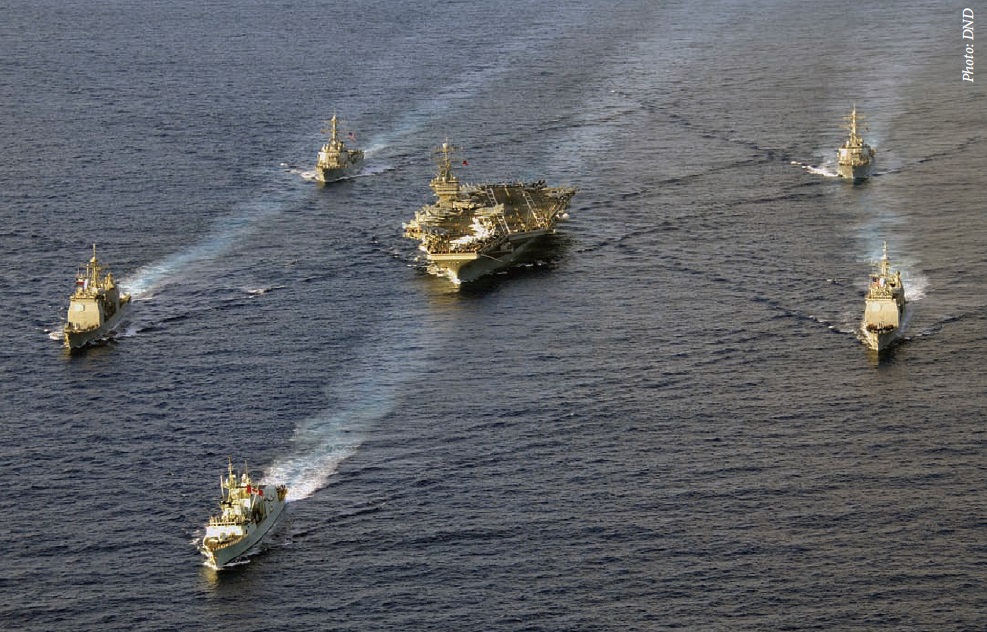
As its operational focal point, the modern Canadian navy uses a “multi-purpose, combat-capable task group.” This policy is consistent with the 1994 Defence White Paper which calls for the navy […]
[12 April 2007] Paul Kennedy’s article, “To Rule the Waves: the Rise and Fall of Navies,” is ‘crying wolf’ by only addressing the question of declining numbers of destroyers and […]
Cookie Consent
At Canadian Naval Review (CNR), we are committed to respecting your privacy. When visiting our website for the first time you can either “Accept all” cookies (including ‘non-essential cookies’) or “Customize” your cookie preferences, which allows you to make individual choices and get details on the cookies we use.
Contains information related to marketing campaigns of the user. These are shared with Google AdWords / Google Ads when the Google Ads and Google Analytics accounts are linked together.
90 days
__utma
ID used to identify users and sessions
2 years after last activity
__utmt
Used to monitor number of Google Analytics server requests
10 minutes
__utmb
Used to distinguish new sessions and visits. This cookie is set when the GA.js javascript library is loaded and there is no existing __utmb cookie. The cookie is updated every time data is sent to the Google Analytics server.
30 minutes after last activity
__utmc
Used only with old Urchin versions of Google Analytics and not with GA.js. Was used to distinguish between new sessions and visits at the end of a session.
End of session (browser)
__utmz
Contains information about the traffic source or campaign that directed user to the website. The cookie is set when the GA.js javascript is loaded and updated when data is sent to the Google Anaytics server
6 months after last activity
__utmv
Contains custom information set by the web developer via the _setCustomVar method in Google Analytics. This cookie is updated every time new data is sent to the Google Analytics server.
2 years after last activity
__utmx
Used to determine whether a user is included in an A / B or Multivariate test.
18 months
_ga
ID used to identify users
2 years
_gali
Used by Google Analytics to determine which links on a page are being clicked
30 seconds
_ga_
ID used to identify users
2 years
_gid
ID used to identify users for 24 hours after last activity
24 hours
_gat
Used to monitor number of Google Analytics server requests when using Google Tag Manager