By Jeff G. Gilmour, 5 August 2024 As noted in a recent article in The Economist magazine, the character of warfare is about to be profoundly changed by artificial intelligence (AI).1 In […]
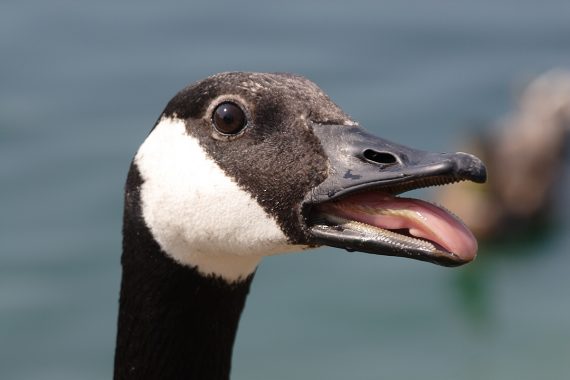
National Defence Headquarters message to personnel: Please be mindful of the Canadian geese that live at NDHQ (Carling). Spring and Summer are their breeding season and they can become aggressive and […]
Professor John Arquilla, who teaches in the special operations program at the U.S. Naval Postgraduate School at Monterey, California, and who is the author of “Worst Enemy: The Reluctant Transformation […]
A report in The Australian published on 8 December describes ‘a purge’ of the Royal Navy’s senior leadership over the embarrassment caused by the ‘fiasco’ when 15 sailors and marines […]
An article by Thom Shanker in New York Times on 12 January contains essential new information about how U.S. Marine Lieutenant General. Paul K. Van Riper, acting as the ‘enemy’ […]
On reading reports and scanning the video of the recent U.S. Navy – Iranian Revolutionary Guard incident in the Straits of Hormuz I was struck by how restrained the American […]
A recent report in the U.K. press describes the return of RN warships to the northern Arabian Gulf following the capture of 15 British sailors and marines in a ‘swarming’ […]
I have a very hard time understanding how and why HMS Cornwall, with the task force commander embarked, allowed her boats to be surrounded or cut off from herself. My […]
Controversy has broken out in the media, particularly in the U.K. and the U.S., over the behaviour, while captive, of the British naval personnel who were recently seized by the […]
Today’s Navy Times (28 March) has an article that reports ‘swarming tactics’ were used by Iranian forces when they captured fifteen Royal Navy and Royal Marines personnel on Friday. Their […]
Cookie Consent
At Canadian Naval Review (CNR), we are committed to respecting your privacy. When visiting our website for the first time you can either “Accept all” cookies (including ‘non-essential cookies’) or “Customize” your cookie preferences, which allows you to make individual choices and get details on the cookies we use.
Contains information related to marketing campaigns of the user. These are shared with Google AdWords / Google Ads when the Google Ads and Google Analytics accounts are linked together.
90 days
__utma
ID used to identify users and sessions
2 years after last activity
__utmt
Used to monitor number of Google Analytics server requests
10 minutes
__utmb
Used to distinguish new sessions and visits. This cookie is set when the GA.js javascript library is loaded and there is no existing __utmb cookie. The cookie is updated every time data is sent to the Google Analytics server.
30 minutes after last activity
__utmc
Used only with old Urchin versions of Google Analytics and not with GA.js. Was used to distinguish between new sessions and visits at the end of a session.
End of session (browser)
__utmz
Contains information about the traffic source or campaign that directed user to the website. The cookie is set when the GA.js javascript is loaded and updated when data is sent to the Google Anaytics server
6 months after last activity
__utmv
Contains custom information set by the web developer via the _setCustomVar method in Google Analytics. This cookie is updated every time new data is sent to the Google Analytics server.
2 years after last activity
__utmx
Used to determine whether a user is included in an A / B or Multivariate test.
18 months
_ga
ID used to identify users
2 years
_gali
Used by Google Analytics to determine which links on a page are being clicked
30 seconds
_ga_
ID used to identify users
2 years
_gid
ID used to identify users for 24 hours after last activity
24 hours
_gat
Used to monitor number of Google Analytics server requests when using Google Tag Manager