By Jeff Gilmour, 7 August 2026
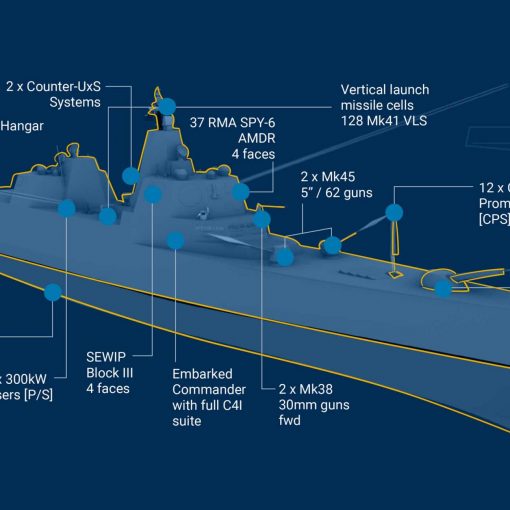
Under the 2010 National Shipbuilding Strategy (NSS), Irving Shipyard was awarded a contract by the federal government to build 15 River-class destroyers to replace the RCN’s ageing frigates. They will be equipped with advanced radar systems and missile capabilities in one of the country’s most significant military manufacturing programs. The keel-laying ceremony for the first ship of its class, HMCS Fraser, happened on 12 June 2026.[1]
In 2022, the Parliamentary Budget Officer (PBO) estimated the cost of this project to be $84 billion. In March 2025, the Canadian government purchased three River-class destroyers from Irving for an estimated $8 billion implementation contract covering the cost for the first six years of construction. The total project cost for the first three ships is estimated to be $22 billion (excluding taxes).[2]
The first ship is scheduled to be launched in the 2030s with nine expected to be in service by 2040 and the entire fleet sometime by 2050.[3] Based on the contract price for the first three ships, is it not reasonable to assume that the cost of this project could escalate to $110B before all 15 ships are built?
In early July 2026 the federal government announced that it would begin discussions to purchase 12 submarines from Thyssen-Krupp Marine Systems (TKMS) of Germany under the Canadian Patrol Submarine Project (CPSP). The initial acquisition and design phase is estimated around $24B. But adding maintenance, lifecycle support and specialized infrastructure means that the total program cost is projected to exceed $70B to $100B. The formal contracting is scheduled to be completed by the end of 2027, with the first four boats to be delivered at the beginning of 2034.
On the basis of these two major naval procurement projects, the total costs will likely exceed $200B. One has to wonder whether the RCN actually requires 15 destroyers and 12 submarines to fulfil its mandate.
A number of questions concerning these two major contracts for the RCN should first be addressed:
1. Can Ottawa afford to spend over $200B on both these projects?
2. Can the RCN provide the necessary manpower for both projects?
3. At present, the RCN operates four submarines; two for each coast. Do they now need six submarines?
4. The Ukraine war has revealed how vulnerable surface fleets are to both enemy surface and sub-surface drones and hypersonic missiles.
5. The last destroyer will not be commissioned until the 2050s. Is this timeline reasonable in the construction of ships being built in this country vs off-the-shelf purchases from other countries.
6. How effective will both the destroyers and the new submarines be in operating in the high Arctic?
It is suggested here that the federal government may wish to pause on the completion of these two major projects for the RCN on the basis of costs, actual needs and requirements and completion schedules.
[1] Calgary Herald, “Battleship”, G. MacDonald, August 1, 2026, p. E1.
[2] AI Overview
[3] Ibid; footnote 1.
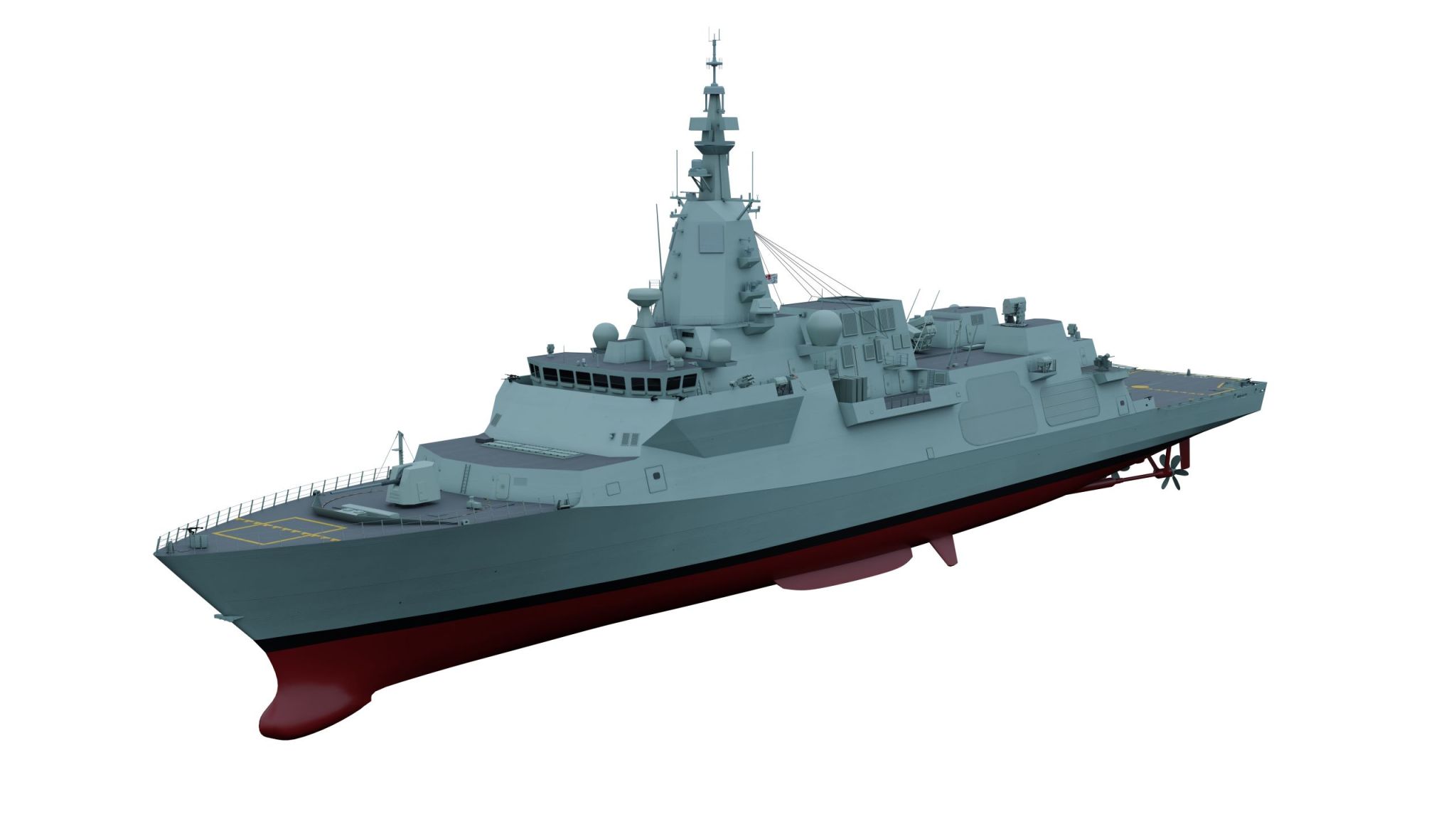
Image: The latest rendering of the River-class destroyer, posted by ADM (MAT) on LinkedIn in April 2026 following progress on the ship's design review. Credit: Assistant Deputy Minister (Materiel)


7 thoughts on “Two New Naval Projects – How Realistic Are They?”
Hello Jeff. Your concerns for both of these RCN projects are noted and perhaps valid to some degree. However, I don’t believe you are completely grasping the whole picture.
Here are my points to counter your concerns:
1. Yes, Canada can ill afford not to spend over CAD $ 200B on both of these projects. By the way, your estimates I believe, are certainly on the lower side for both 15 of the RCDs and 12 TKMS submarines over the full life cycle of both projects. It will likely be somewhere north of CAD $300B over the life span of the RCN’s requirements over the next 40 years or so.
2. The RCN must, and has already, keep up with recruiting for our future naval fleet to both man and maintain these vessels.
3. A fleet of “at least” 12 SSKs must be seriously considered for all 3 of our oceans (6 per coast-East/West). Two per coast (don’t forget the Arctic) would be operational at any given time; two would be in “Ramp-Up/Ramp down mode (Low to High Readiness) and two would be in long maintenance (Major Refits) at any given time. When you consider all of these factors, 12 Boats seems about right for the RCN.
4. Yes, most surface/ASW warships ships can be vulnerable to some degree (submarines, not so much). It is how Canada intends to counter these threats that makes the RCD less vulnerable than some other navies, including drones and hypersonic missiles. These questions have, I believe, already been addressed even before these two projects were off-the-ground.
5. The River Class Destroyer is a very special ship and, in my opinion, the best in the Type 26 design. Time lines for ship commissioning will undoubtedly shift well to the Left and well below the 2050 time lines as construction of this class comes to an end. Perhaps even as close as two to three years to the left for the last ship to come off the line and be commissioned.
6. The RCN has already considered in their long-range planning how effective this fleet will be in the high Arctic.
Your last para Jeff, is certainly a no-go as far as pausing construction on both these fleets. The need is pressing and the time is very short. Both of these vessels are desperately needed…..now! Fleet costs are manageable; the needs and requirements are real and the schedules are …WE NEED THEM LIKE YESTERDAY SO… LET’S GET ON WITH IT!
The central problem with this argument is that it looks at the River-class destroyers and Canadian Patrol Submarine Project as two enormous, stand-alone purchases, adds the largest possible lifecycle figures together, and then asks whether Canada can afford them. That is not a particularly useful way to assess a fleet that will be acquired, operated and replaced over several decades. A $70 to 100 billion submarine program figure, for example, can include decades of personnel, maintenance, infrastructure, training and sustainment. Applying the same accounting method to virtually any major military capability produces an enormous headline number.
The more important question is what fleet Canada actually requires. Fifteen River class destroyers are not simply replacements for a handful of old ‘destroyers.’ They replace the 12 Halifax-class frigates and the already retired Iroquois-class, while providing the RCN with a modern high-end surface combatant capable of air defence, anti-submarine warfare, strike, task group command and operations with NORAD and NATO allies. Likewise, the proposed submarine fleet is not about putting “six submarines on each coast” at the same time. Boats rotate through maintenance, training and readiness cycles. A fleet of 12 might ultimately produce only a fraction of that number continuously available for operations.
The article also overlooks another important piece of the emerging fleet: the Canadian Defence Corvette. The CDC is expected to provide a smaller, highly automated combatant that can conduct many missions for which sending a 7,000 plus tonne River-class destroyer would be unnecessary. Depending on the final design, it could contribute to surveillance, anti-submarine warfare, missile defence, uncrewed system operations, Arctic patrols and task group operations. That matters because the future RCN should not be viewed as 15 River-class ships plus 12 submarines operating independently. It is shaping into a layered fleet, with River-class destroyers providing the high-end combat capability, submarines providing undersea surveillance and sea denial, AOPS providing Arctic presence and constabulary capability, and CDCs filling much of the space between them.
Ukraine has certainly demonstrated the danger posed by missiles and uncrewed systems, but the conclusion should not be that surface warships have somehow become obsolete. Ukraine has also demonstrated the importance of layered air defence, electronic warfare, sensors, long-range weapons, submarines and distributed operations. The answer to increasingly sophisticated threats is not to abandon major surface combatants; it is to ensure they have the sensors, weapons, decoys and supporting platforms required to survive in that environment. That is precisely why Canada is moving toward systems such as SPY-7, Aegis, modern missiles and a much more networked fleet.
The Arctic argument is similarly more complicated than asking whether every River-class destroyer or submarine can spend months breaking ice. The Arctic is not defended by one type of ship. AOPS, Coast Guard icebreakers, aircraft, satellites, underwater sensors, submarines and surface combatants will all contribute. Submarines in particular provide something an icebreaker cannot: covert surveillance and the ability to detect and, if necessary, engage another submarine. Canada does not need every naval platform to perform every Arctic mission.
There are legitimate questions about cost, personnel and construction timelines, and nobody should pretend otherwise. But pausing these programs simply because the numbers appear large would recreate the exact procurement cycle Canada has suffered through for decades: delay replacement, extend aging equipment, watch costs rise, lose experienced personnel and eventually buy replacements in a crisis. The real discussion should be about how the River-class, CPSP, Canadian Defence Corvette, AOPS and Joint Support Ships fit together as a balanced fleet and how Canada intends to crew and sustain it. That is a much more useful debate than adding 40 years of projected expenditure together and declaring the resulting number unaffordable.
Hello Ted. Totally agree with much of what you have said to counter Jeff’s article. Yes, costs for these projects are eye-wateringly enormous, but the scope of their life-cycle costs are manageable over the life span of each project. I particularly enjoyed how you have threaded the other RCN type vessels into your rebuttal as an overall RCN Fleet response or plans to all threats Canada will have to contend with in the future. Each fleet does have its own unique capabilities to help with the overall plan to defend this country. The Canadian Defence Corvette (CDC), although not as yet identified, will also provide Canada with its own mission requirements that the RCD, AOPS, Protecteur JSS Class and the TKMS 212CD Submarines (covert surveillance) cannot provide. I have seen what the proposed CDC capabilities from Vard Marine will give Canada, and they will be a much-improved capability over our current MCDV fleet to say the least. Now, if we could only provide the RCN with an Arctic Mobile Base (AMB) capability, as Admiral Topshee (Retired) has proposed in the “Ready-Aye-Ready” article last year. That would just be the icing on the cake!
First of all, I really wish people would do their homework before writing some of these source articles and comments, because much of this information is out there for anyone willing to look.
The VARD Vigilance designs are a perfect example. VARD unveiled its original Vigilance concept at CANSEC in May 2023, more than two years before the first Kingston class ships were paid off. It was specifically marketed by VARD as its proposed solution for an eventual Kingston class replacement and it has continued to evolve since then and we know now not a direct replacement at all. That does not mean VARD has been selected to build the Canadian Defence Corvette, nor does it mean what VARD is displaying represents the RCN’s final requirements. It is an industry proposal developed in anticipation of a future Canadian requirement.
In other words, VARD is not currently “in the running” for some already defined CDC contract because there is not yet a competition in that sense. When the government actually releases the CDC Request for Information and lays out what it wants, then we will have a much better idea of the requirement and I suspect we will see several proposals from industry. My own suspicion is that Canada will ultimately favour an existing, successful design that can be adapted to Canadian requirements rather than designing another warship entirely from scratch. But until the RFI tells industry what Canada actually wants, arguing that the VARD proposal is what the CDC “will give Canada” is putting the cart several kilometres ahead of the horse.
The submarine side is much further along. TKMS was formally selected on 6 July 2026 as Canada’s preferred supplier for the Canadian Patrol Submarine Project and negotiations are now underway. That is a very different procurement position from an industry team displaying a prospective corvette design at CANSEC.
There is another factual problem here as well: Vice-Admiral Angus Topshee is not retired. He left command of the RCN and became Vice Chief of the Defence Staff on 3 July 2026. That is an important distinction. As VCDS he obviously remains an extremely senior CAF officer, but he is no longer Commander RCN and therefore will have considerably less involvement in the day to day running and future force development of the Navy than he did while sitting in that chair.
And yes, Admiral Topshee discussed a lot of interesting ideas while Commander RCN. That was part of his job. Some will undoubtedly influence the future Navy. Others will go nowhere. A senior officer discussing a concept should not automatically be interpreted as the Government of Canada establishing a funded procurement project.
That brings us to the so called Arctic Mobile Base. It is an interesting idea. I have yet to see anything, however, that elevates it much beyond an interesting concept. As far as publicly available information shows, there is no funded Arctic Mobile Base procurement program marching toward construction. At this point it remains, for lack of a better description, somewhat pie in the sky.
And before we start adding another very large, specialized and expensive ship to the shopping list, perhaps someone should explain exactly what capability it provides that cannot be delivered through some combination of the Harry DeWolf class AOPS, Protecteur-class JSS, Canadian Coast Guard, and other northern infrastructure, air support, sealift and the future submarine and CDC fleets.
The future RCN is supposed to be a system of complementary capabilities, not a collection of individual ships each expected to solve every Canadian maritime problem. River class destroyers bring high end combat power. Protecteur brings task group sustainment. AOPS provides Arctic and offshore presence. The future submarines provide covert surveillance and considerable combat capability. CDC should fill much of the space between the smaller constabulary platforms and the River class while also replacing capabilities lost with the Kingston class.
If Canada actually manages to deliver 15 River class destroyers, the Protecteur class JSS, six AOPS, a credible fleet of Continental Defence Corvettes and up to 12 new submarines, while simultaneously finding the sailors, ammunition, infrastructure, maintenance capacity and money required to operate all of it, that will constitute the largest rebuilding of Canadian naval capability in generations.
Hello Ted. First of all, let me sincerely and truly apologise for my complete ‘faux pas’ on Admiral Topshee’s hasty demise into the wonderful world of blissful CAF retirement. I had him down-and-out well before his time. If you personally know him, please let him know that I am so sorry to have his one foot in the grave way before his time and I wish him well in his new roll as Vice-CDS (or possibly onwards and upwards). I was under the mistaken impression that after his time as RCN Commander, he decided to ‘Jag It In.’
Now to answer your other points:
1.Yes, the Vard Marine 107 metre Continental Defence Corvette (CDC) is only a Vard ‘concept’ on paper, and nothing more. It has however morphed from just a Kingston Class replacement into a significant Canadian Built, Canadian Designed, second-tier warship with significant combat capabilities to ‘marry’ with the River-class Destroyers (RCD) for continental and Arctic defence and global deployments. But again, it is only a proposed design on paper. There are other, more mature corvette designs around the world that Canada may want to consider as well. They include:
a). The Gowind 3100 corvette from France
b.) The K 130 Braunschweig class corvette from Germany
c.) The BAE built Khareef class corvette
d). The Daegu class corvette/light-frigate from South Korea and,
e). The Diponegoro class corvette (Daemon/SAAB-(Sigma corvette 9113)
In my opinion however, the Deamon/SAAB corvette/frigate 10514 Multi-Mission corvette/light-frigate is one that Canada and the RCN might want to seriously consider.
The problem with all of these corvettes/light frigates is that they would all likely not be built in Canada and we may not be able to ‘tweak’ each design to meet Canadian/RCN requirements for a fleet of up to 20 of these corvettes. Total costs may be between $700m CAD-1.045B CAD per ship for a total of $14-20B CAD for the entire fleet.
2. I still believe that Admiral Topshee’s vision for an Arctic Mobile Base (AMB) type vessel has merit. This vessel would complement the future RCN fleet perfectly as a Command Ship and Humanitarian Assistance/Disaster Relief (HA/DR) capability, especially in Canada’s remote Arctic regions, with a Polar Class 2 designation and it would be able to travel to remote sites with ship-to-shore connectors. One or two of these ships could also be configured as a true Mobile Submarine Tender for our 12 future TKMS AIP 212 CD Submarines. If these submarines are to infiltrate remote regions, within and outside Canada, they are going to need technical support from a dedicated AMB Polar Class Type 2 vessel similar to Admiral Topshee’s concept. What say you?
One more thing Ted. Even though The Vard Marine 7 CDC is a ‘paper design’ only thus far, it is the only vessel, that could be built entirely within Canada for the RCN by the Canadian company –Vard Marine. And would be more cost-effective than some of the more mature designs I have eluded to in my last post. Cheers!
There are three other mature choices that Ottawa may want to consider The German TKMS MAKO A-100 Corvette and the TKMS MAKO A-200 Frigate along with the Swedish Lulea Class Frigate. All are worthy of consideration for Canada. Cheers!