By Moderator, 31 July 2026
At the beginning of July Prime Minister Mark Carney announced the winning bid for the construction of (up to) 12 submarines -- the German-Norwegian consortium TKMS. South Korea and Hanwha Ocean were the losers. Both bids involved excellent products and many promises to create value in the country. Either submarine would have been a good choice. The selection of the TKMS option illustrates Canada’s continuing commitment to NATO/the Atlantic, despite claims that it wants to enhance relations in the Asia-Pacific region.
The first submarine will be delivered by the mid-2030s. In that time period, there is much to be done. Facilities for the submarines must be created, maintenance personnel need to be hired and trained, and crews need to be generated. These tasks will all be challenging. But it would also be useful if defence policy could give a clear outline of the strategic purpose of the submarines. For more, see Wesley Wark, “Canada Is Spending Billions of Dollars on New Submarines — So What Are They Actually For? Canada has chosen its submarines. Now it must decide what they're for,” at
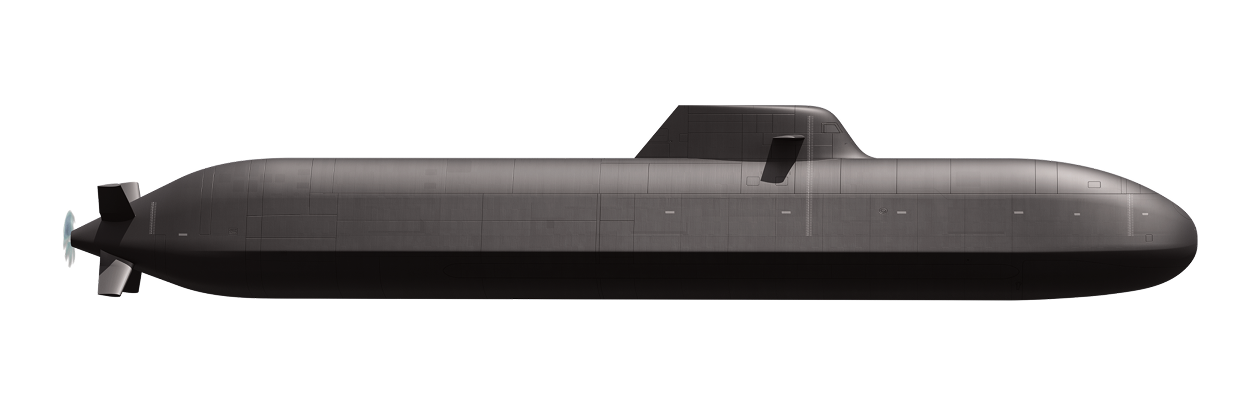
Image: A graphic of the Type 212CD. Credit: TKMS


2 thoughts on “Strategy for Submarines?”
My view on this is that the selection of the German-Norwegian consortium TKMS as the preferred supplier for the Canadian Patrol Submarine Project (CPSP) marks a historic turning point for the Royal Canadian Navy (RCN). Critics who may question the strategic utility of acquiring up to 12 modern, AIP-equipped conventional submarines, in my view overlook a fundamental reality of modern maritime geography: Canada is a three-ocean nation facing rapidly shifting geopolitical threats in the Atlantic, Pacific, and Arctic. Submarines are indispensable instruments of national sovereignty and strategic deterrence.
Strategic Utility: Stealth and Deterrence: The core value of the TKMS Type-212CD submarine lies in its unmatched acoustic stealth and advanced air-independent propulsion (AIP). In an era where great-power competition has returned to the high seas, surface fleets alone are vulnerable to modern anti-ship missiles and surveillance networks.
Submarines remain among the most survivable and difficult-to-detect military platforms, imposing significant uncertainty on any potential adversary. They significantly bolster Canadian coastal defence, and further enable the RCN to support Canada’s allies in detecting and deterring maritime threats far from home, controlling strategic maritime approaches, and projecting maritime power in conjunction with Canada’s allies.
Operational Roles Across Three Oceans:
• The Arctic Sovereignty Challenge: With polar ice receding, the Arctic Ocean may transform into an active strategic highway. The selected conventional AIP design increases the possibility to operate in ice-covered waters, where its primary utility in the North will be intelligence, surveillance, and reconnaissance (ISR). Operating beneath seasonal and multi-year ice where conditions permit, these boats could conduct intelligence, surveillance, and reconnaissance missions while monitoring any foreign naval above and below surface activity in the Northwest Passage where surface ships can less easily go.
• Sustained Three-Ocean Operations: A fleet of up to 12 boats provides the Royal Canadian Navy with sufficient depth to maintain a persistent submarine presence across Canada’s Atlantic, Pacific, and Arctic theatres.
• Force Multiplication with other naval forces: These submarines will not operate in a vacuum. They will be integrated into a broader architecture of long-range patrol aircraft, surface warships, satellites, and potential future unmanned underwater vehicles (UUVs), and as such they will serve as the final deterrent behind Canada’s future maritime sensor web, providing a means of sea denial to potential hostile forces in support of both Canadian sovereignty and in support of Canada’s allies.
The massive investment in the CPSP is a generational commitment to Canadian national sovereignty. A modern submarine fleet will provide Canada with the persistent, covert, and credible means to deter potential adversaries, defend its maritime approaches, and contribute meaningfully to allied security across its vast three ocean maritime frontier.
The latest Canadian Naval Review post asks what Canada’s new submarines will actually be for. It is an important sounding question, but one that has already been answered repeatedly in Canadian defence policy, procurement documents and statements from the Royal Canadian Navy. The strategy is not particularly mysterious.
Canada intends to operate a larger fleet of conventionally powered, under ice capable submarines to maintain a persistent presence across the Atlantic, Pacific and Arctic oceans. Their missions will include surveillance, intelligence gathering, defending Canada and North America, supporting NORAD, contributing to NATO and allied operations, controlling Canada’s maritime approaches and, when necessary, detecting, tracking, deterring and defeating hostile submarines and surface vessels. That is a strategic purpose.
It is also misleading to suggest that selecting TKMS proves Canada is choosing the Atlantic over the Indo Pacific. Submarines are not permanently attached to the alliance structure of the country that built them. A Type 212CD based in Esquimalt will be just as capable of deploying into the Pacific as one based in Halifax will be of operating in the North Atlantic.
The selection certainly strengthens Canada’s relationship with Germany and Norway and brings Canada into a growing NATO submarine partnership. That is a significant advantage. It provides access to a larger allied user community, common training, shared development, established supply chains and decades of collective experience operating advanced conventional submarines. None of that prevents Canada from strengthening its defence relationship with South Korea, Japan, Australia or other Indo Pacific partners.
It should also be remembered that Canada has announced the purchase of up to twelve submarines. That does not necessarily mean twelve boats will ultimately be ordered and delivered. The final number could be lower depending on negotiations, cost, infrastructure requirements, personnel growth and the willingness of future governments to maintain the necessary funding. Even a fleet smaller than twelve would represent a major increase over the four Victoria class submarines Canada currently operates. However, the number matters because submarines require lengthy maintenance periods, training cycles and transit time. A fleet that must maintain a meaningful presence in three oceans cannot be judged simply by how many hulls are tied up alongside on a particular day.
There are certainly major challenges ahead. Canada must modernize submarine facilities on both coasts, establish training and maintenance systems, recruit and qualify considerably more submariners, select weapons, develop secure Arctic communications and integrate the submarines into a wider network of satellites, patrol aircraft, surface ships, helicopters and underwater sensors.
Generating enough trained submariners will be one of the greatest challenges, but it is not a problem the Royal Canadian Navy has suddenly discovered. Steps to mitigate it are already being developed, including recruiting people directly off the street into the submarine service rather than relying entirely on experienced sailors transferring from the surface fleet.
Direct recruitment will allow the RCN to begin building a larger submarine workforce years before the new boats arrive. New sailors can complete basic training, occupational training, submarine qualification and gain experience aboard the Victoria class while facilities, simulators and training programs for the new submarines are being established.
That will not solve the personnel problem overnight. Experienced submariners, maintainers, instructors and technical specialists cannot be produced instantly. However, Canada has years to grow the organization, and beginning direct recruitment well before the first new submarine is delivered is exactly the sort of long term planning critics claim is missing.
These are not unanswered questions about strategic purpose. They are the difficult implementation requirements that follow from the strategy. Canada has the world’s longest coastline, three ocean approaches, an increasingly accessible Arctic and a relatively small surface fleet. Submarines provide something no frigate, patrol ship, aircraft or satellite can fully duplicate: the ability to remain covertly in an area, gather intelligence, force an adversary to change its behaviour and threaten hostile forces without revealing their own location. Their strategic purpose is therefore straightforward.
They will defend Canada, strengthen continental defence, provide persistent surveillance of our maritime approaches, support allies abroad and give the government a credible means of deterrence beneath the surface. The real question is not what the submarines are for.
The real questions are how many Canada will ultimately purchase and whether successive governments will provide the personnel, infrastructure, weapons, maintenance capacity and sustained funding required to use them properly.