
By Peter M. Sanderson, 25 March 2026
United States Space Force (USSF) had scheduled military communications for the Arctic in the 2030s when the next-generation protected MILSATCOM systems would be launched. When USSF found out that the Norwegians were launching two broadband Arctic satellites, they partnered, and piggy-backed their military payload on board. And thus, for the first time, the United States is flying a protected military satellite communications payload on an internationally operated, commercial satellite. On 18 January 2026, USSF announced operational acceptance from Northrop Grumman. (See article below.)
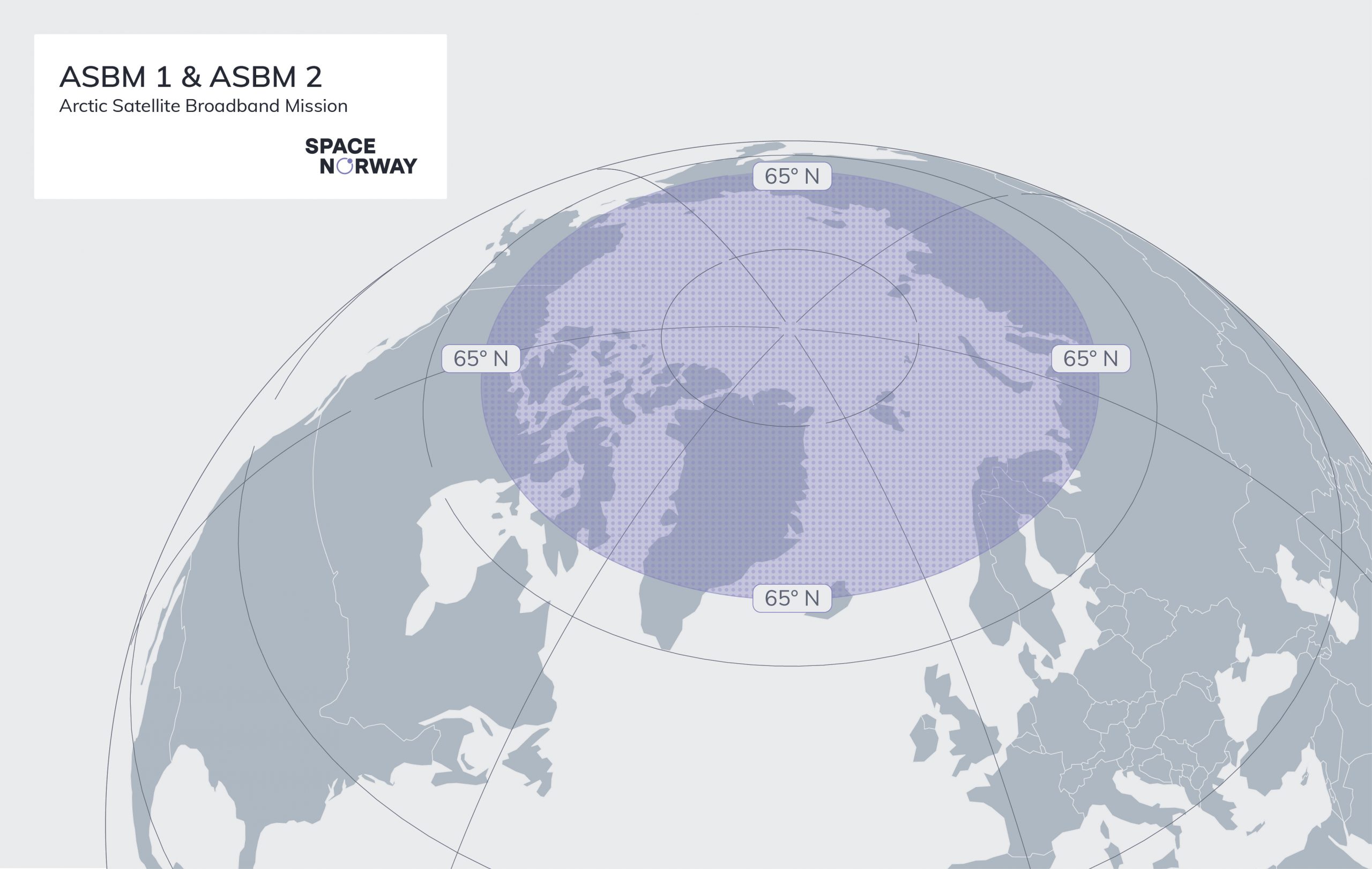
Space Norway Satellite is called the Arctic Satellite Broadband Mission (ASBM) and it hosts four payloads: 1. Ka-band connectivity across the Arctic – broadband – for ViaSat; 2. X-band for Norwegian military; 3. A radiation monitor for the European Commission; and 4. EPS-R for US Department of Defense.
The EPS-R payload or Enhanced Polar System-Recapitalization program consists of an Extremely High Frequency tactical MILSATCOM payload that will significantly increase the existing Enhanced Polar System and be a bridge to the coming 2030s generation. For the United States and its allies, this system provides secure teletype, voice, email, instant messaging, video, multimedia and data communications, robust bandwidth and communication coverage enabling secure voice and data networks.
Implications for the Canadian Armed Forces and the Inuit:
RCN – the AOPS were not slated to patrol the Arctic Archipelago until the 2030s, with the EPS-R, it’s only an ice issue.
RCAF – The ISR community in the High North has been seriously limited by the lack of satellites, this all changes with EPS-R, and Canadian CP-140 crews will be able operate at 100%. The UAV program has been cooling its jets trying to find a way of navigating in the High North without satellites. Since we now have satellites, we now need to get into high gear because we needed the drones patrolling yesterday.
CCG – These crews are used to operating in the high-tech South, but thanks to the EPS-R, their icebreakers and AOPS crews will not suffer any culture shock in this new Arctic.
CA – At least for army communicators, with EPS-R, operating in the Arctic will be like working on the Base or being in Europe, a piece of cake.
Inuit – Broadband in the Arctic will have sociological, economic and political unintended consequences. Both Denmark and Canada, rightly gave the Inuit homelands control over their resources, they are going to make the best deal for them. If we are not astute, Fortress North America will come up short. According to an old Chinese curse “May you live in interesting times.”
Image: A graphic showing Space Norway's Arctic Satellite Broadband Mission coverage. Credit: Space Norway





One thought on “Space Norway and the United States Space Force partnered to provide Arctic satellite coverage – implications for the CAF and the Inuit”
The arrival of the EPS R payload aboard the Arctic Satellite Broadband Mission is not some distant, abstract capability. It is here, it is operational, and it directly improves how we operate in the North. For the Royal Canadian Navy, especially the Harry DeWolf-class, this means something very simple: better, more reliable, secure communications where it used to be patchy at best and nonexistent at worst. That translates into real time coordination, improved situational awareness, and tighter integration with allies while operating in the Arctic Archipelago.
And let’s be clear, the AOPVs have already been operating in the Arctic Archipelago for some time now. This is not a future concept waiting for the 2030s. What EPS R does is make those operations more effective, better connected, and far more integrated with joint and allied forces.
Does it magically solve ice, distance, and logistics? Of course not. Ice still dictates movement. Fuel still matters. But pretending comms were not a limiting factor before is just ignoring reality. This closes a major gap, plain and simple.
And let’s not pretend this is some revolutionary leap for northern connectivity either. The majority of residents across the Arctic are already using Starlink today. Broadband in the North is not a future concept, it is already here. What EPS R does is bring that same level of reliability and bandwidth into the secure military domain, where it actually counts for operations.
Where this really matters strategically is NORAD. This directly strengthens integration with NORAD, improving data sharing, ISR, and command and control across the High North. For those suggesting the alliance is somehow on the rocks, this is just another clear indication that it is not. If anything, cooperation is deepening in the areas that matter most.
At the end of the day, this is not about hype or speculation. It is about finally having the tools to operate effectively in a region we have been talking about for decades.
Comms were a gap. That gap just got a lot smaller.
And that is a good thing.