By David Prior, 14 March 2026
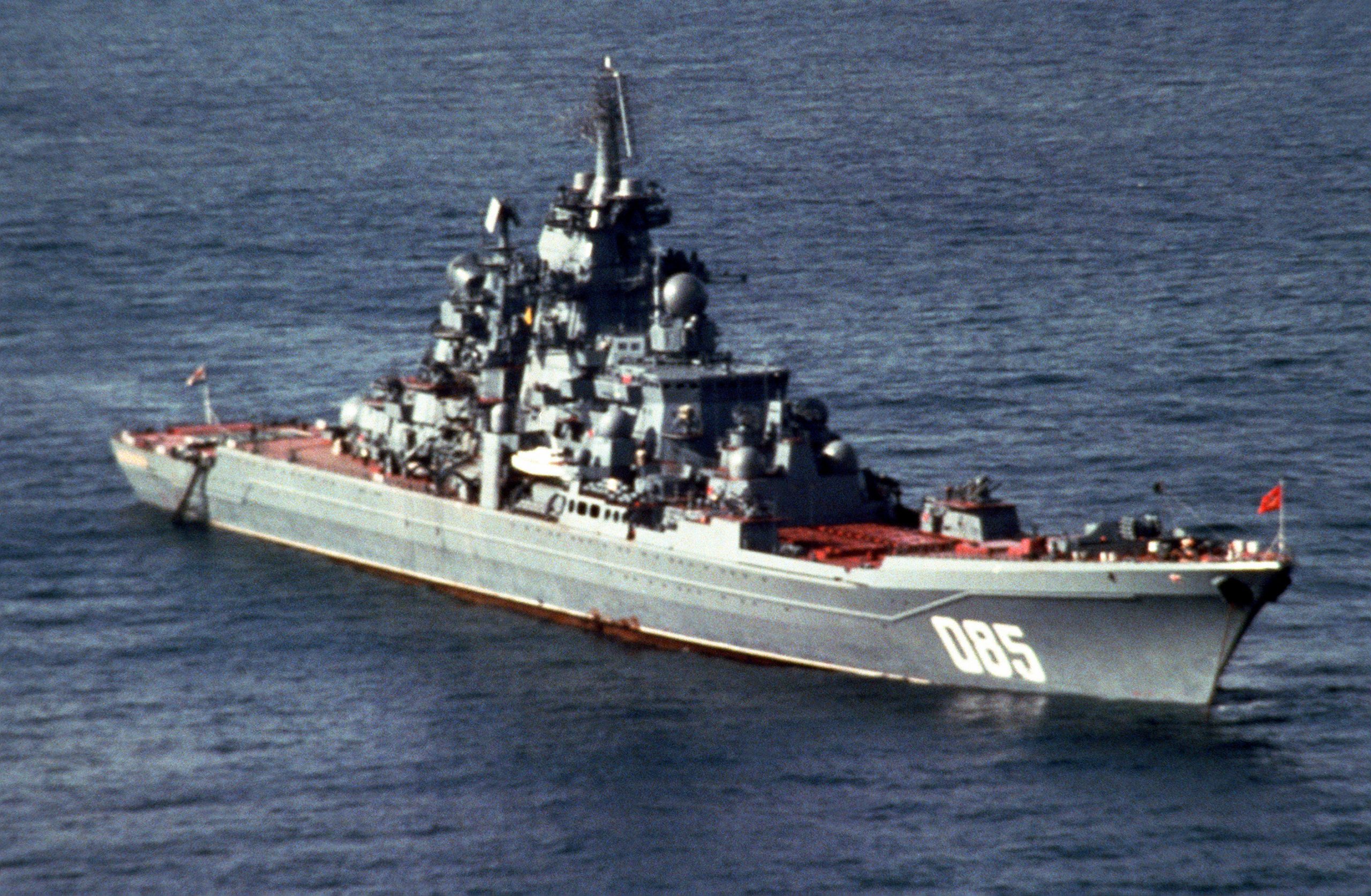
Does an article by H.I. Sutton, “Russia’s overspend on old battlecruiser,” published by the Australian Naval Institute in February, have relevance for Canada? Sutton talks about Russia’s project to modernize Admiral Nakhimov, a Kirov-class battle cruiser that was built in the Soviet Union, and put on ice in the 1990s. Starting in 2015 the ship was modernized over a decade, at great expense. Hutton argues that it is now a ship that is good to create the perception of strength in peace, but not terribly useful in war time. (see https://navalinstitute.com.au/russias-overspend-on-old-battlecruiser/). (See also a YouTube video produced by The Military Show https://www.youtube.com/watch?v=2pgd4bsHSko) Naval warfare has changed -- Ukraine has managed to inflict serious damage on the Russian Black Sea Fleet, even without a navy. Nakhimov is not a match for cheap but effective drones.
What is the relevance here? Will the Polar Class 2 amphibious icebreaker being considered by the Royal Canadian Navy be the Canadian version of Admiral Nakhimov? It would certainly be a beautiful target, ready and waiting to be overwhelmed by a swarm of 500 drones – aerial, surface or sub-surface (UAV, USV, UUV) -- loitering and otherwise, removing bridge windows and interiors, exterior electronics, weapons, etc. Ukraine now has quadcopter drones fibre-optic-controlled with a range of 80 km. That number will likely double soon. The limiting factor is the amount of fibre-optic cable a drone can carry. On a ship, in addition to defending against them, the question could be how many drones the ship could accommodate and how to launch them in swarms.
I argue that what would be more useful for Canada than the possible amphibious icebreakers is polar multi-functional security vessels (PMSVs) which are ice-hardened where necessary with Duplex stainless steel, can serve as drone motherships, and are able to carry, service and quickly launch very large numbers of all three of the above drone versions. I was thinking about how to launch a swarm of them. The PMSV design has a drone ‘airport’ above and forward of the aft helipad which would be good for launching large drones and drones with wings. The forward helipad could likely support 100 vertical launch tubes containing stacks of 5 quadcopter drones, stacked like dinner plates, an entire stack pushed up from the bottom to launch the next one. In this way a flight of 100 fibre-optic drones could lift off together, in a regulated way, and fly away. This process is easily automated. When the last layer of drones is gone, lower the ‘elevator’ and reload another stack by hand. Automation could coordinate the flight up unless an operator intervenes to direct its final approach. Otherwise, AI and visual recognition programming may suffice to drive it home. The caps on the vertical tubes can be built to form a helicopter-friendly surface.
The unique design of the PMSV allows the integration of ‘silos.’ With computer software ‘driving’ all the drones, the first layer of drones (100 units) could fly toward their destination without entanglement. The 100 drones, 10 rows across and 10 deep, would go airborne in 5 waves, always peeling each wave of drones off the front and 2 sides, like peeling an onion. No cross-overs:
Wave One 28 drones
Wave Two 24
Wave Three 20
Wave Four 16
Wave Five 12
Each wave could be airborne in less than 10 seconds.
Five layers (500 drones) could be airborne in 5 minutes plus the time it takes for previous fibre-optic cables to fall to the ground. Probably 10-15 minutes in total to send off 500 FPV drones. Some of the drones in the swarm could be defence drones protecting the swarm from anti-drone efforts, perhaps assisting the swarm defence weapons on the PMSV to target incoming threats to the swarm.
It’s something to consider – and perhaps Canada can avoid an Admiral Nakhimov moment.
For more information, see these sources:
https://www.cbc.ca/player/play/video/9.7028592
https://www.navalreview.ca/2026/01/rcn-polar-class-2-amphibious-icebreaker/
https://www.navalreview.ca/2022/12/the-case-for-a-polar-multifunctional-security-vessel/
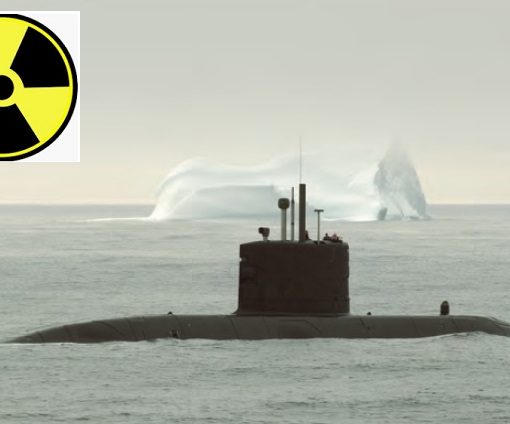
Image: A starboard bow view of the Soviet Kirov class nuclear-powered guided missile cruiser KALININ, now named ADMIRAL NAKHIMOV. Credit: US Navy

44 thoughts on “Lessons from Russia’s Bad Choice?”
No objection to aerial drones, but the concept of this article seems strange. First, the Canadian equivalent of repairing the Admiral Nakhimov would have been repairing the Iroquois class destroyers – which Canada clearly is not planning. Second, the new-build programs of the Canadian navy are
a) The Harry DeWolf class patrol ships
b) The Fraser class Destroyers
c) Corvettes with light ice capability
None of these resemble an amphibious heavy icebreaker or a vessel designed to deploy 500 drones simultaneously, and there is no spare shipyard capacity to build additional ships in peace-time before 2045.
Yes, the article is strange, and the comparison David Prior makes simply does not hold water. Comparing Russia pouring billions into rebuilding a Soviet battlecruiser to anything Canada might realistically do is a stretch to begin with. Canada has never shown any inclination to revive obsolete major combatants the way Russia did with Admiral Nakhimov. The closest historical comparison would have been extending the life of the Iroquois class destroyers, and Ottawa already made that decision years ago not to do it because the cost versus capability simply was not worth it. So the premise of the comparison fails.
It also ignores the actual direction of the Royal Canadian Navy. The fleet recapitalization program is already clearly defined. The Harry DeWolf class patrol ships provide Arctic and offshore presence, the future River class destroyers will form the core of Canada’s high end combat capability, and discussion around corvettes or smaller combatants is about filling numbers at an affordable cost. None of those programs resemble an amphibious icebreaking drone carrier or some experimental platform launching hundreds of drones at once. These kinds of ideas tend to appear in think tank papers far more often than in real procurement plans.
What will happen in the future is that Canadian warships will absolutely operate drones of many different types. Surface vessels, submarines and aircraft will all integrate unmanned systems for surveillance, targeting, mine warfare and reconnaissance. That evolution is already happening across NATO navies. But it will not be in the form of some massive ship designed to deploy hundreds of drones simultaneously as described in the article. Those capabilities will be integrated into normal fleet units rather than concentrated into a single experimental platform.
I can also categorically state that Canada is not currently looking for an amphibious drone carrier, nor is it pursuing any PMSV concept of that nature. The navy’s priorities are already set: Arctic patrol ships, the new destroyer program, and potential smaller surface combatants that can be built and sustained within the realities of Canadian shipbuilding capacity. Irving, Seaspan and Davie are already fully committed under the National Shipbuilding Strategy for years to come. The focus is on practical ships the fleet actually needs, not theoretical concepts that consume money, sailors and shipyard time for little operational return.
Ted Barnes states that “I can also categorically state that Canada is not currently looking for an amphibious drone carrier, nor is it pursuing any PMSV concept of that nature. The navy’s priorities are already set: Arctic patrol ships, the new destroyer program, and potential smaller surface combatants that can be built and sustained within the realities of Canadian shipbuilding capacity. Irving, Seaspan and Davie are already fully committed under the National Shipbuilding Strategy for years to come”. This is all known to be true but none of it addresses what the future is bringing. In just a few years, drone warfare went from nearly nothing to what we see here https://www.youtube.com/watch?v=yOF2AFh_sGE . Since then, it has made another significant leap forward with fibre optic drones. The pace of progress is exponential. Strapping a few drones onto today’s conventional naval vessels is akin to calling a spotter plane perched on the aft deck of a WW 2 battleship “Naval Air Power”. While both are useful, both are lacking in power projection. Trying to imagine what another ten years of drone evolution will bring is difficult, and is likely unimaginable. The PMSV buys the RCN a seat at the table in this naval aspect of drone warfare. Indeed, the PMSV makes Canada the world leader at the table. Exceptional drone capability is in addition to the PMSV’s other unique and essential capabilities, all of which will bring immense operation returns. Thinking only of present needs is not useful if the goal is to build a future. In today’s world, the present is already the past.
David, this is where your argument sails clean off the chart and into fantasy. Nobody is disputing that drones are changing warfare or that naval forces will need to adapt. What is being challenged is your leap from “drones matter” to “therefore Canada needs a giant, bespoke PMSV drone mothership.” That is not strategy. The RCN does not become a world leader by chasing every shiny idea that shows up on YouTube and in think-piece speculation. It becomes credible by getting the ships it is already committed to into the water, crewed, armed, supported, and operational. Arctic patrol ships, River-class destroyers, and likely smaller combatants with modular payloads, uncrewed systems, and aviation facilities are the real path to integrating drones into the fleet. That is how serious navies do it: they evolve practical platforms with real logistics, real escorts, real sustainment, and real doctrine, not by conjuring up a one-off “seat at the table” vessel that Canadian industry is neither funded nor tasked to build.
And this line that “thinking only of present needs is not useful if the goal is to build a future” would carry more weight if your PMSV concept was grounded in Canadian reality. It is not. The future is not built by ignoring shipyard capacity, manpower shortages, procurement timelines, escort requirements, and the fact that any large, slow, lightly defended drone carrier would be a priority target in wartime. The lesson from drone warfare is not that every navy now needs some giant floating drone barge. It is that every credible warship class must be designed to operate, defend against, launch, recover, and network uncrewed systems as part of a wider force. Canada absolutely needs to embrace drones, but in a way that fits the fleet, the budget, and the missions it actually has. Dressing up an impractical PMSV as visionary thinking does not make it so. It just risks leaving sailors with an expensive gimmick instead of useful ships.
A few years ago Ukraine threw out the old playbook: “Arctic patrol ships, River-class destroyers, and likely smaller combatants with modular payloads, uncrewed systems, and aviation facilities are the real path to integrating drones into the fleet”. That used to be the real path, until Ukraine threw it out. Today, Ukraine has defeated Russia’s Black Sea Fleet and all the world’s navies are trying to emulate Ukraine’s playbook (“Go radically innovative, go big FAST, or go home”). PMSVs follow the Ukraine playbook.
The PMSV is not solely a wartime vessel. It is a multifunctional security vessel operating year-round in the Arctic, escorted by icebreakers only when necessary. This is how it’s done https://tc.canada.ca/en/marine-transportation/arctic-shipping/icebreaker-escort . Canada’s new Polar Max icebreakers are adequate for the job at any time of year https://www.seaspan.com/press-release/seaspan-shipyards-unveils-digital-model-of-canadas-heavy-polar-icebreaker/ . PMSVs may have to move occasionally but will rarely patrol in winter ice. They will serve as economical distant floating bases servicing the requirements of the RCN, Arctic industrial activity, and Arctic research. The USCG gets it: They are aware of the need for enhanced Arctic security, including environmental security: https://maritime-executive.com/article/adm-zukunft-we-are-not-ready-for-arctic-oil-spills
https://www.youtube.com/watch?v=eKITrB1j5Mg minutes 1:18:52 to 1:25:55
As for wartime scenarios, PMSVs are not powerful destroyers or frigates. PMSVs more closely resemble resupply vessels or aircraft carriers, both of which sail within a fleet of vessels which protect them. AOPS will need the same protection. Indeed, a lot more of it.
David Prior
Ukraine did not “throw out the old playbook” and replace it with some magic PMSV theory. Ukraine exploited a very specific Black Sea fight against a geographically constrained enemy, close to shore, with dense ISR, land-based support, and short logistic lines. That is not the Canadian Arctic. A floating base that needs escorts, icebreaker support, permissive conditions, and protection from actual warships is not a revolutionary combat concept, it is a dependency stack. Calling a vulnerable auxiliary a “multifunctional security vessel” does not make it survivable, practical, or affordable. Canada needs ships that can actually fight, patrol, and survive in the environment they are meant for, not oversized Arctic platforms justified by cherry-picked Ukraine analogies, oil spill talking points, and PowerPoint warfare. If the PMSV needs escorts in war, icebreakers in winter, and a protective bubble just to exist, then it is not the backbone of Arctic security, it is a burden on the fleet we already do not have.
The thrust of the article is not about repairing old ships, it is about investing in innovative technologies and ship designs to meet the security challenges of the near future and beyond, not the past. The Harry DeWolf class patrol ships, the Fraser class destroyers and the new corvettes are all modernized vessels from the past. They do not represent new thinking. They are not designed around the paradigm-shifting new naval technologies in weapons, security and shipbuilding appearing today. Deploying a few drones today is akin to rolling out a few 12-pounders at the Battle of Trafalgar. Realizing the potential of the innovative weapons now appearing in Ukraine and elswhere requires innovative ship designs that are matched to them.
It’s true that there is no available shipbuilding capacity in Canada until the 2040s. This why a new, modern Canadian shipyard based on modern composite shipbuilding, not 200-year-old steel and aluminum, is a good idea and should be built asap https://www.navalreview.ca/2025/06/the-case-for-large-canadian-naval-vessels-built-with-modern-materials/ .
The danger is trying to sound visionary, but just stringing buzzwords together and pretending that proven warship design is somehow intellectual cowardice. The Harry DeWolf class, River class and the future corvettes are not “modernized vessels from the past” in the way Prior suggests. They are practical naval answers to real Canadian requirements: Arctic presence, escort work, task group integration, sovereignty patrols, sea control and survivable combat capability. That is what serious navies build around, not whatever social media wunderweapon happened to trend out of Ukraine this month. Drones, loitering munitions and autonomous systems absolutely matter, and every navy worth its salt is already working out how to embark, control and sustain them from existing and future hulls. But that is very different from pretending the answer is to throw away the fundamentals of warship design and start fantasizing about unproven composite motherships in a country that already struggles to deliver steel ships on time.
And this constant obsession with “new thinking” usually turns out to mean no thinking at all. A navy does not gain combat power by chasing exotic materials, reinventing shipbuilding from scratch, and proposing a brand new yard before it can even crew the fleet it is already getting. Composite construction has niche uses, but it does not magically solve survivability, repairability, Arctic durability, magazine protection, or battle damage in high-end naval combat. Canada needs ships it can build, man, maintain and fight, not PowerPoint marvels designed around the latest drone clips from the Black Sea. The future fleet will absolutely carry and operate all kinds of uncrewed systems, but in a balanced and integrated way, not as some doctrinal religion. Real innovation is fitting new technology into a force structure that can survive first contact with the enemy.
It’s true that innovation is a challenging business, but it is also a fact of life. The only question is “Which team is going to win the prize?”. It won’t be the team that is reluctant to take a chance. In 1906, the Royal Navy struck gold despite an ocean of conventional criticism trying to block the project https://www.youtube.com/watch?v=_Al6KGHosig&t=11s . The Royal Navy realized the breakthrough required throwing away the fundamentals of warship design and begin fantasizing about unproven battleship design fundamentals (the engineering comes later in the process). Innovation requires a tolerance for dead ends. Tank development has seen many https://www.youtube.com/watch?v=n7Q1vubN4w8 . Nevertheless, in every field, competition has forced everyone to participate and take chances, or drop out. PMSVs mitigate the risk by utilizing proven systems and techniques in mildly innovative ways. A good example is choosing composite ship design. Composite fabrication has been commonplace for over 70 years, and in many fields. Core construction is just one type of composite construction https://www.diabgroup.com/what-we-do/ . Composites are replacing steel and aluminum at an accelerating rate because they offer superior results in many applications, including in some large naval vessels:
https://maritime-executive.com/article/russia-readies-world-s-largest-monolithic-fiberglass-ship
https://www.navalreview.ca/2025/06/the-case-for-large-canadian-naval-vessels-built-with-modern-materials/
David, invoking HMS Dreadnought every time you want to bless another half baked concept does not make it serious naval thinking. The Royal Navy in 1906 did not “fantasize first and engineer later”; it built on an industrial base, deep technical expertise, and a clear operational requirement. That is the part you keep skipping. Real innovation is not daydreaming about composite wonder ships, moon pools, drone motherships and oil spill kits all jammed into one Arctic fantasy vessel, then declaring the engineering details someone else’s problem. That is not vision; that is brochure writing. “Proven systems used in mildly innovative ways” is also doing a lot of heavy lifting here, because the moment anyone asks about Arctic survivability, damage tolerance, ice loading, battle damage repair, sustainment, Canadian certification, cost, yard capacity, or who exactly is going to build and support this thing, the answer is always another analogy, another article, or another YouTube link. A Russian fiberglass minesweeper and a Diab composites webpage do not magically prove Canada should bet Arctic sovereign presence on a giant composite PMSV.
And that is the real problem….you are trying to pass off technology enthusiasm as strategy. Canada does not need a naval science project built around whatever shiny concept caught your eye this week. It needs ships that can actually be built, crewed, maintained, armed, and sent north in numbers within the limits of Canadian industry and budget reality. Innovation that ignores shipyard capacity, procurement timelines, operational doctrine, and logistics is not boldness, it is escapism. Dreadnought was a revolution because it answered a real naval problem with a buildable answer. Your PMSV pitch keeps doing the opposite: starting with a fantasy answer and then hoping reality salutes smartly and falls in behind it.
The comparison between Russia’s Admiral Nakhimov and the proposed Canadian Polar Class 2 amphibious icebreaker makes for an interesting headline, but it falls apart quickly once you look past the surface analogy. Nakhimov is a Cold War nuclear battlecruiser designed around massive missile batteries and prestige naval power projection. Its modernization is largely about restoring a Soviet era symbol of status. Canada’s proposed polar amphibious vessel, by contrast, would exist primarily as a logistics and sovereignty platform operating in the Arctic, an environment where presence, lift capacity, and ice capability matter far more than missile salvos or blue water fleet combat.
The idea that a large Arctic vessel automatically becomes an easy drone target also ignores the realities of geography and operations. Unlike ships operating in the confined waters of the Black Sea, Canadian polar vessels would operate across vast, sparsely populated Arctic regions where launching, controlling, and sustaining large drone swarms is significantly harder. Ukraine’s success against the Russian Black Sea Fleet occurred in a very specific environment with short ranges, abundant coastal launch points, and predictable naval basing patterns. The Arctic is the opposite of that. Distances are enormous, infrastructure is limited, communications are difficult, and environmental conditions alone defeat many small drone systems.
There is also a misunderstanding of what these ships are actually meant to do. A Polar Class 2 amphibious icebreaker would not be built to duel drones or serve as a frontline combatant. Its purpose would be to move troops, equipment, vehicles, helicopters, and supplies into austere northern environments where Canada currently has very little ability to operate at scale. In other words, it would be closer to a heavily ice capable logistics and sealift platform than to a Cold War battlecruiser. If anything, the closest comparison is an Arctic version of a strategic mobility asset, something Canada currently lacks.
The proposed drone mothership PMSV concept also sounds clever on paper but runs into practical issues very quickly. Launching hundreds of fibre optic controlled drones requires massive onboard storage, maintenance facilities, trained operators, and reliable communications architecture. Fibre optic tethered drones also create their own logistical problem, kilometres of cable that must deploy cleanly and then be discarded or recovered. Multiply that by hundreds of drones and you are quickly dealing with a deck and maintenance nightmare. Naval architects already struggle to integrate helicopters, boats, cargo systems, and command facilities on multipurpose vessels. Adding large scale drone launch systems complicates the design dramatically while providing capabilities that could likely be delivered more efficiently by smaller unmanned platforms or shore based systems.
More importantly, the PMSV concept misunderstands survivability at sea. Turning a ship into a floating drone warehouse with hundreds of explosive FPV systems stored aboard is not clever innovation. It is a recipe for disaster. A single successful hit could detonate stored drones or fuel and cause catastrophic damage. Instead of increasing survivability, the concept risks creating a large, poorly protected platform packed with volatile systems and limited ability to defend itself. In a real conflict that kind of design choice does not produce a smarter warship. It risks leaving sailors exposed and potentially dead because the platform was built around a theoretical drone gimmick rather than balanced naval survivability.
There is also a deeper strategic issue with the argument. Canada’s biggest Arctic weakness is not a lack of drone launch tubes. It is mobility, sustainment, and presence. The ability to move people, vehicles, engineering equipment, and supplies into the Arctic and support them once they arrive is what gives sovereignty credibility. A large polar logistics vessel directly supports that mission. A specialized drone carrier does not.
The real lesson from Ukraine is not that large ships are obsolete. It is that ships must be integrated into layered defence systems and supported by their own unmanned capabilities. Future Arctic vessels will certainly carry drones for surveillance, reconnaissance, and security. But those systems will be integrated into a balanced platform designed to operate helicopters, deploy boats, move cargo, and support joint operations.
In short, Canada does not risk building an Admiral Nakhimov of the Arctic. The real risk is continuing to debate theoretical drone motherships while lacking the basic sealift and Arctic mobility required to operate in our own northern waters.
If Canada is serious about Arctic sovereignty, the priority remains simple. Ships that can get there, stay there, and support operations once they arrive. Everything else, including drones, can be layered onto that foundation.
Hi Ted,
Thank you for your thoughts. I agree fully with your conclusions.
Ubique,
Les
It’s true that Canada’s proposed polar amphibious vessel will exist primarily as a logistics and sovereignty platform operating in the Arctic, at least until it is demilitarized by a swarm of hostile drones. At that point, Canada will go back to having no presence, lift capacity, and ice capability in the Arctic. It’s true today that Canadian polar vessels operate across vast, sparsely populated Arctic regions where launching, controlling, and sustaining large drone swarms is significantly harder. However, this article is not talking about today, it is planning for 2030 and beyond. Four years ago, drones barely existed on the battlefield. Today they have revolutionized warfare and renderered largely obsolete many magnificent weapons on the battlefield today. This includes many types of naval vessels forming the backbone of the world’s navies, including Canada’s. Many future naval vessels will look different because they will be designed and built around drone warfare. Drones are the new 1906 HMS Dreadnought.
PMSVs are an excellent match with drone swarm technology; the drones do not inhibit the multifunctional PMSV’s other essential capabilities and they require no significant alteration in the PMSV’s design. They are also modular and quickly added or removed. It’s true that launching hundreds of fibre optic controlled drones requires massive onboard storage, maintenance facilities and reliable communications architecture. The PMSVs offer all these things. However, it will not require massive numbers of trained operators. We can expect advances in autonomous technology and software to eliminate that need for massive numbers. It’s true that fibre optic tethered drones will create their own logistical problem, for example, kilometres of cable that must deploy cleanly and then be discarded or recovered. Multiply that by hundreds of drones and you will quickly be dealing with a deck and maintenance nightmare. However, by utilizing PMSVs those problems will be avoided (see details of the solutions in the content of this article).
It’s true that naval vessels filled with explosives are hazardous environments. That’s why naval ships, including PMSVs, have magazines. The amount of high explosive in the silos of a PMSV will likely be 1,000 kg spread over 400 sq metres. Not too concentrated. The blast will be directed vertically through the deck, which is designed for such an event, and not horizontally through the ship. The situation can be worse on ships carrying aircraft, both fixed wing and helicopters, with their payloads of aviation fuel, missiles and bombs https://www.youtube.com/watch?v=-nfbgKOnDrM&t=657s .
It is also true that ships must be integrated into layered defence systems and supported by their own unmanned capabilities. Future Arctic vessels will certainly carry drones for surveillance, reconnaissance, and security. Those systems will be integrated into a balanced platform designed to operate helicopters, deploy boats, move cargo, and support joint operations. The PMSV performs all these tasks well in addition to effectively deploying swarms of hundreds of drones when required. No other vessel comes close to providing such naval drone capability in the near future, both in Canada’s southern latitudes and the Canadian Arctic.
Prior is mistaking science fiction enthusiasm for naval analysis. He keeps declaring that everything built today will be obsolete tomorrow, then somehow leaps to the conclusion that this makes his PMSV concept the answer to everything from Arctic sovereignty to drone warfare. It does not. A Polar Multi Role Support Vessel is a logistics platform, not some magical drone mothership that can shrug off the brutal realities of Arctic weather, bandwidth limits, deck handling, maintenance burden, ice operations, trained personnel requirements, magazine safety, and the simple fact that Canada is not designing its future fleet around a floating fibre-optic drone warehouse. Tossing around phrases like “Dreadnought moment” may sound dramatic, but it is not an argument. The Dreadnought was a real warship built for a real fleet with a coherent doctrine behind it.
The real giveaway is that every practical objection gets waved away with “technology will solve that later.” Operators? Autonomy will fix it. Storage and launch complexity? PMSV will fix it. Fibre optic cable chaos on deck? PMSV will fix it. Vulnerability to enemy drones? More drones will fix it. That is not naval planning. That is hand waving dressed up as strategy. Canada’s future Arctic vessels will absolutely carry uncrewed systems, just like every serious navy is moving toward, but they will do so as part of balanced ships designed for surveillance, lift, helicopters, boats, cargo, command support, and survivability, not as some explosive-laden barge pretending to be the second coming of naval warfare. The PMSV concept remains what it has always been: an ungainly, badly thought out idea that sounds impressive in an opinion piece and would leave sailors riding into danger inside somebody else’s PowerPoint.
Ted Barnes states that “The Dreadnought was a real warship built for a real fleet with a coherent doctrine behind it”. In fact, the Dreadnought was a radical new warship built to replace a real fleet with an ossified, incoherent doctrine (illogical battleship design). Being “real” is not necessarily a virtue. The PMSV has never been about replacing the status quo today. Rather, it is about broadening the RCN’s existing capabilities by using innovation in design and materials. Using more of the same-old same-old will not broaden anything. Is there a problem with broadening and strengthening the RCN’s capabilities with innovative thinking? Hopefully not. Innovation is the introduction of new ideas, methods, or things (Collins Dictionary), with “new” being the essential element. “New” is very likely going to look different from the status quo, and to possess different strengths and weaknesses. This difference is not inherently a “problem”. A solution to a problem needs to be different.
Hello David Prior. I have been away for a while so just getting back into the game. I tend to totally agree with Ted Barnes’ replies to your passion for the PMSV concept. Treating it as the ‘next new thing’ and as a much-needed concept for the RCN just does not pan-out compared to Admiral Topshee’s conceptualized Arctic Amphibious vessel which is certainly more in line to what the RCN really needs rather than what you propose for your PMSV concept. The RCN Commander envisions this vessel as a year-round Polar Class 2 ship and would function as an Arctic Mobile Base equipped to carry landing-craft/hovercraft and helicopters for aerial support. Again, this would not be a Drone Carrier per se (although it would carry a wide array of Air/Surface/Underwater unmanned vehicles) and yes, it would resemble a medium-sized LHD type vessel, but this is also a ship that would clearly be identified as a Nation-building Sovereignty asset for Canada. This is a vessel that would certainly be able to vigorously defend itself if need be with state-of-the-art communications suites; AAW/ASWASuW along with state-of-the-art Laser Weapons capabilities. Envisioned by the RCN Commander as an Arctic Mobile Base able to move quickly anywhere in the High Arctic where needed. Just imagine this scenario. Picture this Amphibious Sealift Vessel plowing through the far North followed closely by 1 or 2 River Class Destroyer (RCD) escorts. Think of that scenario. Yes, this would be like an LHD Carrier, but more powerful, able to move in the Far North at will, but would also be a perfect Humanitarian Assistance/Disaster Relief (HA/DR) asset for all disasters at home and world-wide. Positive preliminary discussions have already taken place with various shipyards including Davie Shipyard in Quebec & Seaspan Vancouver. Can you say the same, David, for your PMSV concept? Only one problem with this conceptualization. This vessel has not been built…..yet. The RCN Commander’s concept of a 3 + 1 Amphibious Sealift Fleet would very much be in play, a far cry from your 12 PMSV ships or even a G-LAAM concept. I for one, would much rather go to sea in one of Admiral Topshee’s type vessels rather than what you are proposing!
An Arctic Amphibious Sealift Vessel, plowing slowly with difficulty through mid-winter ice in the Canadian High Arctic, followed closely by 1 or 2 River Class Destroyer (RCD) escorts trying hard not to suffer ice damage, is a tempting target for a variety of weapons, likely including all those you listed. Is cost an issue? 3 + 1 x $5 billion = $20 billion, assuming the initial price doesn’t wildly inflate as usual. For PMSVs, it’s likely that a fleet of 12 will cost $5 billion because they do not have to be icebreakers. PMSVs are essentially ice-capable armed cargo ships with 2 helicopters. They can be escorted by real icebreakers when required. Other than icebreaking, a few PMSVs can do everything an Arctic Amphibious Sealift Vessel can do, plus a lot more. For example, the USCG are aware of the need for enhanced Arctic security, including environmental security: https://maritime-executive.com/article/adm-zukunft-we-are-not-ready-for-arctic-oil-spills
https://www.youtube.com/watch?v=eKITrB1j5Mg minutes 1:18:52 to 1:25:55 . Only PMSVs can provide credible oil spill protection on the oceans and in the Arctic. This fact has been well documented by CCG, Chinese Coast Guard (MSA), BP, Altinex AS in Norway, US Naval Weapons Station Earle, and others. With Arctic shipping and pipelines-with-tankers coming soon to the Arctic, honest and effective oil spill recovery will be essential. Petroleum oils and canola oil etc are all highly lethal to birds, bears, and seals, killing by hypothermia (matted feathers and fur lose insulation value). PMSVs can provide the oil recovery. Amphibious Arctic Sealift Vessels cannot. They can only deploy the status quo. Today, the status quo is unacceptable: – http://spilltechnology.com/ltdaccess/506179351.mp4
– Standard Oil Corexit https://oilspilldispersants.weebly.com/history.html
– http://www.gazette.gc.ca/rp-pr/p2/2016/2016-06-15/html/sor-dors108-eng.php#archived
– DFO Corexit https://www.dfo-mpo.gc.ca/csas-sccs/Schedule-Horraire/2021/03_01-12-eng.html
RCN fibre optic attack drones don’t need extreme speed, probably 160 kph is fine. They need one-way endurance, big batteries and a lightweight explosive charge (the targets are windows, interior spaces and exterior electronic antennae and weapons. Demilitarize the vessel, not sink it and cause pollution.
David, this is exactly the sort of fantasy that sounds clever until you put it anywhere near a real ship, a real crew, and a real war. Fibre optic attack drones are a useful tool, not some magic naval equalizer that lets you strip warships of their weapons and turn them into floating drone sheds. Saying 160 kph is “fine” because they only need to hit windows, antennas, and topside systems ignores the obvious: modern warships are built with layered defences, redundancy, damage control, decoys, jamming alternatives, hardening, and people whose entire job is to keep fighting after taking hits. “Demilitarize the vessel, not sink it” is a catchy phrase, but in combat the enemy gets a vote, and a ship that has lost sensors or weapons but is still afloat is still a hazard, still recoverable, and still able to be defended by other ships, aircraft, and its own crew. This is not a video game where you poke at exposed weak spots and win by points.
More to the point, the RCN is not going to build its future around a boutique one-way attack gadget at the expense of balanced combat power. Drones will absolutely become part of the naval fight, of that there is no question, but they will be integrated into proper warships with missiles, guns, sensors, EW, helicopters, boats, and layered survivability, not replace them. The obsession with lightly armed mothership concepts, demilitarized platforms, and drone-centric silver bullets keeps leading to the same dead end: a ship that looks innovative right up until the first time it has to sail into a contested environment and survive. Warships are built to fight hurt, not just launch clever toys. That remains true whether the latest fad arrives by quadcopter, USV, or fibre optic spool.
Ted Barnes states that “The obsession with lightly armed mothership concepts, demilitarized platforms, and drone-centric silver bullets keeps leading to the same dead end….”. It appears that Mr Barnes is unaware of some important weaponry details of the proposed PMSV. Some of the details are available here https://www.navalreview.ca/2022/12/the-case-for-a-polar-multifunctional-security-vessel/. I can provide many more which I am happy to share, but there are too many for this particular forum. It’s worth noting that PMSVs are formidable vessels in close combat hostilities, the kind that can defeat the most powerful frigates and destroyers, which carry long-range heavy weapons (all their deck guns have limited value https://x.com/NavalInstitute/status/1784753615267131809 ). https://allthingsiceland.com/the-cod-wars-iceland-vs-britain-ep-36/
https://maritime-executive.com/article/report-chinese-fishing-vessel-tried-to-hit-uscg-cutter-off-galapagos
There you go again, David, trying to sell a paper warship as though repeating the claim often enough will make it real. Every time someone points out the obvious holes in the PMSV concept, you reach for another anecdote, another article, another ‘important detail’ that supposedly changes everything. It never does. What you are pitching is not a credible naval requirement matched to Canadian strategy, industry, manpower, and budget. It is a floating wish list with icebreaking, drone handling, oil spill response, aviation, close combat dominance, sovereignty patrol, and somehow destroyer killing ability all jammed into one imaginary hull. At some point this stops being naval analysis and starts sounding like a catalogue of things you think would be neat.
The really absurd part is the repeated claim that this vessel would be formidable enough in close combat to take on major frigates and destroyers. That is pure fantasy. Real combatants are built around layered sensors, command systems, trained crews, magazine depth, survivability standards, doctrine, logistics and decades of hard lessons written in steel, not blog prose. You keep trying to leap over all of that because it is inconvenient to the argument. Canada does not need another silver bullet concept that exists mainly in comment sections and speculative articles. It needs ships that can actually be funded, crewed, built, armed, sustained and integrated into a real fleet. The PMSV still fails that test, which is why no amount of hand waving, vague extra details, or dramatic combat claims can rescue it from what it plainly is: an overbuilt fantasy in search of a mission.
Drones are effective. During recent NATO naval exercises, Ukrainian sea drones easily “sank” a NATO frigate https://www.faz.net/aktuell/politik/ukraine/nato-manoever-vor-portugal-ukraine-versenkt-alliierte-fregatte-accg-200633625.html . Every Canadian PMSV incorporates a large moon pool as part of its modern oil spill recovery system. This same moon pool can launch and recover UUVs and USVs, in addition to assisting ocean research activity. Modern Arctic security vessels require a modern oil spill recovery system. Only the PMSVs have it. The need is obvious today. The USCG are also aware of the need for enhanced Arctic security, including environmental security: https://maritime-executive.com/article/adm-zukunft-we-are-not-ready-for-arctic-oil-spills
https://www.youtube.com/watch?v=eKITrB1j5Mg minutes 1:18:52 to 1:25:55
I think we all know drones are effective. Nobody is disputing drones matter. What people are disputing is your habit of treating every buzzword, moon pools, oil spill response, UUVs, USVs, ocean research, sovereignty, logistics, environmental security, as if cramming them into one vessel magically creates a coherent naval requirement. It does not. A moon pool is not some mystical proof that the PMSV is the answer to everything from drone warfare to Arctic pollution. It is a feature, not a strategy. And citing oil spill response does not turn a heavily compromised concept into a credible fighting ship.
What you keep doing is taking real problems and using them to sell one pet platform as the universal solution. Yes, Arctic spill response matters. Yes, unmanned systems matter. Yes, sovereignty matters. But that still does not explain why Canada should build some overburdened jack of all trades vessel that tries to be an environmental response ship, drone mothership, research platform, Arctic patrol asset, and combat support vessel all at once. In the real world, the more roles you pile on, the more trade offs you create in cost, survivability, crewing, maintenance, and actual operational usefulness. You keep mistaking “can technically carry” for “should be designed around,” and that is exactly how you end up with an expensive white elephant instead of a fleet.
On March 18, 2026 at 3:11 pm, Ted Barnes declared that an RCN ship that needs escorts in war, icebreakers in winter, and a protective bubble just to exist is not the backbone of Arctic security, it is a burden on the fleet we already do not have. RCN AOPS also need escorts in war, icebreakers in winter, and a protective bubble just to exist, so they too are not the backbone of Arctic security. They are a burden on the fleet we already do not have. Canada’s new Protecteur class supply vessels https://www.youtube.com/watch?v=Vl_0sW_F_2s also need escorts in war, icebreakers in winter, and a protective bubble just to exist, so they also are not the backbone of Arctic security. According to Mr Barnes, they are all burdens on the fleet we already do not have. This fact may come as a surprise to RCN leadership. Note: I’m unsure of the meaning of “the fleet we already do not have”. Details please. Of course, we all know that for the vast majority of their service life, all these vessels are not at war and have no need of escorts, icebreakers and protective bubbles. Thus none of them are rarely, if ever, burdens on the fleet that we already do not have.
Yes, auxiliaries need protection in wartime. Yes, patrol ships operating in heavy ice may need icebreaker support in certain conditions. None of that is controversial. The difference, which I stated plainly and which Mr. Prior conspicuously avoids, is that AOPS and JSS are not being pitched as the backbone of a new Arctic warfighting concept. They are supporting elements within a broader naval structure. My criticism is of the idea that a vessel requiring escorts in combat, icebreaker assistance in winter and a protective bubble to survive against modern threats can somehow be dressed up as the centrepiece of Arctic security. That is not a backbone. That is a liability.
As for “the fleet we already do not have,” the meaning should be obvious. The RCN is short ships, short sailors and short readiness. We do not possess a surplus escort force to babysit fragile concepts dressed up as revolutionary thinking. Force design is not judged by how a ship looks in a peacetime brochure, but by what it demands from the rest of the fleet when conditions turn ugly. Prior’s argument amounts to saying that because other support vessels also need protection in war, his preferred vessel should be exempt from criticism. It is nonsense. The fact that other ships have support requirements does not make it wise to build an Arctic concept around a vessel whose chief military characteristic is needing even more support. That is not strategy.
Who said that that the PMSV is being pitched as the backbone of a new Arctic warfighting concept? My main paper making the case for a polar multifunctional security vessel states on page 1 (of 10) that “Drones and ocean protection capability help make PMSVs effective complements to RCN’s AOPS”. PMSVs are economical, multifunctional vessels that bring new and essential capabilities to the the RCN. They don’t replace anything currently deployed or under development ( https://www.youtube.com/watch?v=f1B2jfmJTSc ). My detailed paper makes clear that PMSVs are supporting elements within a broader naval structure. The USCG hearing previously mentioned also makes the same point. At no point was the PMSV dressed up as the centrepiece of Arctic security. I will gladly share my primary paper on PMSVs if that can be arranged. I always appreciate feedback.
David, this is the same pattern you’ve used in every PMSV discussion to date. Float a concept wrapped in sweeping capability claims, let it gather momentum, and then when challenged, walk it back to “supporting element” status as if that was always the intent. You can’t have it both ways. In earlier comments and papers, PMSVs were framed as doing everything, security presence, environmental response, drone mothership, cargo lift, close combat capability, Arctic patrol, and doing it cheaply. That is not a niche support vessel, that is a Swiss Army knife being quietly positioned as a fleet solution. Calling it a complement to AOPS now does not erase the broader narrative you have been building.
Let’s talk reality, not theory. The Royal Canadian Navy does not design force structure around conceptual vessels that might one day do everything. It builds around proven roles, survivability standards, crewing models and integration into NATO task groups. AOPS already fills the constabulary and presence role in the Arctic, with known limitations that are accepted because they are purpose built. When you introduce a PMSV that is supposedly cheaper, more capable, drone enabled, combat effective and logistically flexible, you are not describing a supporting element, you are describing a program that would compete for resources, personnel and doctrine against ships we already struggle to crew and sustain.
And this is where your argument consistently falls apart. You lean heavily on economical and multifunctional without addressing the brutal realities of naval procurement and Arctic operations. Ice strengthening, aviation facilities, command spaces, cargo capacity and any credible defensive capability all add weight, cost and complexity. You do not get a fleet of 12 miracle ships for 5 billion dollars unless you strip them down to the point where they stop being what you claim they are. The RCN is not ignoring PMSVs because of lack of imagination, it is because every time concepts like this hit engineering and costing, they collapse under their own contradictions.
As for citing the US Coast Guard or your paper, respectfully, neither of those drive Canadian naval force development. The RCN, the CAF and the Government of Canada do. And right now, they are fully committed to AOPS, River-class destroyers, Joint Support Ships, and eventually submarines. There is no gap screaming for a lightly armed, do everything multifunctional vessel to slot in as a side project. What does exist is a personnel shortage, infrastructure gaps in the Arctic, and a need to sustain the fleet we already have.
So no, no one is confused about what you are saying. The issue is that the PMSV concept keeps shifting depending on the criticism. When it is challenged on survivability, it becomes a support ship. When it is challenged on relevance, it becomes essential. When it is challenged on cost, it becomes economical. That is not a coherent capability proposal, that is a moving target.
If you want serious feedback, here it is in plain terms, until PMSV is defined within realistic naval constraints, crewing, cost, survivability and integration, it remains exactly what it has been from the start, an interesting idea that does not survive contact with the real world.
On March 18, 2026 at 3:08 pm Ted Barnes declared that “A Russian fiberglass minesweeper and a Diab composites webpage do not magically prove Canada should bet Arctic sovereign presence on a giant composite PMSV”. This is very true. The Russian fiberglass minesweeper and a Diab composites webpage are just the starting point for a new concept. As I said previously, the naval engineering comes at a later stage in the process and it is the engineering work that proves or disproves the concept. Science rules, not uninformed opinion. That’s how true innovation works. I have many decades of experience in innovation, with global patents and many presentations. For example, I presented here in 2014 https://www.youtube.com/watch?v=jHngqkyr62k. Plus I have commercial offshore sea time in the winter North Atlantic to inform my opinions. This is familiar territory for me https://www.youtube.com/watch?v=QH6OOfh7sFs .
David, nobody is disputing that engineering comes later. That is precisely the point. You do not start with a grandiose Arctic mothership fantasy, staple on a few buzzwords like “innovation,” “composites,” and “science,” and then expect everyone else to salute while the hard parts are hand-waved into the future. A concept is not validated because you say the engineering will come later. It is validated when the engineering, costs, survivability, buildability, maintainability, crewing model, ice performance, and operational utility all stand up to scrutiny. Until then, it is still just a concept, and in this case one built on a remarkably flimsy pile of examples that do not prove what you claim they prove. A Russian minesweeper and a composites manufacturer’s website do not suddenly transform into a credible foundation for Canada’s Arctic sovereignty posture. That is not “uninformed opinion,” that is called refusing to mistake a sales pitch for a naval procurement plan.
And spare us the résumé recital. Patents, conference presentations and commercial sea time do not magically confer expertise in designing a sovereign Arctic force structure for the Royal Canadian Navy. Plenty of people have sea time. Plenty of people have given presentations. That does not exempt their arguments from being tested, and yours keeps collapsing at the same point: you are trying to reverse-engineer a national capability requirement around your preferred vessel concept instead of proving that the vessel answers Canada’s actual needs better than real, available, supportable options. Science does rule, you are absolutely right about that, which is exactly why slogans, personal credentials and references to future engineering are not enough. Show the numbers. Show the survivability case. Show the ice case. Show the costed fleet structure. Show how this thing is crewed, sustained, repaired, escorted and fought. Until then, this is not bold innovation. It is concept art with a lecture attached.
“It is validated when the engineering, costs, survivability, buildability, maintainability, crewing model, ice performance, and operational utility all stand up to scrutiny.”
Thank you for confirming what I said.
” A Russian minesweeper and a composites manufacturer’s website do not suddenly transform into a credible foundation for Canada’s Arctic sovereignty posture”. This is very true. Only after long analysis will it be determined if they can, or cannot, transform into a credible foundation for Canada’s Arctic sovereignty posture. Only an open mind has the ability to determine which one it will be. As I said previously, innovation requires a tolerance for dead ends. They are a sign of progress. “Tradition” and “time-tested” have no place at the innovation table.
“Show the numbers. Show the survivability case. Show the ice case. Show the costed fleet structure. Show how this thing is crewed, sustained, repaired, escorted and fought.” Exactly right. This is how innovation proceeds. My 10-page paper on the PMSV covers many of these details. Of course, innovation also requires boldness, which is quite rare. It can’t be taught in school.
David, nobody is afraid of innovation. What people are tired of is watching the word innovation used as a substitute for evidence. Every time the criticism lands, you retreat to the same safe harbour: “the engineering will tell us later,” “dead ends are progress,” “boldness is rare.” Fine words, but they do not turn a speculative concept into a naval requirement. The RCN does not build fleets on motivational poster slogans about open minds and courage. It builds them on validated capability, hard tradeoffs, crewing realities, survivability, sustainment, doctrine, and cost. Until that exists, a PMSV is not an answer. It is a thought experiment.
And that is the point you keep skating past. Nobody said new ideas are forbidden. What was said is that a Russian minesweeper reference, a composites manufacturer’s website, and a self-produced paper do not amount to a credible foundation for Canada’s Arctic sovereignty posture. That is not hostility to innovation. That is basic professional discipline. The burden is not on everyone else to admire your boldness. The burden is on you to prove the ship can survive, fight, be repaired, be escorted, be sustained in the Arctic, and fit inside a real fleet structure that Canada can actually afford and crew. Until then, this is not vision. It is advocacy in search of a navy willing to indulge it.
And spare us the line about tradition and time-tested thinking having no place at the innovation table. Navies operate in salt water, ice, darkness, fatigue, fire, collision risk, enemy action and maintenance reality. “Time tested” matters because sailors die when fashionable ideas fail under pressure. The Arctic is not a TED Talk. It is not a branding exercise for bold thinkers. If you want your concept taken seriously, then stop treating scrutiny like resistance to progress and start producing the evidence that serious people have been asking for from the beginning. Until then, calling for open minds is just a way of asking others to suspend judgement while you skip the hardest part.
These three Canadian shipping companies focus on the Arctic (FedNav, NEAS and Desgagnes). Only FedNav operates icebreaker cargo ships
https://www.fednav.com/ https://neas.ca/about/corporate/ https://desgagnes.com/en/fleet/ . NEAS and Desgagnes operate with caution around ice, sometimes requiring icebreaker assistance. NL-built fishing vessels built of fibreglass composite regularly hunt seals in crushing Arctic pack ice. They seldom require icebreaker assistance. The R/V William Kennedy began life as a NL crab fishing vessel https://www.arcticfocus.org/about/vessels-and-labs/rv-william-kennedy-decommissioned/ . Its stem is armoured with stainless steel for working in ice. PMSVs are Arctic multifunctional cargo ships heavily armed for close range offensive and defensive action. It’s likely that composite PMSVs can be ice-strengthened and built to Polar Class 5 or 6.
A future threat in the Arctic is the loitering UUV. Likely built entirely of hard-to-detect composites, propelled using compressed air and liquid fuel stored in carbon fibre tanks, utilizing seafloor topography and acoustic homing for guidance (ships travelling through ice make a lot of underwater noise) and a magnetic proximity fuse, they can be activated by an underwater signal, perhaps emitted by a nearby submarine. Corrosion-proof, they can rest for years on the sea floor. Upon activation they can silently travel long distances through the water column, perhaps at 15-20 kts and well below the sea ice. Upon arrival, they will come up from below the slow-moving target vessel. The impact zone will likely be the keel and noisy propellers. The blast may sink a Polar Class 2 amphibious icebreaker. It likely won’t sink a PMSV because a PMSV is extremely well compartmentalized, very strong and very light for its size. It will yield better to the blast. This extreme compartmentalization exists because a PMSV is a multifunctional oil spill recovery vessel equipped with modern oil spill technology that requires extensive (lightweight composite) tankage in the hulls.
Let’s get one thing straight right out of the gate. Throwing together Fednav, NEAS, Desgagnés, Newfoundland sealing boats, a converted crabber, a hypothetical composite warship and a sci fi underwater drone does not magically produce a coherent Arctic naval strategy. It produces a patchwork argument built on half truths, wishful thinking and a misunderstanding of how ships actually operate in ice and in combat.
Yes, Fednav runs ice class bulk carriers. No, they are not icebreakers. There is a reason the Canadian Coast Guard exists and it is not because commercial operators can casually push through multi-year Arctic pack ice whenever they feel like it. NEAS and Desgagnés operate exactly how every responsible commercial operator does in the Arctic. They pick their windows, they route carefully and when conditions dictate, they take escort. That is not weakness, that is seamanship. Trying to spin that into some kind of gap that can be filled by a fantasy warship tells me you are not dealing in reality.
Now dragging Newfoundland sealing vessels into this is where it really goes off the rails. Those boats operate at the ice edge, in dynamic conditions, with highly experienced crews who know exactly what they are doing. They are small, maneuverable and working specific environments. That is not the same as transiting heavy pack ice with a 100 plus metre vessel carrying military payloads. Scaling that up is not innovation, it is a category error.
The William Kennedy example is another classic reach. Yes, it started life as a fishing vessel and was modified. That happens all the time. It proves that you can adapt a hull for research work. It does not prove you can design a heavily armed Arctic combatant out of composites and expect it to out-perform purpose-built naval vessels in survivability. That leap is doing a lot of heavy lifting and none of it holds up.
Now onto the PMSV. This is where the argument leaves the chart entirely. There is no serious naval program in Canada pursuing a heavily armed composite Arctic cargo ship that can supposedly defeat frigates and destroyers in close combat. That is not doctrine, that is not procurement, and it is not how modern naval warfare works. You do not replace layered air defence, sensors, weapons integration and survivability with a lightly protected mothership and call it a day. The Royal Canadian Navy is investing in the River-class destroyers, integrating Aegis, building a land-based test facility in Halifax and sending sailors to train in the United States for a reason. That reason is not to throw it all away for a composite cargo ship with a moon pool.
The survivability claim is probably the most backwards part of the whole thing. A Polar Class 2 icebreaker is built like a tank for a reason. Steel, mass, compartmentalization and damage control are what keep ships alive after they take a hit. The idea that a lighter composite vessel will somehow ‘yield’ to a blast and survive better is not supported by anything in naval architecture or combat experience. Shock, fire and structural damage do not care about marketing language. They care about physics, and physics is not on your side here.
As for the loitering UUV, yes, unmanned underwater threats are real. Navies are taking them seriously. But what is being described here reads like a brochure for a weapon system that does not exist in operational service. Long duration seabed loitering, high speed sprint, perfect acoustic homing under ice and remote activation networks all rolled into one neat package. That is not a current threat profile, that is a speculative future concept with major engineering hurdles that are conveniently ignored.
At the end of the day, this whole argument tries to replace proven, integrated naval capability with a collection of loosely connected examples and a heavy dose of imagination. The Arctic is not forgiving, and neither is naval warfare. You do not solve those problems with composites, buzzwords and analogies to sealing boats. You solve them with proper ships, proper systems and realistic doctrine.
The Royal Canadian Navy is not going to bet Arctic sovereignty on a concept that exists only in articles and comment sections. And no amount of repetition is going to make it real.
Ted Barnes declares that “Yes, Fednav runs ice class bulk carriers. No, they are not icebreakers.” Fednav, on the other hand, declares that they run 3 “Ice Breaking Bulk Carriers”. The Fednav ships even sport icebreaking bows, just like real icebreakers https://www.fednav.com/our-fleet/arvik-i , https://www.fednav.com/our-fleet/nunavik , https://www.fednav.com/our-fleet/umiak-i . They even come equipped with propulsion power adequate for an icebreaker https://www.facebook.com/watch/?v=518580193052531 . They actually are icebreakers. As for NL sealing vessels, they travel far into the Arctic icepack in the pursuit of seals. Sometimes thay are trapped solidly for days and weeks and need to be rescued by CCG icebreakers. There are many photos available for those who look https://www.tsb.gc.ca/eng/rapports-reports/marine/2008/m08m0010/m08m0010.html .
Ted Barnes states “That reason is not to throw it all away for a composite cargo ship with a moon pool.” I repeat, again, that the PMSV does not throw anything away. Instead, it brings new, modern, essential capabilities to the RCN fleet. The PMSV represents innovation, not housecleaning. Mr Barnes also states that “It does not prove you can design a heavily armed Arctic combatant out of composites and expect it to out-perform purpose-built naval vessels in survivability”. This is obviously true, which is why that claim was never made. Ted Barnes declares that “The idea that a lighter composite vessel will somehow ‘yield’ to a blast and survive better is not supported by anything in naval architecture or combat experience”:
– https://www.facebook.com/TankForceOnline/posts/-evolution-of-armor-from-steel-to-compositein-modern-tanks-pure-steel-is-used-le/1459456029516804/
– https://www.armyrecognition.com/news/navy-news/2025/french-navy-trials-swedish-cb90-patrol-boats-for-coastal-defense-upgrade “The boats also feature a high level of protection, with lightweight polyethylene armor and ballistic-resistant security glass offering CBRN and ballistic threat mitigation”. Ceramic armour and Kevlar can also be added to the hull and superstucture monolithic layup. Steel will continue to play a role in the mix, just less of it.
Ted Barnes states again “At the end of the day, this whole argument tries to replace proven, integrated naval capability with a collection of loosely connected examples and a heavy dose of imagination”. Again, the PMSV is not about replacement, it is about augmentation of the status quo, an augmentation that is badly needed (see USCG) and is based on today’s innovations, not 200 year-old steel and aluminum (which still have roles today, although they are rapidly shrinking). Innovation in turn depends upon a heavy dose of imagination, not more unthinking tradition. Without heavy doses of imagination there is no progress and no competitivness. Canada’s RCN deserves more of both. Winston Churchill made clear that tradition can be problematic, and he was First Lord of the Admiralty. As for this “The Royal Canadian Navy is not going to bet Arctic sovereignty on a concept that exists only in articles and comment sections. And no amount of repetition is going to make it real”: The new knowledge that shapes the future begins in articles and comment sections, complete with much repetition, and evolves from there. The past also sounds very repetitive, but it eventually yields to the future.
David, this is the same trick again. You take a commercial label, stretch it past recognition, then pretend you have proved a naval case. Yes, Fednav itself describes Arvik I, Nunavik, and Umiak I as “ice breaking bulk carriers,” and yes, they are Polar Class 4 ore and bulk ships built to operate independently in significant ice conditions. That still does not make them equivalent to purpose built state icebreakers in the operational, doctrinal, or military sense you keep implying. They are commercial cargo vessels optimized to move freight in Arctic service, not sovereign combatants, not naval escorts, and not substitutes for a warship design process. A PC4 merchant hull with an ice capable bow is still a merchant hull carrying cargo in a commercial risk framework. That is a long, long way from proving Canada should build a heavily armed composite Arctic combatant around the same rhetorical leap.
And your sealing vessel example does not rescue the argument either. In fact it cuts against it. The Transportation Safety Board report you cite describes a small fishing vessel operating in ice, requiring Coast Guard assistance, and ultimately capsizing while under tow by a light icebreaker. The same report also references another case where a vessel trapped in an ice field was crushed because it was not adequately strengthened for those conditions. That is not evidence of magical civilian Arctic robustness. It is evidence that working in ice is unforgiving, that marginal designs get punished, and that “it can go into the ice” is not the same thing as “it is suitable as a survivable naval combatant.”
On survivability, you are again blurring categories that do not belong together. Modern armies use composite, ceramic, Kevlar, polyethylene, and other materials in specific protection schemes for very specific threat sets. Fine. Nobody disputes that advanced materials have valid uses. But citing tank armour evolution or a fast patrol boat with ballistic protection does not establish that a large Arctic naval combatant built primarily around composite structure will somehow outperform steel based purpose built warships in blast resistance, fire, shock, fragmentation, damage control, repairability, and battle recovery. The CB90 example you cite is a small coastal craft with lightweight ballistic and CBRN protection features, not a blue water Arctic fighting ship meant to absorb punishment and keep operating. That is precisely the problem with this whole exercise: you keep presenting adjacent examples as though adjacency were proof. It is not.
And no, repeating “augmentation not replacement” does not fix the underlying weakness. Every dollar, every sailor, every maintainer, every berth, every training pipeline, every support contract, and every project management slot devoted to a speculative PMSV is a resource not available for the very real programs the RCN already struggles to staff, fund, and sustain. That is the real world. Capability is not conjured into existence by calling something an augmentation. It has to be integrated, crewed, supported, repaired, armed, and justified against actual fleet priorities. The RCN does not have the luxury of chasing every imaginative article that appears in a comment section just because someone invokes Churchill and declares tradition unfashionable.
Innovation is not the issue. Serious navies innovate all the time. But real innovation starts with disciplined requirements, engineering evidence, survivability analysis, costed force structure, industrial feasibility, and an honest concept of operations. What you keep offering instead is a collage: Fednav bulk carriers, sealing boats in trouble, tank armour references, patrol boat articles, and then a leap to “therefore composite Arctic combatant.” That is not naval architecture. That is not force development. That is not a credible path for the RCN. The future does not belong to whoever repeats the boldest idea the longest. It belongs to the side that can prove its case. Right now, the PMSV case remains a slogan in search of evidence.
“That still does not make them equivalent to purpose built state icebreakers in the operational, doctrinal, or military sense you keep implying”. Please stick to what I am saying. For example, I did not “make those Fednav icebreaker cargo ships equivalent to purpose built state icebreakers in the operational, doctrinal, or military sense”. To be clear, PMSVs are not specialized vessels (cargo, destroyer, submarine etc). The letter “M” in PMSV stands for multifunctional; the multiple functions that the PMSV brings to the table are badly needed and are not currently provided by any ship anywhere. Even the latest concepts in naval vessels, all variations on the past, offer nothing to deal with these new and important challenges of today and the future. Solutions to old problems usually look very different from the traditional thinking that has always failed to solve them. Let’s be clear that I am not implying that all existing naval assets need to be replaced by PMSVs. If I believed that, I would say it, but I’m not saying it.
As for the small fishing boat in trouble in the pack ice, that was just illustrating that small fishing boats regularly proscecute the seal hunt in pack ice. Unfortunately it was the only example available online. If you are curious and want to know more, just contact https://trinavmarinedesign.com/ourservices/. They design the modern vessels in question. Also note that a PMSV is not a fishing vessel just because it is built with the same materials that are often used to build a fishing vessel. A Boeing 747 and a beer can are both built with aluminum but, generally speaking, people recognize they are otherwise very different. In the same way a PMSV built with modern composites is very different from an F-35 and a modern NL fishing vessel, both of which are also built with modern composites. I am not even implying they are the same.
“But citing tank armour evolution or a fast patrol boat with ballistic protection does not establish that a large Arctic naval combatant built primarily around composite structure will somehow outperform steel based purpose built warships in blast resistance, fire, shock, fragmentation, damage control, repairability, and battle recovery”. This is all very true which is why I did not say that it did. At this point, nobody knows, including you. We won’t know until the engineering and development work is completed. The best time to judge is after the facts are known. Of course, innovation requires boldness to proceed into the unknown. Not everybody has the courage to proceed.
“Capability is not conjured into existence by calling something an augmentation”. That’s obvious, which is why nobody tries it. Again, your words, not mine.
Mr Barnes states that “… real innovation starts with disciplined requirements, engineering evidence, survivability analysis, costed force structure, industrial feasibility, and an honest concept of operations”. Completely wrong. Real innovation starts with a clean sheet of paper and an open mind free of old habits. What you are describing is the bureaucratic development process. It’s a necessary part, but only a part, of bringing an innovation to fruition. It is based on strictly following rules and regulations (engineering). This is necesaary to avoid chaos but it has absolutely nothing to do with true innovation (which is lacking in every military today except Ukraine’s). Tweaking old systems, while often useful, is not true innovation. In Ukraine, extreme courage and extreme danger allowed innovation to flourish and accelerate. They did not give up in the face of overwhelming force. This courage and innovation could lead to Russia’s defeat because Russia is both thoroughly corrupt and strangled by its bureaucratic thinking. In an over-stressed and fast-changing world, progress depends on innovation, not making the trains run on time (even though that is very important).
Here is an interesting analysis of naval drone warfare in 2026: https://www.youtube.com/watch?v=KWtY6eATZeY . In the future, one source of drone swarms can be RCN PMSVs (500 drones per PMSV). Like the Strait of Hormuz, the Canadian Arctic consists almost entirely of constricted waters. The difference is that Canada’s constricted Arctic waters are usually plugged, more or less, with floating ice. In both cases, fast,powerful warships become less lethal. PMSVs, on the other hand, are built for such close quarters engagements. PMSVs, designed for an affordable, permanent Arctic presence, bring balance to the RCN.
There is an article in the Canadian Naval Review that brings to light an important fact. This is the article: https://www.navalreview.ca/2026/03/canadian-maritime-forces-in-the-current-environment/ . The article refers to this paper titled “The Road to Five Percent 2026” https://cdainstitute.ca/wp-content/uploads/2026/03/CDA-Strategic-Outlook_Final_Mar3_2026.pdf . On page 12 it states….. “In response, China openly contests access to, and attempts to assert sovereignty over, the Strait by interfering with freedom of navigation operations, performing unsafe aerial intercepts, and nearly colliding with North Atlantic Treaty Organization vessels”. Ramming is one of China’s preferred naval tactics and the Canadian PMSV is the world’s only naval vessel capable of effectively defeating it. Blowing the hostile vessel out of the water is not an effective method. That has real consequences. A measured response is required and only a PMSV can provide it, from a warning to a gentle nudge to a debilitating ramming to swift demilitarization, all without sinking the hostile vessel(s). PMSVs are everyday practical. They are economical to build, crew and operate because they are seriously armed supply vessels (cargo ships), not ultra high-tech greyhounds of the sea. They are useful naval vessels to strengthen Canada’s North on many levels (military, environmental, industrial, community). They are not just a “nuclear option” (destroyer, frigate, submarine) that can rarely, if ever, be utilized in a world of increasing sub-warfare hostility. This is the real world today, and likely for decades to come. Canada needs a balanced RCN fleet, not just insanely expensive, highly lethal, fast and fragile “nuclear options” to project force. For many decades, American patriots shouted “Remember the Maine!” https://en.wikipedia.org/wiki/USS_Maine_(1890) . Today they should shout “Remember the Cole!” https://www.fbi.gov/history/famous-cases/uss-cole-bombing .
David, you’ve taken a real observation from the CDA Institute paper about Chinese grey zone aggression and then leapt straight to a conclusion the authors never make. Nowhere does that report say the answer is to design Canadian warships around ramming other vessels. That leap exists only in your own writing, not in any credible naval analysis.
Your PMSV concept is built on a fundamentally flawed premise. You keep describing “measured responses” like gentle nudges and controlled ramming as if ships behave like bumper cars. They do not. Even low speed contact between steel hulls can cause flooding, fires, injuries, and mission kills. The moment you deliberately ram another state vessel you have escalated, full stop. You are no longer managing a grey zone encounter, you are creating an international incident and handing the other side the legal and propaganda high ground.
You also keep claiming PMSVs are uniquely capable in this space. They are not. Real navies already deal with harassment at sea through maneuvering doctrine, embarked boats, aviation overwatch, non lethal options, and most importantly credible escalation control backed by actual combat power. When things go wrong, and they do, you need sensors, weapons, and survivability. Not a reinforced bow and a theory about pushing contests.
Your own articles make the problem worse, not better. You talk about puncturing hulls above the waterline, dominating close encounters, and launching hundreds of drones in minutes. That is not a mature naval concept. That is speculation layered onto a cargo ship hull and presented as a fleet solution. There is a reason no navy on the planet is building what you are describing.
Then there is the cost argument, which collapses immediately under scrutiny. The moment you add ice capability, aviation facilities, heavy armament, drone systems, command spaces, and year round Arctic sustainment, you are no longer talking about a cheap utility vessel. You are talking about a complex, high risk, bespoke platform with all the integration, crewing, and support burdens that come with it. Calling it a cargo ship does not make those realities disappear.
And invoking the USS Cole bombing to justify this is completely backwards. The lesson of Cole was force protection, readiness, and layered defence against asymmetric threats. Not the abandonment of capable warships in favour of lightly armed multipurpose platforms built around collision tactics.
Canada does need a balanced fleet. But balance is not achieved by replacing credible warfighting capability with a single catch all concept that claims to do everything and has been validated by no one. Balance is AOPS for presence, high end combatants for deterrence and control, submarines for denial, and support ships to sustain them. Each built for a role, all working together.
What you are offering is not innovation. It is a mess deck sketch of a miracle ship that ignores physics, escalation, and how modern navies actually operate.
Regarding ” That leap exists only in your own writing, not in any credible naval analysis”, you are correct. Thank you.
Regarding “Even low speed contact between steel hulls can cause flooding, fires, injuries, and mission kills”. You are correct. That’s why all tugs, and PMSVs have permanently installed fender systems to enable safe nudging and pushing. The starboard fender system on the PMSV can be seen here on the https://www.navalreview.ca/2022/12/the-case-for-a-polar-multifunctional-security-vessel/.
Regarding “… you are creating an international incident and handing the other side the legal and propaganda high ground”. True enough, and your point is….? The PMSV’s most likely targets are Chinese, Russian or American vessels which are violating Canadian territorial integrity. Legal and propaganda high ground is already not in play, so can be ignored. Boldness and common sense is required to know when to break the rules. When confronting invaders is often a good time.
Regarding “Real navies already deal with harassment at sea through maneuvering doctrine, embarked boats, aviation overwatch, non lethal options, and most importantly credible escalation control backed by actual combat power. When things go wrong, and they do, you need sensors, weapons, and survivability”. All very true. The PMSV excels at them all, particularly aviation overwatch. The PMSV is a drone carrier, not a “nuclear option only” jet fighter carrier. Even helicopters cannot provide a measured response (it’s still missiles and machine guns). Only drones can offer a flexible response, which is why drones are effective (they can actually be put into action without causing WW3). Fighter jets and helicopters cannot modulate their missiles in these hostile but non-lethal confrontations. Troops speeding toward a hostile, armed vessel in a little RIB are at risk, perhaps extreme risk. Not a good idea when drones are in pursuit. PMSV doctrine says “Don’t do it”. Likewise sliding down a rope in full view of night vision goggles. Send drones instead.
Regarding “You talk about puncturing hulls above the waterline, dominating close encounters, and launching hundreds of drones in minutes. That is not a mature naval concept”. All very true. Innovation and new thinking is, by definition, not a mature concept. At one time the propeller was not a mature naval concept and was vigorously opposed by the traditionalists. That’s the way progress usually progresses. Likewise, this conversation is focussed on preparing for the future, not the past and present. The PMSV is a product of the future. That is the reason no navy on the planet is building what I am describing. I see no problem with Canada being a leader again. Be bold.
Regarding “That is speculation layered onto a cargo ship hull and presented as a fleet solution”. Canada’s new Protecteur class is a cargo ship hull presented as a fleet solution https://www.canada.ca/en/navy/corporate/fleet-units/surface/protecteur-class.html . The Protecteur class is not speculation today, although at one time it was.
Regarding “Calling it a cargo ship does not make those realities disappear”. Exactly right, as the cargo-focussed Protecteur class demonstrates. The PMSV likewise is far more expensive than a conventional 4,000 tonne cargo ship. However, the PMSV is still less than 10% of the cost of a $5 Billion amphibious Polar Max ship. A conventional 4,000 tonne cargo ship is likely only 1% as expensive.
Regarding “The lesson of Cole was force protection, readiness, and layered defence against asymmetric threats”. The lesson of Cole was that force protection, readiness, and layered defence sooner or later fails against asymmetric threats, probably because of human error.
Regarding “Not the abandonment of capable warships in favour of lightly armed multipurpose platforms built around collision tactics”. Both Iceland and China proved that virtually unarmed fishery patrol vessels and old Chinese fishing vessels can defeat modern naval frigates and USCG cutters by using collision tactics. History has proved it. No speculation required. It works, and can be proportional.
Regarding “But balance is not achieved by replacing credible warfighting capability with a single catch all concept that claims to do everything and has been validated by no one”. All very true, which is why nobody suggested such a thing.
Regarding “Balance is AOPS for presence, high end combatants for deterrence and control, submarines for denial, and support ships to sustain them. Each built for a role, all working together”. All very true, but there are several important things that none of them can do and that only the PMSV is capable of. Only then will Canada have a balanced (complete) fleet. I recommend learning about the PMSV here https://www.navalreview.ca/2022/12/the-case-for-a-polar-multifunctional-security-vessel/ . Additionally, a great deal of information is availble at other locations.
Regarding “It is a mess deck sketch of a miracle ship that ignores physics, escalation, and how modern navies actually operate”. This is partly right. Mess deck sketch is good, better than the land lubber’s “napkin” sketch. A PMSV is not a miracle ship, just a new approach to solving long standing problems that have never been addressed by the status quo, and never will be. New and innovative thinking in ship design is required. The physics issues are not innovation issues. The physics are addressed later by naval architects and engineers. This is the normal practice; it has worked well for centuries. The focus of the PMSV is defusing escalation by providing several unique options for measured responses in hostile environments. No other vessels have these options. PMSVs are therefore innovative. Details are available in previous Canadian Naval Review articles. Naturally, the goal of innovation is to change how modern navies actually operate. Remember the Cole.
Small NL fishing boats with correspondingly thin composite hulls and perhaps 400 kW of propulsion power can be seen in this video trying to operate with difficulty in challenging pack ice at minutes 39:25 to 44:00 https://www.youtube.com/watch?v=DhXQDz-Oo-4 . They are stuck but they are not sinking. These fishing vessels are similar to this one https://trinav.com/enterprise/enterprise-details/12205NL/ . The small 100 tonne fishing boats have thin composite hulls laid up by hand (fibreglass and vinylester resin) whereas the 4,000 tonne PMSV has 9,000 kW of propulsion power plus a massively thicker and much stronger hull constructed of far stronger materials, including monolithic fibreglass reinforced with a high proportion of Kevlar (aramid), infused with a far stronger and more durable resin (marine epoxy). The PMSV’s hull is further hardened against ice with extensive use of stainless steel sheathing. Additionally, the PMSV has an extensive underwater air bubbler system for ice and a water jet system for oil spill recovery. Both systems can work to assist the PMSV in heavy ice. Both fishing vessels and PMSVs have composite hulls but are otherwise very different. Neither compare with true icebreakers so they will both need escorts occassionally, but by the time the PMSVs are commissioned, icebreakers in the Arctic, both naval and civilian, will be more common and the ice will be thinner, although probably not easier.
David, you’ve taken a YouTube clip of small Newfoundland fishing boats struggling in pack ice and somehow leapt to validating a completely hypothetical 4000 tonne PMSV that exists nowhere outside your own imagination.Those fishing vessels aren’t proof of concept they’re proof of limitation. They get stuck. They wait for help. That’s exactly why real navies and coast guards invest in purpose built icebreakers with steel hulls, polar class ratings, and decades of operational validation not Kevlar reinforced wishful thinking.
This obsession with composite hulls is particularly telling. There is a reason virtually every serious ice capable vessel on the planet from Canadian Coast Guard heavy icebreakers to Russian nuclear units uses steel. Ice doesn’t care about marketing language like monolithic fibreglass or marine epoxy. It cares about compressive strength, abrasion resistance, and structural integrity under repeated impact. Stainless steel sheathing and bubbler systems are supplemental features not magic solutions that suddenly let a non icebreaker behave like one. If that were true, every navy on earth would have abandoned steel decades ago.
And then there’s the power argument 9000 kW sounds impressive until you realize power alone doesn’t make an icebreaker. Hull form, weight distribution, icebelt design, and propulsion configuration matter far more than throwing kilowatts at the problem. Otherwise we’d just strap bigger engines into ferries and call it a day. We don’t because physics still applies.
The real issue here is the constant attempt to elevate the PMSV concept into something revolutionary when it’s neither proven nor grounded in operational reality. You’re comparing a hypothetical vessel to real world limitations and calling that validation. It’s not. It’s circular logic.
At the end of the day this isn’t about innovation it’s about credibility. Real Arctic capability comes from ships that have been designed, built, tested, and deployed in those conditions. Not from concept vessels that rely on selective comparisons, misunderstood materials science, and optimistic assumptions about future ice conditions.
You can keep layering features onto the PMSV on paper but paper ships don’t break ice. Real ones do.
Regarding: “Stainless steel sheathing and bubbler systems are supplemental features not magic solutions that suddenly let a non icebreaker behave like one”. This is very true, which is why the PMSV has never been described as an icebreaker. It is a ship capable of operating in broken ice of any thickness, anywhere in the Arctic. The ice is sufficiently broken by an icebreaker, with sufficiently being the key word. Icebreakers perform this work for non-icebreakers all the time. For example, https://www.youtube.com/watch?v=DhXQDz-Oo-4 .
Regarding: “We don’t because physics still applies”. Exactly true. This is why the modern naval architects and engineers engineering the PMSVs will address all those issues, at the right time. That’s just standard practice, and has been for centuries. Engineering gets taken care of at an appropriate time in the process, which is not at the beginning of the conceptual stage where the PMSV is now.
Regarding: “…when it’s neither proven nor grounded in operational reality”. Exactly true of all innovation, upon which progress depends. Traditional thinking has a place, but not at the innovation table. I’m not comparing a hypothetical vessel to real world limitations and calling that validation because your suggestion does not even make logical sense. Perhaps a rephrasing will help.
Existing real Arctic capability comes from ships that have been designed, built, tested, and deployed in those real-life, fast changing conditions over the last 150 years. The goal of innovation is to improve on the old ideas, not continue to embrace them. Replace with something better when it makes sense, not just lazily repeat the time-tested ways forever. Traditional thinking has a place, but not at the innovation table. In a competitive world driven by innovation, everything is on the table, including monolithic steel hulls. All ships begin life as “paper” ships, even the old-fashioned ones.
David, that YouTube clip you keep leaning on isn’t validation, it’s a warning label. It literally shows small composite fishing boats getting stuck, losing mobility and relying on external help in pack ice. That’s not proof of concept, that’s a real world demonstration of exactly why purpose-built, steel-hulled, ice-rated ships exist in the first place. You don’t get to point at vessels struggling in ice and somehow declare victory for a hypothetical design that hasn’t even made it past the napkin stage. Ice doesn’t care about optimism, buzzwords, or future engineering promises — it cares about structural strength, hull form and power applied through a design that’s already been tested, not imagined.
And this engineering will solve it later line is where the whole thing really falls apart. Naval architecture is not something you bolt on after the concept phase like an optional upgrade, it is the concept. Every credible Arctic capable vessel in existence today from Coast Guard heavy icebreakers to Arctic patrol ships was designed from day one around the physics of ice interaction, not retrofitted in theory after the fact. You’re not describing innovation, you’re describing deferral. Real innovation builds on proven principles and then pushes them forward, it doesn’t ignore 150 years of operational lessons and replace them with trust me we will figure it out later. Right now the PMSV isn’t a disruptive concept it’s a collection of assumptions wrapped in marketing language, propped up by a YouTube video that actually undermines your argument the moment you watch it properly.