By Lee Matheson, 12 November 2026
Operating conventional submarines in the High North presents a communications difficulty. Traditional Geostationary Earth Orbit (GEO) satellite networks experience severe coverage degradation beyond 70° to 75° North, leaving polar and sub-polar corridors in a communications shadow. HF and other communications are not fully reliable in the North. For navies operating in the Norwegian Sea, Barents Sea, or Canadian Arctic, GEO satellites are too low on the horizon to provide an adequate signal. Low Earth Orbit (LEO) constellations fundamentally alter this issue by potentially providing high-throughput, low-latency links across high latitudes.
The Future Telesat Lightspeed Military Payload
Integrating a sovereign LEO capability -- specifically leveraging constellations like Canada’s planned Telesat Lightspeed network -- offers a potential improved sovereign capability for the Canadian Patrol Submarine (such as for the preferred supplier’s Type-212CD). Telesat Lightspeed is a planned advanced low-earth-orbit satellite constellation supported by major Canadian government financing. Under the Department of National Defence's Enhanced Satellite Communications Project-Polar (ESCP-P), it is intended in part to deliver secure, high-capacity military connectivity across the Arctic. Telesat’s integration of 500 MHz of military Ka-band (Mil-Ka) spectrum on the satellite directly addresses defense requirements by including a custom military payload on the satellites, operating primarily within secure military Ka-band frequencies.
Lightspeed is intended to implement optical inter-satellite links and multi-orbit redundancy, potentially enabling the military communications payload to align with established NATO secure tactical communications frameworks, thereby potentially supporting interoperability and selected allied country potential access under appropriate data-sharing arrangements.
Potential Trilateral Utility: Canada, Norway and Germany
While Canada has a national stake in sovereign polar communications, the Royal Norwegian Navy shares a similar operational requirement for high-latitude, low-probability-of-intercept (LPI) connectivity around Svalbard and the Barents Sea. This operational synergy is already reflected in commercial space strategy, as this author understands Space Norway has formally expressed interest in utilizing the Telesat Lightspeed constellation to support sovereign Arctic and security communications. Furthermore, as part of a future trilateral Team 212CD user group, access to a robust LEO architecture benefits Germany’s northern flank deployments as well. Under a shared framework, Germany and Norway (in addition to Canada) could hypothetically be authorized to use the Lightspeed satellite military payload via a potential compact, future mast-deployable LEO submarine terminal tailored for the Type-212CD submarine, made possible via allied data-sharing agreements.
Engineering the Submarine Segment: Mast Integration Challenges
The primary engineering hurdle lies in the physical segment: to the author’s knowledge, an ‘appropriate’ commercial off-the-shelf broadband submarine LEO SATCOM mast antenna does not yet natively exist. While narrowband LEO networks (such as Iridium) provide reliable high-latitude polar connectivity for surface ships and submarines, their available bandwidth remains relatively limited compared with broadband LEO systems -- leaving submarines without the high-capacity connectivity required to download high-resolution graphical data files, likely such as detailed ice maps, appropriate for complex Arctic navigation.
Existing optronic masts (including the Hensoldt OMS 150/300 suite planned for the Type-212CD, alongside the associated L3Harris mast systems) are designed for surveillance and combat functions rather than broadband satellite communications. Integrating a low-RCS, high-frequency LEO-compatible SATCOM antenna would therefore require dedicated engineering changes to the mast and existing SATCOM systems, particularly to accommodate satellite tracking and dynamic LEO satellite handovers.
Lightspeed’s LEO geometry offers a distinct practical advantage for submarines compared to using much higher altitude high-elliptical systems such as Norway’s Arctic Satellite Broadband Mission (ASBM): the lower path loss of a LEO architecture permits smaller, more easily integrated submarine mast antennas, an essential requirement within the tight physical constraints of a submarine mast envelope.
Possible Implementation Pathway
Given that the procurement framework of the Canadian Patrol Submarine could be structured around batch procurements, such specialized high-latitude communications capability, if not available today, could be part of subsequent batch upgrades. The initial hulls could establish the baseline propulsion and nominal communications standards while submarine-integrated SATCOM terminal technology matures. While any Arctic-capable SATCOM system would be beneficial for initial operational utility, pursuing a domestic architecture like Telesat Lightspeed preserves vital sovereign control over national data routing rather than relying on foreign commercial or allied communication networks. Subsequent hulls -- or mid-life class upgrades across the trilateral fleet -- could natively incorporate a future LEO SATCOM communications mast system, ensuring the preferred supplier Type-212CD class retains robust High North communications well into the 2050s.
Note
I am a retired RCN Lieutenant. I served in the Canadian military from 1972 to 1985. After I left the navy, most of my career, from 1987 to 2019, was working on satellites (nominally weather satellites). I want to post this to provide the RCN ‘food for thought’ in current procurement and maybe for any subsequent batch procurement of the Canadian Patrol Submarine, in terms of the difficulty of Arctic communications, and how Satellite Communications (and SATCOM) could potentially help address such a limitation.
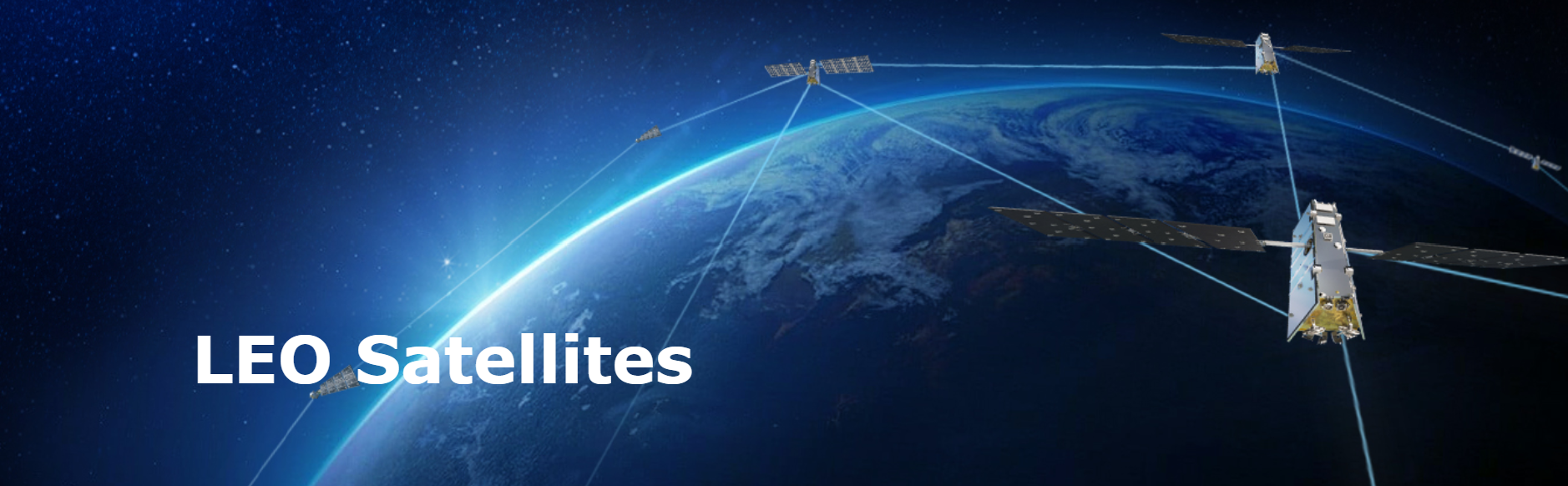
Image: A graphic produced by Telesat illustrating their Low Earth Orbit satellites. Credit: Telesat