By Les Mader, 30 September 2026
Comments made over the years here in the Broadsides Forum and by some individuals connected with Canadian Naval Review have led me to understand that the Royal Canadian Navy (RCN) has no intention or plan to procure amphibious vessels for use in the Arctic or anywhere else. It was further understood that the RCN feels that it has so many other concerns (personnel shortages, finite shipbuilding capability, limited funding, etc) that it could not be expected to waste time and energy looking at nice-to-haves like an amphibious capability.
Given these ardently and repeatedly expressed views, I was extremely startled to discover the interview at the attached link on YouTube that was given by Vice-Admiral Topshee some two months ago when he was still Commander of the RCN. (“Designing The Future Royal Canadian Navy with Vice-Admiral Angus Topshee,” https://www.youtube.com/watch?v=dujFNrIVMJI) During some six minutes (from 39:05-45:00), Vice-Admiral Topshee discusses the procurement of an Arctic amphibious ship in terms that seem to indicate that the RCN is actively exploring/pursuing such a vessel.
From his comments, I have understood the following:
• The RCN is currently at the conceptualization, identification and options analysis phase of the procurement process. This includes identifying whether other options exist to meet the key requirements.
• There is no formal capital equipment project yet.
• Therefore, no firm timeline has been identified.
• The envisioned vessel would be used to support the army and allow it to operate/intervene anywhere in the world, with the priority being in Canada’s Arctic.
• A primary purpose for the vessel would be to provide sustained Humanitarian Assistance/Disaster Relief throughout the year, even during the Arctic winter.
• The implications of such a vessel on the remainder of the Canadian Armed Forces (CAF) (army, air force and special operations forces) need to be determined.
• The combat amphibious approach envisioned is the ‘British one’ – landing where the enemy is not – rather than the ‘American one’ – being able to conduct opposed landings.
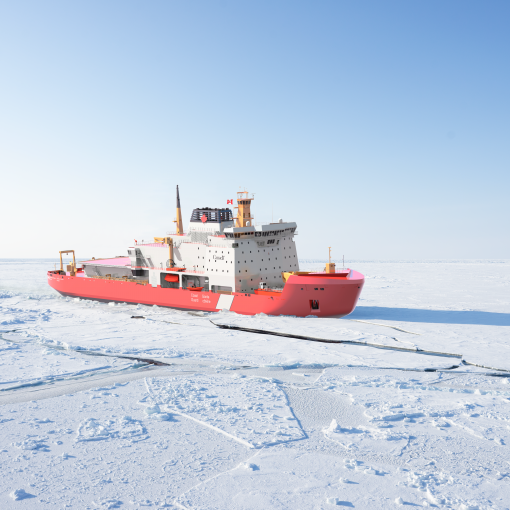
• From these requirements, the navy envisions a Polar Class 2 vessel that is similar to the Netherlands navy’s Rotterdam-class Landing Platform Dock (LPD), that has a strong air component including: helicopters and UAVs; and surface connectors (landing craft, floats, etc.) that can move supplies to shore.
• The supply requirement means that a well-deck-like capability is essential in order to be independent of the need for port infrastructure, but perhaps with side access in order to optimize the vessel’s stern for ice breaking.
• The vessel would have self-defence weaponry only.
• The ability of the Canada’s shipyards to build the vessel must still be determined. However, Vice-Admiral Topshee thinks that among the three relevant shipyards, the capacity likely exists.
From the above, I am left wondering where things are headed with the CAF’s force structure and whether we might see the government direct the CAF to procure at least one Polar Class 2 LPD, especially now that Vice-Admiral Topshee is the Vice Chief of the Defence Staff.
Time will tell.
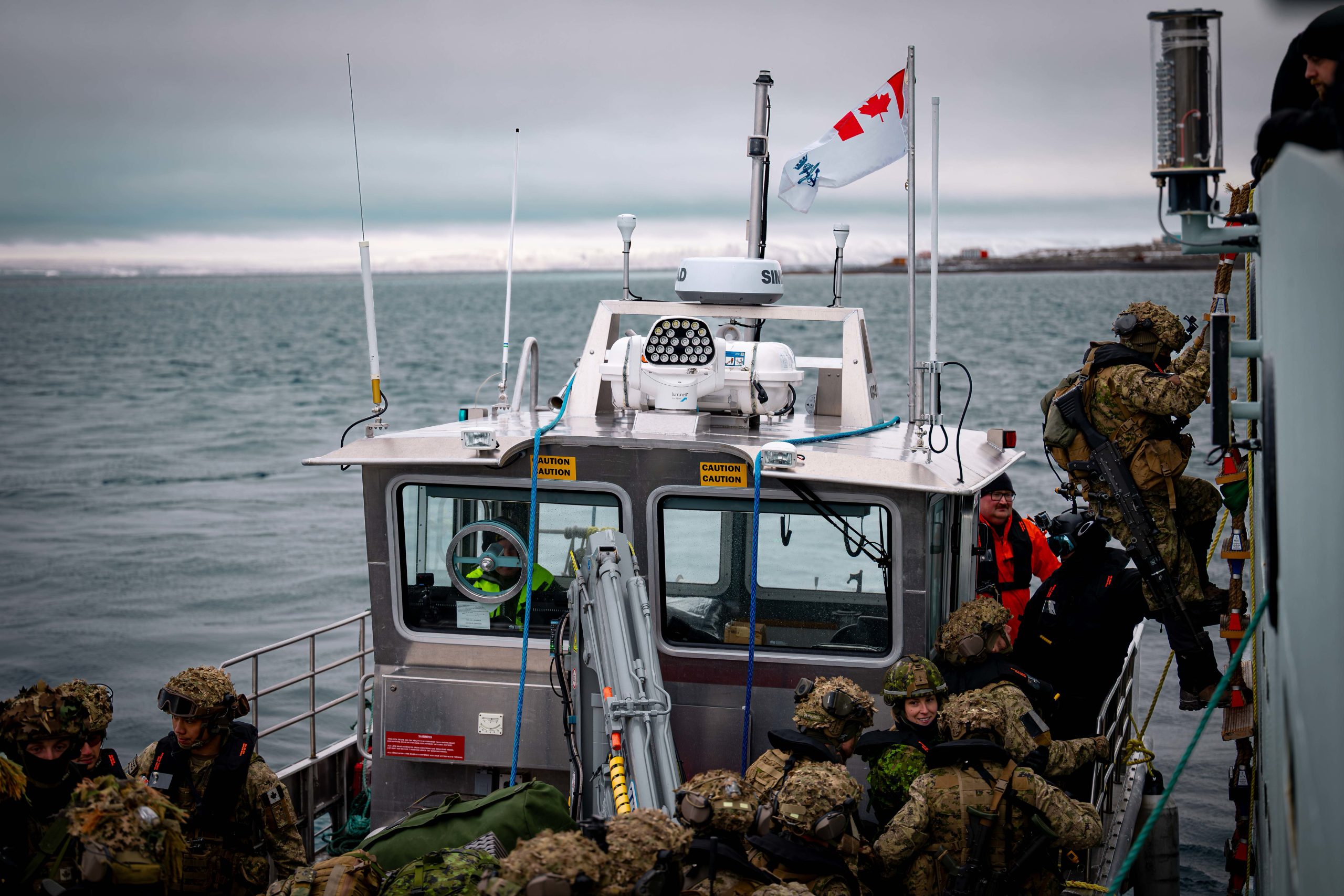
Image: Canadian Army Soldiers are transferred to HMCS ROBERT HAMPTON GRAY by a landing craft near Resolute Bay during Operation Nanook-NUNAKPUT on 8 September, 2026.