By Brian Santarpia, 3 July 2026
Jay Heisler’s article, “The Death of Naval Art?”, in the spring issue of CNR raises an important and timely concern about the declining visibility of naval experience in contemporary Canadian culture. His argument that the erosion of artistic representation risks severing the connection between the navy and the society it serves is both compelling and difficult to dismiss. If maritime power ultimately rests on public understanding and support, then the absence of a vibrant naval artistic tradition is more than aesthetic loss; it is a strategic liability.
Yet, as Heisler suggests, the issue is not simply one of cultural drift, but of institutional attention. In this regard, the Canadian Armed Forces already possess a mechanism that could help address the problem: the Canadian Forces Artists Program (CFAP), most recently highlighted in CANFORGEN 114/26. The program provides a structured means of embedding artists within military environments, enabling them to interpret and communicate service life to broader audiences. Properly leveraged, CFAP could serve as a bridge between the navy and the Canadian public, translating complex maritime realities into accessible and enduring forms.
However, the program appears to be a missed opportunity. It remains relatively unknown, even within defence circles, and its resourcing model raises concerns about accessibility and prioritization. The requirement that units may be asked to share the costs of artists’ travel and accommodation risks discouraging participation, particularly in an era of constrained budgets and competing operational demands. This effectively shifts what should be a strategic communications function onto already stretched units.
If the concerns outlined by Heisler are to be taken seriously, then CFAP warrants renewed attention. Expanding its visibility, centralizing its funding, and integrating it more deliberately into naval outreach and strategic communications efforts would represent a modest but meaningful step toward restoring the connection between Canada’s Navy and its citizens. Naval art is not a luxury; it is part of how a maritime country understands itself.
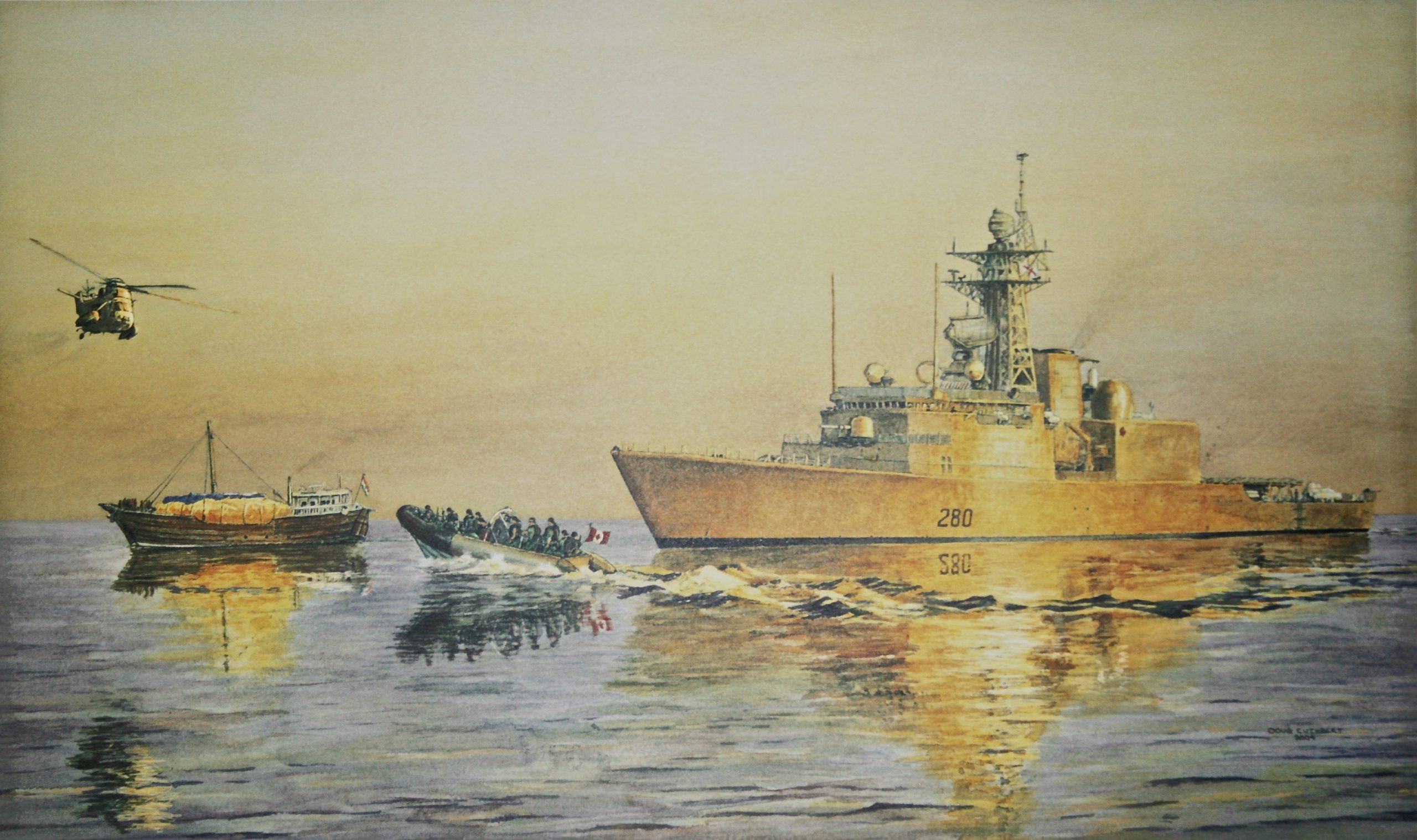
Image: Douglas Cuthbert's 2005 watercolour painting of HMCS Iroquois on counter-terrorism operations in the Gulf of Oman, as commissioned from him by the ship's crew for their Commanding Officer. Credit: Douglas Cuthbert