By Blair Shaw, 19 February 2026
The Inocea Group has confirmed it will acquire both Royal Fleet Auxiliary Wave-class oilers (Knight and Ruler) from the UK. (The Inocea Group currently owns MV Asterix.) The Wave-class sale has lead me to consider a hypothetical scenario in which I am putting to the forum for input and discussion.
The Question:
Is it possible that we could be looking at moving away from traditional government owned and operated auxiliary services such as the Royal Fleet Auxiliary in favour of an outsourced 3rd party supplier owned and operated by a commercial company for profit in order to service the fleet with stores?
This would be outside the normal STUFT (Ship Taken Up From Trade) operations and could take the form of an ad hoc charter, for example during large deployments or exercises or, like Asterix, long-term lease to a Navy/Government.
Pros:
I think we can speculate that the benefits of this would be; freeing up government budgets in some areas so that they can input funding elsewhere.
They would also have no requirement to refit, replace and/or maintain the ship coupled with crewing as it would become a commercial problem.
Cons:
Inability to be more flexible with deployments with ships' companies run along the same vein as commercial shipping companies, thus; time off requirements, benefits etc could be a difficult thing to manage unlike a government owned/military managed vessel.
I also see many in the Parliamentary Budget Office (PBO), for example, questioning the chartering agreements given that you spend a lot of money and have no asset to show.
Conclusion:
In my view we could possibly see the development of a new form of auxiliary service that works in a commercial way to supply fleets based along commercial lines.
There likely would be a few options available for their use such as long or short lease and chartering.
There are arguments on both sides for such things as budget, crewing and deployment among others.
I will state that this is just a hypothesis for consideration, this is not an actual statement of intent nor a model that the company will use. It is speculation on my part and I am not affiliated in any way with Inocea.
Source: https://truenorthstrategicreview.substack.com/p/inocea-group-to-acquire-uks-wave
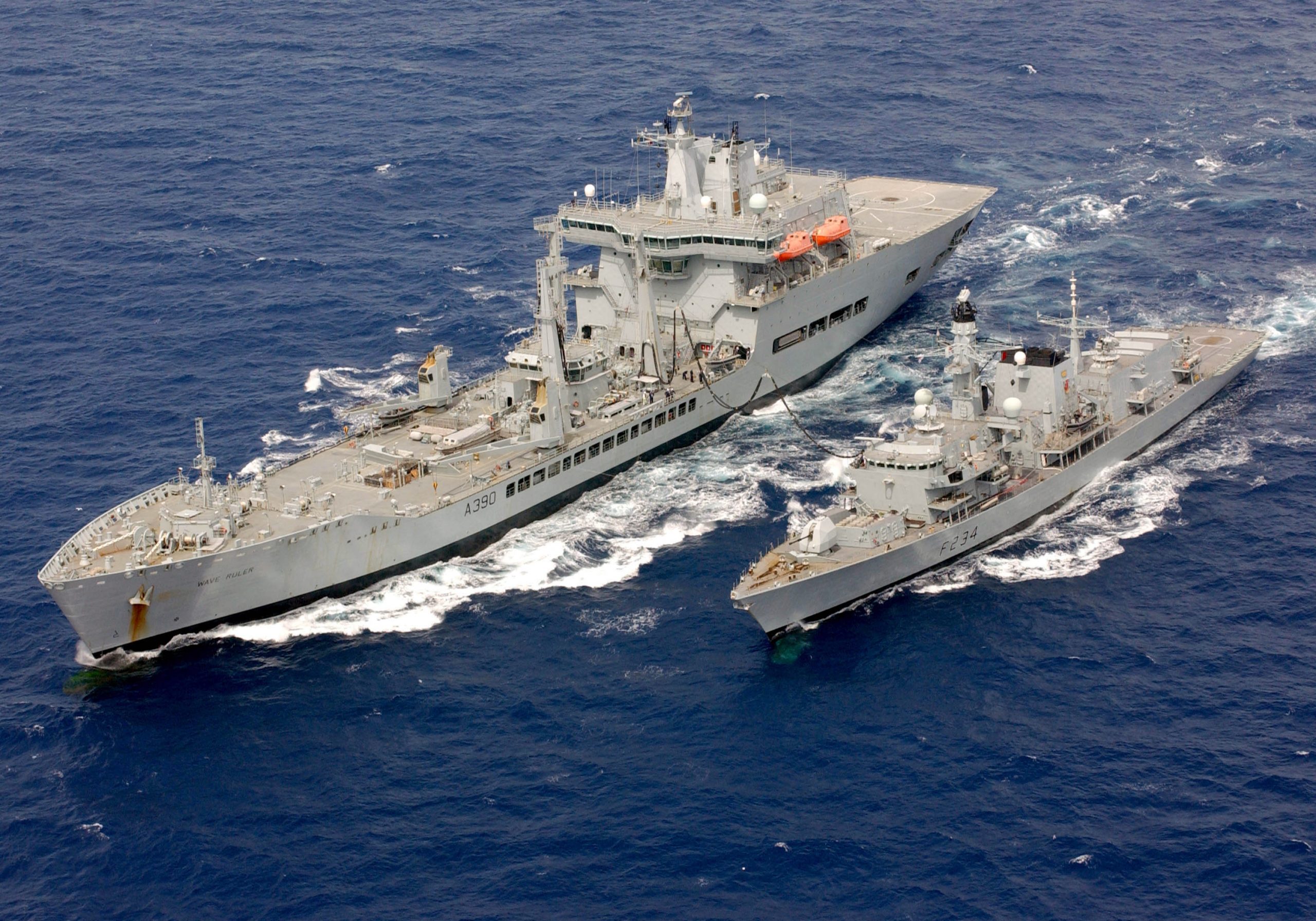
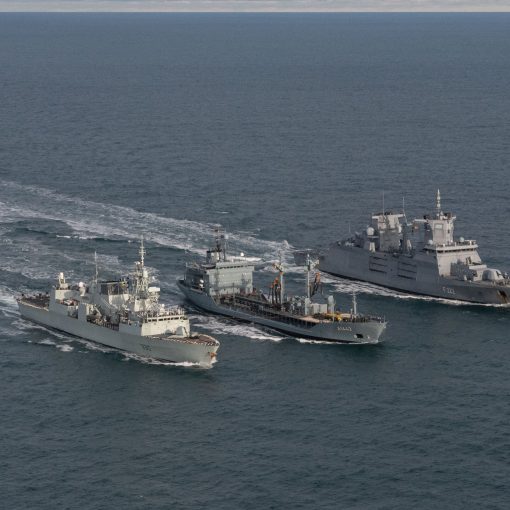
Image: The Portsmouth based Type 23 Frigate, HMS Iron Duke carrying out Replenishment at Sea (RAS) with RFA Wave Ruler in August 2006, whilst carrying out the duties of the Atlantic Patrol Task (North) ATP (N). Credit: LA (Phot) Shaun Preston, Ministry of Defence, Open Government License


One thought on “Inocea Group to Acquire UK’s RFA Wave-class Oilers”
First, MV Asterix has been mind wateringly expensive to lease and operate. Anything outside the narrow confines of the original charter costs the Government of Canada dearly, and that alone makes it highly doubtful the RCN would ever pursue an expanded or prolonged lease arrangement. This was never intended as a permanent solution. It was a stopgap.
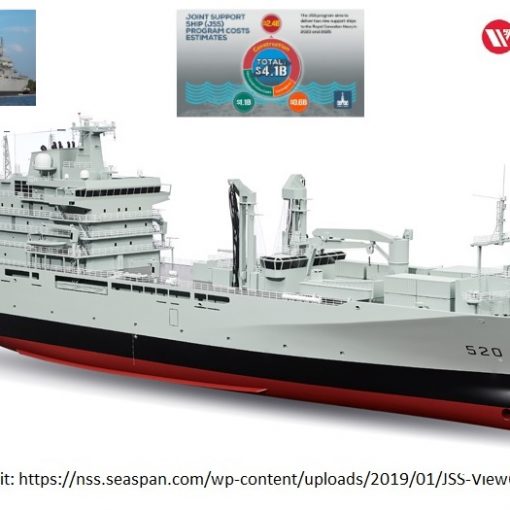
That matters, because Asterix was always expected to come off charter as soon as the first Joint Support Ship becomes operational. That has been the plan from the outset. Buying Asterix outright is estimated at roughly $700 million, and that figure still leaves Canada with a civilian standards ship that lacks the survivability, flexibility and sovereignty of a purpose-built naval auxiliary. At that price point, it simply makes more sense to build new.
Which brings us to the broader context. Inocea Group, which owns Asterix has now confirmed the acquisition of the UK’s former Royal Fleet Auxiliary Wave class oilers. That tells you exactly where this is headed. This isn’t about Canada abandoning government-owned auxiliaries; it’s about positioning a commercial fleet for charter to NATO and allied navies. From a business standpoint, that makes sense. From a Canadian naval standpoint, it does not replace sovereign capability.
There’s been a lot of speculation about whether navies might move toward outsourced, third party auxiliary services. On paper, the ‘pros’ are often cited as budget flexibility and offloading crewing and maintenance to the private sector. But the operational ‘cons’ are decisive. Commercial crews operate under commercial rules, insurance limits, employment law, crew rest requirements and risk tolerance that simply do not align with sustained naval operations. Flexibility drops, availability becomes conditional, and sovereign control evaporates.
Then there’s the unavoidable question the Parliamentary Budget Office would rightly ask: after spending billions in lease payments, what asset does Canada actually own? The answer is none. Leasing may work for niche or surge requirements, but it is a poor foundation for core fleet sustainment.
And now we need to put the crew shortage myth firmly to bed.
The idea that the RCN cannot crew additional ships is already outdated. Royal Canadian Navy recruiting is up by roughly 50% this year, driven in large part by the success of the Naval Experience Program, which is bringing hundreds of new sailors into uniform. On top of that, the RCN is now running RCN-specific basic training at three locations across Canada, deliberately removing the historical bottleneck between enrolment and trade training. That is what a navy does when it is preparing to crew a larger future fleet, not when it plans to outsource its backbone. There is still lots of work to do but the RCN has real gains now which will pay off in a few years.
There is also persistent water cooler talk of two additional JSS hulls beyond the current program. If that happens, it only reinforces the obvious conclusion: new, purpose-built auxiliaries are vastly superior to buying or leasing used ships with civilian compromises baked in. New hulls are designed from day one to Canadian standards, Canadian doctrine and Canadian operating environments, not retrofitted assumptions inherited from someone else’s navy and built overseas.
So let’s be honest about what Asterix represents. It was a bridge, not a destination. Efforts to keep it in service indefinitely are not about naval necessity, they are about maintaining a commercially attractive product for third-party charter. That may make sense for industry, but it does not dictate Canada’s force structure.
The RCN doesn’t need clever leasing models or recycled hulls. It needs owned, sovereign, deployable capability. New ships. Canadian crews. Long-term control.