By Brian Santarpia, 26 May 2026
The current debate over nuclear-powered submarines for the Royal Canadian Navy (RCN) is, in many respects, a debate past itself. Critics are correct to note the immense cost, institutional disruption, and generational timelines associated with acquiring and sustaining a nuclear submarine capability. Proponents, meanwhile, often struggle to articulate a mission set that clearly distinguishes nuclear boats from advanced conventional alternatives. The result is a conversation focused on platforms rather than purpose.
What is being missed is the most consequential mission for Canadian submarines and the strategic logic that underpins it.
The central threat to Canadian sovereignty in the maritime domain is not, in the first instance, territorial encroachment in the Arctic or grey-zone activity along the coasts. It is the possibility that the United States loses confidence in Canada’s ability to prevent its air and maritime approaches from being used as avenues of attack against the continental United States. In such a scenario, the risk is not simply military, it is political. If Washington judges that Canada cannot secure its own approaches, it will act to secure them itself. History suggests that, when faced with existential threats, the United States will not defer to allied sensitivities.
The most dangerous manifestation of this problem lies in the threat posed by guided-missile submarines (SSGNs) operating in the open Atlantic or Pacific approaches to North America. These platforms are inherently difficult to detect and track, particularly when operating in deep ocean environments beyond the reach of fixed surveillance systems. Armed with long-range land-attack cruise missiles, they offer a hostile power the ability to strike North American targets with minimal warning time.
This is not a hypothetical concern. It is a logical extension of how peer adversaries think about deterrence and escalation management. A covert, survivable and rapidly employable strike option based offshore of North America complicates defensive planning and compresses decision timelines in a crisis. It is precisely the kind of capability that would be employed to hold the continent at risk.
The operational problem this creates for Canada is acute. Surveillance systems, including fixed seabed arrays, maritime patrol aircraft and surface combatants, can contribute to detection and tracking. But detection is not denial. To credibly prevent an SSGN from using Canadian maritime approaches as a launch platform, there must be a persistent, proximate and lethal capability to hold that submarine at risk. Only another submarine, armed with heavy-weight torpedoes and positioned close enough to prosecute at all times during a crisis, can provide that credible capability.
This is where the limitations of conventional submarines become decisive. Modern diesel-electric boats are formidable platforms in littoral environments. They are quiet, difficult to detect and well-suited to choke point operations. But in the open ocean, against a nuclear-powered adversary, they face a fundamental constraint: speed and endurance. An SSGN can reposition rapidly, outrun a trailing conventional submarine, and exploit the vastness of the Atlantic or Pacific to break contact.
The requirement, therefore, is not merely to find an adversary submarine, but to remain in a position to threaten it continuously. That is a very different operational problem that strongly favours nuclear propulsion.
A similar misunderstanding is evident in arguments about Arctic operations. It is often asserted that AIP-equipped conventional submarines can operate under ice for extended periods, reducing the need for nuclear boats. This is true in a narrow technical sense but misses the operational context. A hostile submarine seeking to hold North America at risk would not choose the Arctic as its primary operating area when the open oceans offer greater flexibility and survivability. If it did operate under ice, however, the challenges of prosecution would intensify.
A submarine tasked with countering such a threat would need not only endurance, but the ability to surface through thick ice to communicate, re-task and integrate into a broader operational picture. This requires size, structural strength and reserve buoyancy, which are characteristics associated with nuclear submarines, not conventional ones.
None of this is to suggest that Canada must acquire nuclear submarines. On the contrary, the timeline and complexity associated with doing so may render it impractical, particularly if it results in a prolonged gap in Canada’s submarine capability altogether. A submarine force deferred is a submarine force denied.
But it does mean that the case against nuclear submarines has been too casually made. The issue is not that Canada has no use for them; it is that Canada may not be able to field them in time and at sufficient scale to meet its needs.
The more important conclusion is that Canada’s requirement for an effective submarine capability is more urgent and more strategically significant than is commonly appreciated. If nuclear submarines are not feasible, then the RCN and the government of Canada must develop a comprehensive operational concept that compensates for the limitations of conventional boats. This will require deeper integration with allied forces, more robust surveillance architectures and a clear understanding of how Canadian submarines contribute to continental defence.
The debate, in other words, should shift from whether nuclear submarines are useful to how Canada ensures that its maritime approaches cannot be used to threaten North America. On that question, the stakes are not simply operational. They go to the heart of Canadian sovereignty itself.
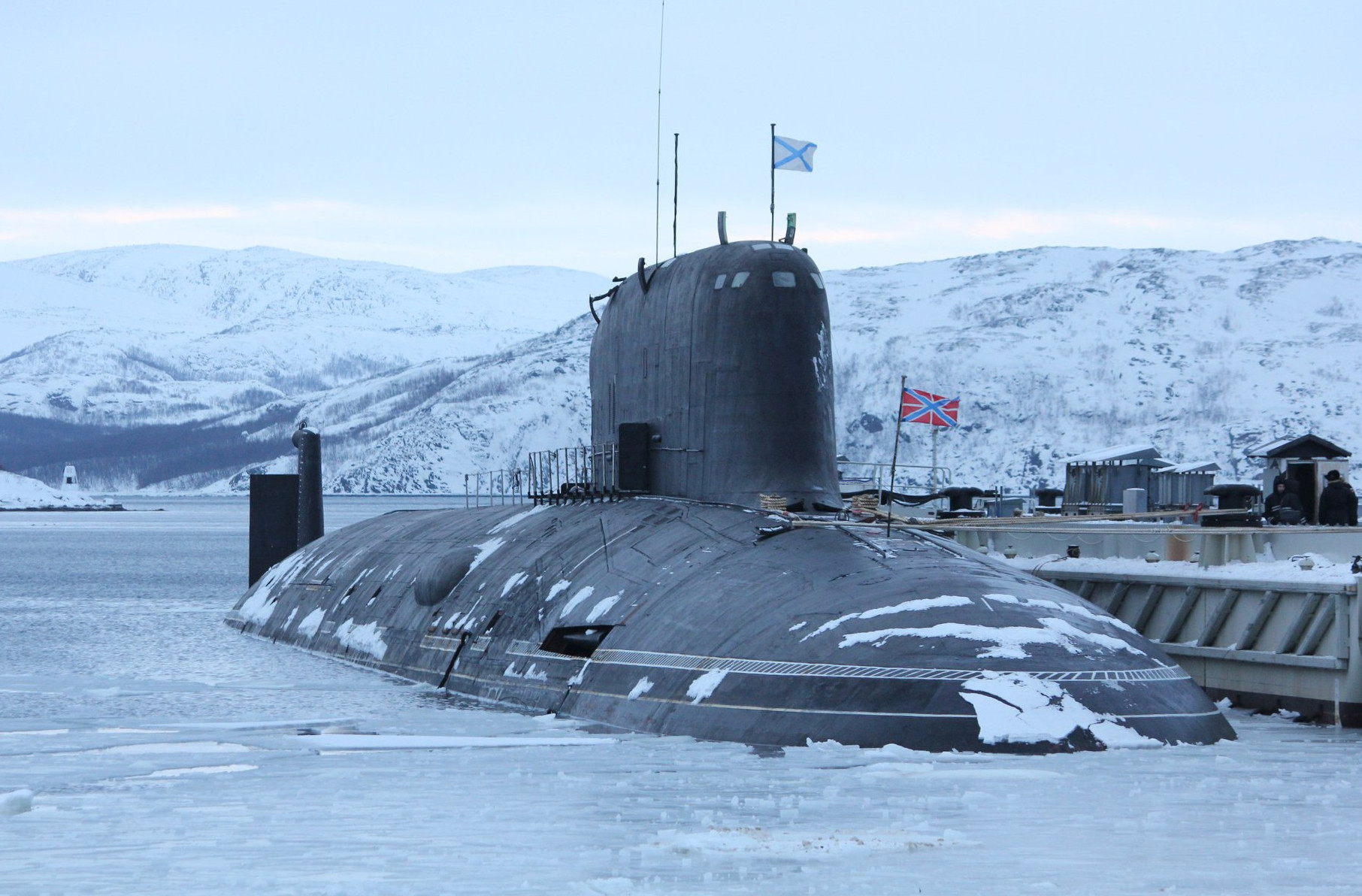
Image: The Russian Yasen-class guided-missile submarine K-560 Severodvinsk seen in Murmansk, 2018. Credit: Russian Ministry of Defence



5 thoughts on “The Point We Are Missing on Nuclear Submarines”
Hello Brian. Thank you for keeping the “Canadian SSN” in the far-reaching picture, however dim that light may be. Canada will be procuring an advanced AIP Submarine either from South Korea’s Hanwha Ocean (KSS III) or Germany’s TKMS 212CD late next month (I believe the South Korean bid will prevail). For the time-being, a Canadian SSN option is and has always been, on the back-burner for several decades now. It is very evident that the SSN option will be un-attainable for several reasons. First and foremost, the nuclear technology transfer from the US will never happen. The US SSN technology was asked for and denied by the US for several decades from both political parties (The AUKUS agreement not with-standing). The UK and France will never help Canada to acquire this technology. Our only hope of acquiring a Canadian SSN capability in the long term is to develop our own Small Modular Reactor/Micro Modular Reactor (SMR/MMR) within Canada. Something that is feasible and could be accomplished in the near-to-long term. A Canadian SSN fleet of between 8-10 of these boats could be acquired each with enriched-uranium SMR/MMR core reactors. This fleet however will be eye-wateringly expensive. We are probably looking at overall costs of between $100-150 Billion CAD (not including life-cycle costs). The better question to ask is: will ‘Jean Guy Hockey Stick’-Public be on board with this? Another question to ask is: will we have the political gumption to see this through? In any case, you and I will probably not be around to see it!
Sorry Brian. I meant to say-“This fleet however will be eye-wateringly expensive”-! [Moderator: the original post has been revised to reflect this.]
Good Afternoon David
I think you also miss one key player here in your statement of nuclear technology transfer and that is France.
If the US & UK are unwilling to transfer technology to Canada, there’s nothing stopping France. Indeed France has several times told the US to basically go pound salt and there’s nothing they can do.
That said, the French reactors are very different to US & UK ones in that they are LEU not HEU which creates its own issues namely refuelling every 7 or so years whereas British and American boats can go their entire lives without a refuel.
While I agree with many of the points raised in the article here there are some points that many on both sides forget to include in the debate about SSNs.
Firstly the operational capability of them far exceeds even advanced AIP boats in that SSNs can run high speed for indefinite periods making pinning them down harder. They also tend to have far better sonars and systems than AIP or conventional boats simply due to the power generation for the hotel load being such they can support larger systems.
If a country like Russia wants to strike into Canada or northern USA, the attack in my opinion, likely even from a SSGN, will come from the north, it is the least guarded, shortest route and hardest environment to track. Tracking submarines under ice is not an easy thing to do indeed a MPA isn’t going to be doing it very well nor are surface ships so your only option is another submarine.
Canada does not, and even with either the KSIII or T212CD will not, have a submarine capable of interdiction of a SSN/GN simply due to the fact the SSN/GN can accept or decline engagement at will.
I have been on nuclear, AIP and conventional boats and they all have their place but for open ocean long-range and heavy under-ice operations you’re not beating a nuclear boat unless you have one yourself.
That said I do not believe that the SSN is the way forward for Canada. We have better options on the table that fit within our budget and capability. The sums required for SSN operations would be eye watering to the point the Canadian Parliament would probably have a collective stroke about it. That and the time frames — we are talking a good two decades to get a first boat in the water deal and frankly we do not have the time for that.
SMR technology while great I don’t think will be the solution either, other navies have tried this — the Soviets with Project 651E and the French with the Rubis class (basically an Agosta 90B with a reactor shoehorned inside) both are not good boats (Yes i’ve been to sea on the Rubis and have run against her).
What we have as the alternative are two very good AIP boats that cover our needs and will perform well. This is the safe option and one that we should take.
Thank you Blair for the clear and helpful comments.
Ubique,
Les