By Al Vigier, 18 September 2026
Canada has ordered P-8A Poseidons and is negotiating for GlobalEyes. Both should improve what our navy can see. The useful question is how much better the maritime picture will become once the two fleets are working alongside ships, satellites and allied systems.
Ottawa chose the Poseidon in November 2023, saying it was the only available aircraft that met all the operational requirements. The agreement covers 14 aircraft, with options for two more. The estimated $10.4-billion investment includes equipment, training, infrastructure and weapons. Full operational capability was forecast for 2033. Whatever one thinks of the procurement decision, the government explained it in terms of an established requirement.
The GlobalEye decision followed a different course. In May 2026, the government announced negotiations with Saab for six aircraft. On 9 September, CBC reported that the air force had not yet set out its technical and operational needs for potential bidders when the announcement was made. Its most recent assessment reportedly found that GlobalEye met only part of those needs.
For this forum, I think the more useful debate is about what happens after delivery. The P-8A is a maritime patrol aircraft with an anti-submarine warfare role. GlobalEye is an airborne early warning and control system that can also monitor activity at sea. Their roles differ, but both can contribute information about the same waters. That overlap should be useful to the navy. We should ask how it will be used.
Canada already has maritime security operations centres where departments share information. The new fleets must work with existing commands and information-sharing arrangements. A House of Commons defence committee report also recorded the Auditor General's concerns about information sharing, decision-making and accountability in those centres. The audit concerned Arctic waters surveillance, but the questions it raised are relevant to these purchases.
The procurement announcements leave a more specific question unanswered: what standard will the combined information have to meet, and who is responsible for making sure it does? There may be detailed work under way inside DND but a public explanation of the approach would help us judge what these investments are meant to deliver.
A task group commander needs to know whether a report from a Poseidon and one from a GlobalEye refer to the same vessel. The picture also needs to incorporate information from frigates, satellites and allies. How old is each observation? How reliable is the identification? Who resolves conflicting reports? Those are practical questions about whether the information can support a decision at sea.
Endurance belongs in that discussion. The P-8A can refuel in flight using a boom. The September reporting identified GlobalEye's lack of in-flight refuelling in its current configuration as a concern for the Canadian military. Over Canada's maritime approaches, the value of that capability depends on how much useful time it adds where surveillance is needed.
Saab advertises 12 hours of endurance for GlobalEye. That is a substantial flight, but it does not tell us how much time an aircraft can spend over a particular area. Transit, basing, maintenance, crew availability and competing missions all matter. So would the availability of tankers. Six aircraft in an inventory will not mean six aircraft continuously watching the water.
In August, I argued in these pages that the River-class debate needed more attention to software, because the value of a warship depends on keeping its combat systems current. The aircraft purchases raise a related question. Canada needs to pay for the continuing work that turns observations from different platforms into information a commander can trust.
I would ask DND for three things while the GlobalEye deal is being negotiated.
First, explain the shared requirement. Set standards for the areas to be covered, how often observations must be refreshed and the quality of the resulting tracks. Make the contribution expected from each fleet clear, alongside its other duties. The navy should have a direct role in setting those standards. Counting sorties alone will not tell us whether commanders are getting the information they need.
Second, explain the endurance case. Compare realistic coverage with and without in-flight refuelling, including the cost and availability of tanker support. The public does not need patrol routes or classified performance figures to understand the trade-offs. It should be possible to explain whether a modification would materially improve coverage, what it would cost and how it would affect delivery.
Third, identify the authority responsible for integrating the two fleets into the maritime picture. That responsibility could sit within an existing command. Whoever holds it needs a budget, an agreed testing programme and the authority to resolve problems that cross fleet boundaries. It should be clear who answers when both aircraft meet their individual specifications but the combined information falls short of what the navy needs.
These are questions to settle before the fleets enter service. Integration takes people, testing and sustained funding, and it will need attention as sensors and software change. The aircraft purchase is only the beginning of that obligation.
The air force will fly these aircraft. The navy will depend on the information they provide for decades. We should be able to explain how that information will fit together before celebrating how much more each aircraft can see.
Al Vigier is the CEO of Caseway, an AI company that co-creates products with large enterprises and shares the revenue with them. He spent seven years in the Canadian Army, where he was shot.
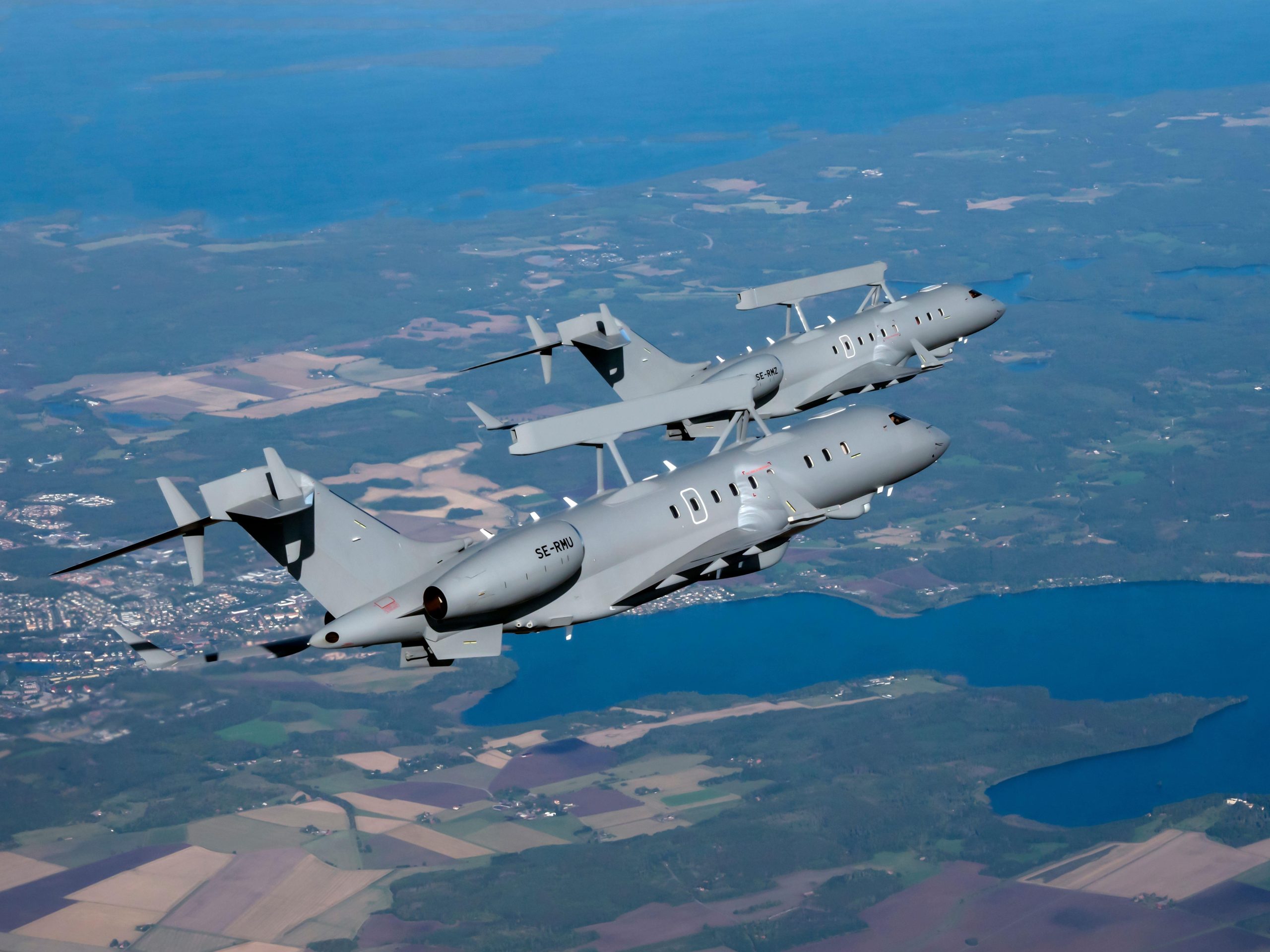
Image: An undated photo of two Saab GlobalEye aircraft. Credit: Saab


One thought on “Two fleets need one maritime picture”
Al Vigier raises a legitimate issue, but then manages to frame it as though the Canadian Armed Forces has just discovered that aircraft, ships, satellites and allies need to exchange tactical information. They do. They have been doing so for decades. The real question surrounding GlobalEye is not whether Canada understands the concept of a common maritime picture. It is whether the government selected a preferred aircraft before the RCAF had properly defined what the aircraft needed to do.
The Royal Canadian Navy already has a Recognized Maritime Picture, and DND itself published an entire article on its evolution in 2025. GCCS Maritime correlates and merges contact information from multiple sources into a Common Operating Picture, Canadian ships exchange that information over national and international networks, and GCCS M has been interfaced with CMS 330 to permit bidirectional exchange of track data. This is not some theoretical capability waiting for the arrival of the P8 and GlobalEye. It is current naval command and control architecture.
The CAF also has an established Joint Tactical Data Link organization specifically responsible for this problem. DND policy describes tactical data links as providing the continuous near real time exchange of air, surface, subsurface, land and space tracks and states explicitly that these systems provide commanders with an overall view of the operational environment. The same organization is responsible for interoperability standards, testing, network design and working with NATO and American tactical data link standards. In other words, the questions about track correlation, identification, conflicting reports and information exchange that Vigier poses are not unanswered questions. They are fundamental functions of modern military command and control.
Nor was the P8 bought simply because it has a good radar and carries sonobuoys. Canada specifically identified C4ISR, interoperability and the ability to operate with joint, interagency and multinational partners as requirements. The government stated when the aircraft was selected that it would operate seamlessly with allies and noted that every other Five Eyes country operates the type. P8s already exchange tactical information with naval task groups through systems such as Link 16.
That distinction matters because the article also leans heavily on the Auditor General’s criticism of the Marine Security Operations Centres. Those findings were real and should not be dismissed. The Auditor General found deficiencies in interdepartmental information sharing and governance in Arctic maritime domain awareness. But an MSOC combining Coast Guard, Transport Canada, RCMP, CBSA and DND information for national maritime security is not the same thing as the tactical combat picture being maintained by a naval task group. Treating the two as the same problem makes the issue appear far more complicated than it is.
There is also a slightly curious demand that DND publicly spell out standards for coverage, refresh rates, track quality and the performance expected from each platform. Some broad explanation is certainly reasonable. Detailed requirements governing detection, track quality, identification confidence, update rates and military communications, however, rapidly wander into operational information that governments normally have very good reasons not to publish. We do not need to provide a potential adversary with a technical user’s manual for Canada’s surveillance network merely to demonstrate that somebody inside DND has thought about track management.
Where Vigier does land on something important is GlobalEye procurement itself. The concern raised by recent reporting is considerably more serious than his “two fleets, one picture” thesis. Canada entered negotiations with Saab as the preferred supplier before the RCAF had apparently finished communicating its detailed operational requirements. Subsequent assessments reportedly identified issues involving radar coverage, communications, crew stations, NORAD connectivity and air to air refuelling. The government itself originally described the Saab selection only as a preferred supplier discussion, not a completed procurement commitment.
That is where the scrutiny belongs. Did Canada define the military requirement first and select the aircraft that best satisfied it, or did Canada select an industrially attractive aircraft first and then begin modifying the requirement and aircraft until the two met somewhere in the middle? That is a serious procurement question.
But suggesting that the Navy is waiting for somebody to decide how a P8 report, a ship’s radar track, allied information and another airborne sensor get combined into a tactical picture is several decades late. The RCN has been building, correlating and distributing recognized maritime pictures since people were feeding LINK 11 tracks into systems that would now belong in a museum.
The P8 and a future AEW&C aircraft do not require Canada to invent “one maritime picture.” They need to plug into the one the CAF already fights from. And before GlobalEye plugs into anything, Ottawa should first demonstrate that it is buying the aircraft the RCAF actually asked for.