By Mike Peasgood, 14 November 2026
The Royal Canadian Navy (RCN) faces an existential problem. The character of naval warfare is changing faster than Canada can buy and field the systems needed to keep its ships relevant and survivable.
In an August 2026 RCN account, Commander Phillip Durand, one of the navy’s experts in maritime counter-drone operations, emphasized the speed of the change. According to him, “[e]ven the observations I share today may be outdated within weeks because the technology is evolving so quickly.”1 He expects the operational battle space to become saturated with aerial, surface and subsurface uncrewed systems within the next few years.
These systems create an asymmetric challenge. Cheap and expendable aircraft and vessels can be fielded in large numbers, while their small size, unconventional materials and low electromagnetic signatures make them difficult to detect, classify and distinguish from routine activity. Swarms can exploit gaps in layered defence and exhaust limited magazines.
These new technologies threaten the RCN fleet’s combat relevance. Canada could continue operating sophisticated and expensive ships while their military value erodes around them. A warship that cannot find, classify and affordably defeat large numbers of autonomous threats may remain seaworthy while becoming increasingly vulnerable. The RCN must adapt its sensors, defensive systems, networks, tactics and training at the pace of the threat. That pace is measured in weeks and months. Canada’s purchasing system usually works in years. Canada needs a naval purchasing pathway that can turn an operational problem into a paid field trial in months instead of years.
Canadian companies are developing autonomous vessels, artificial intelligence, resilient navigation, sensors, electronic warfare tools and new propulsion systems. Naval personnel are looking for ways to use these technologies. The missing connection is often a timely purchase contract that allows a promising system to be tested in sustained operations.
Start-up innovators have systems ready for testing. The RCN has operational problems it wants to solve. But once a purchase is required, both sides enter a process whose timing they largely cannot control.
…
A naval sponsor may know exactly what it wants to learn from a trial. A start-up may have working equipment and the engineering team required to support it. Months of productive engagement can still end at the same point: the navy lacks a suitable purchase mechanism, and the company cannot keep supplying equipment and engineering support without a contract. Commander Durand identifies the procurement challenge as the limiting factor in deploying new technology. He notes that “[w]e often produce impressive prototypes, but without a pathway to procurement. If we can’t buy the system, field it and put it in sailors’ hands, then we haven’t created real capability.”3
The challenge is that the procurement system is driven by risk documentation and bureaucratic compliance, requirements that settle on a solution too early, limited contact between end users and industry, a weak route from innovation programs into fleet capability, and training or policy work that starts too late. The result is the familiar ‘valley of death’ between a successful prototype and an operational purchase.
For the navy, the cost is lost learning, and the potential loss of a valuable technology supplier. For a start-up, the cost may be survival. Venture-backed technology companies are often financed in increments that provide 12 to 18 months of runway. Before that capital is exhausted, the company must reach milestones that justify another investment round – typically technical progress and credible evidence that customers will buy its product. Defence procurement operates on a different clock. The interval between selecting a company for a project and putting a signed contract in place can extend for 18 to 24 months. During that delay, customer-specific development loses momentum, engineering teams are reassigned or reduced, and investors may conclude that government interest will not translate into revenue. A promising technology can therefore be validated by Canadian defence users but fail commercially before Canada is ready to purchase it. The company may close, pivot away from defence, seek foreign customers or move into a market with a faster route to contract. If Canada is serious about acquiring leading-edge technology, its procurement system must operate at the pace of technology development and venture financing.
…
To read the rest of this free access article, go to https://www.navalreview.ca/wp-content/uploads/public/vol22num2/cnr_vol22_2_Peasgood.pdf
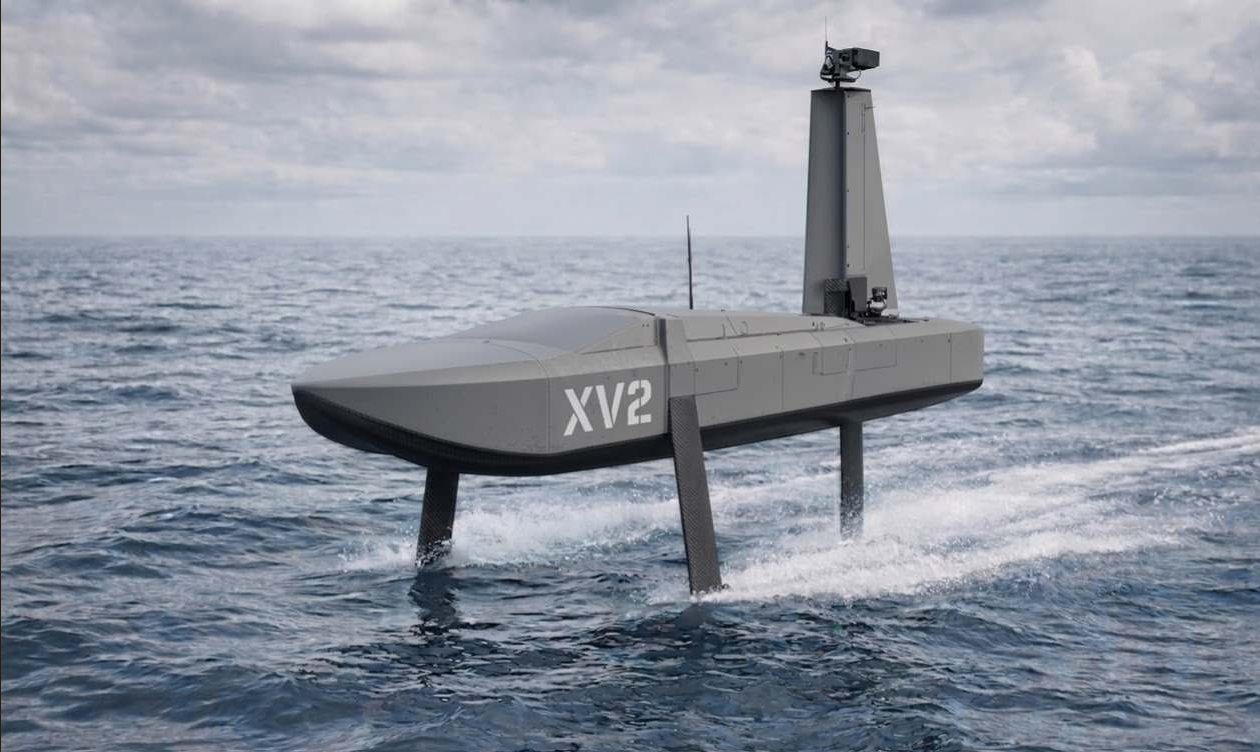
Image: A computer-generated graphic of a hydrofoil uncrewed vehicle proposed by the author's company. Credit: ENVGO