

By Les Mader, 14 October 2026
At the attached YouTube video, Scott Taylor of Esprit de Corps magazine argues for the RCN's continued use of the Asterix resupply vessel even when the Protecteur-class AORs enter service. He states that: "Asterix delivers 95% of the design capability of a full military support vessel, but at only 20% of the cost and in 10% of the time required to build one."
I do not have a firm opinion on the idea of retaining Asterix, but do know the following:
- The RCN needs at least three AORs to cater for two fleets, readiness rotation, ship maintenance, and ship refits.
- It seems extremely unlikely that we will see any more Protecteur-class AORs any time soon.
- Asterix would be able to meet some part of the AOR shortfall.
- Asterix is not built to military standards and thus is at greater risk if sent into danger.
- Using mixed military and civilian crews on non-military AORs is done by some NATO navies - for example, USN and RN.
I am curious what the Forum's views on the topic are.
CANADIAN ARMED FORCES: Why they need to Retain the CSS Asterix
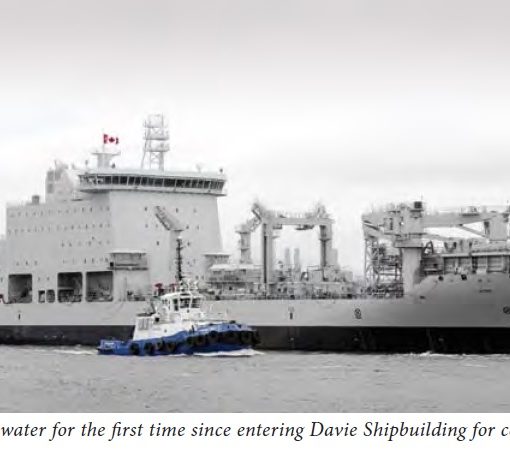
Image: MV Asterix as seen in Halifax on 3 June 2022. Credit: Timothy Choi



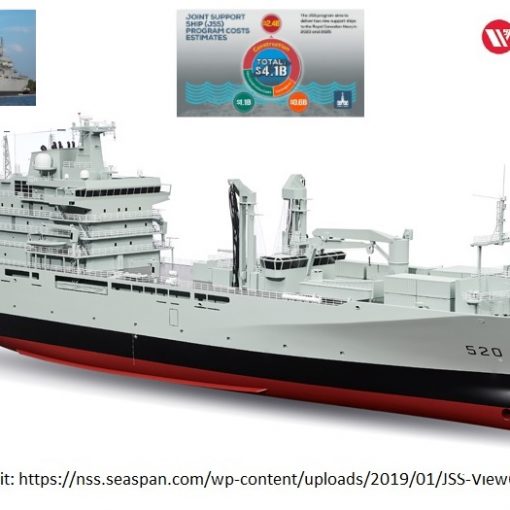
20 thoughts on “The Future of Asterix”
Les, I agree that Canada needs greater replenishment capacity to support two fleets through deployments, maintenance and refits. However, that does not automatically establish a case for retaining Asterix. The claim that it delivers “95% of the design capability” at “20% of the cost” and in “10% of the time” needs considerably more scrutiny. Capability measured against which requirements, assessed by whom, and with what weight given to survivability?
Federal Fleet has a very effective public relations department that consistently portrays Asterix in the most favourable possible light. In my view, that percentage formula embellishes a much more complicated comparison. Now the company is pushing the retain Asterix narrative, and we should recognise the substantial commercial interest behind it.
The original merchant vessel was reportedly acquired for approximately $20 million, with conversion commonly put at around $200 million, although the latter figure needs a firm source before being treated as an audited cost. Against those figures stands the government’s published $1.2 billion service contract value, including taxes, covering the arrangement of up to ten years. Canada pays for access to the service while Federal Fleet retains ownership of the ship. It is hardly surprising that the company wants that arrangement to continue.
Purchasing Asterix would require another substantial payment. The Parliamentary Budget Officer’s 2020 analysis estimated a purchase after the initial five year contract at $576 million before tax, or $633 million including tax. That is the basis for a roughly $600 million historical buyout estimate, rather than a confirmed current asking price. The service payments cover crews, maintenance, financing and other expenses, so the entire contract cannot be called profit. Nevertheless, this is a major revenue stream, and continued employment of the vessel plainly serves Federal Fleet’s business interests.
The “20% of the cost” comparison therefore needs to specify exactly what is included. A merchant hull’s conversion price, a contract for years of replenishment services and a naval shipbuilding programme cover different expenditures and deliver different assets. Similarly, converting an existing vessel can restore a capability faster than building a new naval support ship, but the “10% of the time” claim needs clearly defined starting and finishing points. Asterix’s timely arrival deserves credit without turning it into proof of equivalent capability.
DND, the department employing Asterix, states that it cannot perform the full range of military activities required by the RCN. Its explanation identifies dual shaft redundancy, combat management systems, defensive weapons, electronic support measures and protection against chemical, biological, radiological and nuclear threats among the JSS advantages. These affect where a support ship can operate, its integration with a task group and its ability to survive damage. Treating those differences as an inconsequential remaining five per cent requires evidence.
The civilian crewing argument does not resolve those differences. Civilian mariners can operate replenishment vessels professionally, but the employment model alone establishes nothing about a particular ship’s protective systems, redundancy or operational limitations. Canada’s procurement description specifically identifies Asterix’s contracted service as supporting noncombat domestic and international operations.
Asterix has provided valuable service, and its crews deserve recognition. My position remains that Canada should pursue a third purpose built JSS, bring the two Protecteur class ships into effective service and conclude the commercial arrangement when the transitional requirement ends. The difficulty of securing a third JSS is a reason to press the government for a credible plan. Federal Fleet is entitled to market its vessel enthusiastically, but its success in doing so should not determine the future composition of the Canadian fleet.
Good afternoon Ted,
Thank you for taking the time to provide such a detailed reply. You have confirmed much of what I already thought.
I guess the key question now is what should DND propose to the government as a credible plan to provide at least three AORs.
Ubique,
Les
Hello Les. The answer to your last question “what should DND propose to the government as a credible plan to provide at least three AORs”? The answer is quite simple. Have Seaspan in Vancouver build one more and/or possibly a fourth Protecteur Class JSS AORs (JSS 3/4). They already have the expertise, skills and people with JSS 1 & 2. So why not? Federal Fleet and Davie Shipyard have done an outstanding job with MV Astrix as an interim AOR for the RCN and should be commended for all their efforts but it is time now for the RCN and Canadian Government to see this JSS Fleet strength through to its logical conclusion in my opinion. Perhaps if (and only if) the “conceptualized idea” for an Arctic Mobile Base (AMB) Polar Class 2 Fleet envisioned by the Vice-CDS (Admiral Topshee) could be realized ($$-in a world of 5% GDP) by the Canadian Government for the CAF and RCN, Davie Shipyard and Seaspan could again collaborate on that fleet as well. What say you & Ted?
I agree that Canada should pursue a third, and even a fourth JSS. However I would point out that the choice is not between Asterix and a third JSS, and will not be for many years. The choice is either two JSS or two JSS + Asterix. Indeed, at this point it is still between Asterix and nothing.
Notwithstanding Seaspan’s self-promotion, every project they have started has been delivered well behind schedule. After multiple previous delays, HMCS Protecteur was launched around New Year’s in the dying days of the Trudeau government. Why did they do it over Christmas? Because they were at risk of missing yet another previously announced milestone – launch in 2024. At that time, they were still talking about delivery to the navy in about a year. Well we are nearly two years on, and the ship hasn’t gone out for sea trials. Best case – we are still two years away from having even one JSS actually in service. And that’s assuming that the repeated delays are not a sign of major problems in design or build quality, and that the navy needs less time testing the ship and working up the crew than they did for Harry DeWolf.
Meanwhile, Seaspan has been earmarked for 16 coast guard ships, including Imnaryuaq, the huge icebreaker whose keel laying ceremony apparently occurred yesterday. Even with major improvements to build speed, they will not complete that work before 2040. So Canada cannot obtain a third JSS – from the only shipbuilder qualified to build them – before the mid 2040s without shorting the Coast Guard. Okay, say we accept shorting the Coast Guard. JSS 3 would still be entering the production queue after Imnaryuaq. Imnaryuaq is unlikely to be delivered before 2032, so when would JSS 3 be ready? Probably about 2035.
For the next decade then, Canada doesn’t really have any choice. We either go with Asterix or we go without sustainment.
Agreed, Michael. This is a shipyard capacity issue. The RCN can define whatever requirements it likes, but I see no way to sequence a 3rd or 4th AOR until the other programs have been completed (or even partially completed). All the major yards look to be too busy to take on more large builds. Sending the modified-by-Canada design back to Germany for construction would fly in the face of NSS and would likely be impractical given the Bundesmarine’s own re-capitalization drive.
If Asterix is to be retained as the 75-80% solution, I wonder what leverage the Government of Canada has in knocking down the price to more reasonable levels. (A used car is a used car, and this one has lots of miles on the odometer already.) Second, if the RCN wins the argument that the vessel must undergo modification to install a combat system and defensive weapons, how quickly and easily can this be done? Has it been costed out, and have any low-level discussions with Davie taken place?
Bill, shipyard capacity is a legitimate concern, but overseas construction should not be dismissed simply because of the NSS. Canada is already using Davie’s Finnish yard to construct the hull of its new polar icebreaker, with work also taking place in Lévis. That does not guarantee an available berth for another AOR, but it demonstrates that foreign construction can form part of an NSS project. The options deserve investigation.
I would also challenge the “75 to 80 per cent solution” description. What requirements are being measured, and who has validated that percentage? National Defence has stated that Asterix cannot conduct the full spectrum of military activities required by the RCN and that its long term survivability and armament requirements require a purpose built warship.
The issue goes well beyond installing weapons and defensive systems. It includes the ship’s actual compartmentation for damage control, a CBRN citadel, protected ammunition storage and redundant propulsion. These are fundamental features of the ship’s design. Adding a gun or a missile defence system does not provide them, and attempting to retrofit those features into an existing commercial conversion could require extensive reconstruction.
Before suggesting that Asterix can be economically upgraded, we need a fully costed engineering proposal identifying what can realistically be achieved, how long the ship would be unavailable and what limitations would remain afterward. A lower lease price would address only one part of that calculation.
In my view, building a third JSS or another suitable purpose built naval oiler would provide a much better long term result and could prove cheaper than extending the commercial arrangement while attempting major reconstruction of Asterix. That comparison needs proper costing, but pouring more money into a conversion does not automatically make it the economical option.
Asterix has provided a valuable interim service. My preference remains to bring both JSS into operational service and pursue additional purpose built capacity, including overseas construction or shared production if domestic yard capacity is the obstacle.
Good morning Ted,
Excellent points. Many seem to gloss over or completely ignore design aspects like compartmentation and redundant propulsion. They see a ship as a ship – which can only be at all valid if no-one is trying to sink them!!
Ubique,
Les
Les, DND should put forward a costed proposal for a third Protecteur class Joint Support Ship, with a realistic construction schedule, a funded crewing plan and the infrastructure needed to support it. If the requirement is three replenishment ships, government should be asked to fund that capability properly.
Any proposal should compare the full costs of a third JSS with purchasing, modifying, operating and eventually replacing Asterix. That comparison must account for military capability, survivability, maintenance and personnel requirements, alongside the purchase price. Three hulls also do not guarantee three available ships, so DND needs to explain what availability the investment would actually deliver.
Federal Fleet has every commercial reason to promote continued employment of Asterix. That is understandable, but its public relations campaign should not define the Navy’s requirements. DND should establish the operational need and assess the options against it.
If a temporary extension of Asterix is necessary to bridge a demonstrated gap, it should have a defined purpose, cost and end date. My preference remains a third JSS as the permanent solution. The credible plan is to build towards a common fleet of three naval replenishment ships, with the sailors and support needed to operate them.
Asterix is in all probability going to be shut down. The RCN will be preoccupied with HMCS Protecteur and Preserver. Seaspan can build Provider and Portage in time for the RCD arrival in the 30s. In the meantime the RCN will probably pay off a few more ships
Hello Wayne. I applaud your enthusiasm, but me thinks you may be putting the cart-before-the-horse. 3/4 JSS is a grand idea and yes, putting MV Asterix to bed, once and for all, should, and must happen soonest. But for now, there is still a need for Asterix to exist. If (and only if), one or two more Protecteur Class JSSs were to be built by Seaspan, some things need to happen from both Seaspan, the RCN and Canadian Government ($$). Question 1: Will Seaspan have the capacity to build both the Polar Class 2 Icebreaker/Ice breakers and 1/2 more JSS Ships for the RCN at the same time? If not, can they be out-sourced to Germany or would Davie Shipyard have the ability to take on this doubling of the AOR Fleet? Question 2: With a well thought out plan from the RCN, for crewing these needed ships, will Ottawa buy into this ($$)? Question 3: Don’t even think about Irving Shipyard, as they will be much, much too busy with RCD and the proposed Continental Defence Corvettes building until at least 2035-2040. So, where does that leave the RCN and CAF? Question 4: Can these “Tier 2” Corvettes (if approved) by Canada be built at other shipyards in Ontario or the Maritimes? Only time will tell. Hopefully much sooner than later!
David, those are fair questions, but I would separate the transition to Protecteur and Preserver from the longer term argument for a third or fourth JSS. Asterix still has a role during that transition. However, I do not believe its continued retention should depend on Canada first ordering and receiving two additional support ships. That would turn an interim arrangement into an indefinite commitment.
On Seaspan’s capacity, building a polar icebreaker and a JSS concurrently is already part of its announced construction approach. That does not establish when it could deliver additional JSS, but it does mean the two programs are not automatically mutually exclusive. Ottawa would need a credible proposal identifying construction slots, costs and delivery dates before anyone could promise another two ships.
If the domestic schedule cannot meet the operational requirement, Canada should examine allied construction or a combination of Canadian and foreign work. Germany is an option to investigate, rather than an assured shortcut. Yard availability, design rights, Canadian modifications and procurement approvals would all have to be addressed. Davie should likewise be assessed against its actual commitments and capacity.
You are absolutely right about crewing. Any proposal for additional JSS must include funded recruiting, training, maintenance and shore support. Four hulls would provide greater flexibility through refits and deployments, but only if the RCN can generate the people and resources to operate them.
I would also avoid treating the proposed corvettes as an established Irving workload. Their construction arrangements need to follow an approved requirement and procurement strategy. Other Canadian yards could potentially contribute through complete ships, modules or equipment integration, but that requires a proper assessment of facilities and workforce.
My preference remains a planned transition away from Asterix as the two JSS become operational, alongside a separate, properly funded case for additional replenishment capacity. If Canada needs three or four naval support ships, Ottawa should make that decision and commission a deliverable plan. Continuing the lease year after year does not resolve that question.
Thanks Ted. Well said!
I don’t see a start for JSS 3 and or 4 happening until after the Polar Icebreaker PC2 is done and until the RCN has run them for a few years to figure out what possible modifications/improvements should be made.
2 AORs aren’t enough, really 4 is a minimum especially if we add the proposed CDCs.
In the meantime, there is some leeway as the RCN is likely to see a reduction in ships before it grows again.
Wayne, yes, I too expect Asterix’s relationship with the RCN will end once Protecteur and Preserver are operational. The RCN has consistently described Asterix as an interim measure, and many within the Navy are comfortable with that arrangement coming to its intended conclusion. Bringing the two JSS into service will demand considerable people, training and resources.
Returning Asterix to Federal Fleet does not necessarily mean shutting the ship down. Federal Fleet could pursue employment supporting NATO or other navies. Whether that produces a contract remains to be seen, but continued Canadian employment is clearly commercially attractive. It offers predictable revenue from an established customer under a familiar arrangement. Federal Fleet’s interest in retaining that business is understandable, but it should not determine the RCN’s fleet requirements.
I would welcome a third and fourth JSS, but Provider and Portage remain proposed names in this discussion, not an approved construction program. Additional vessels require funding, contracts, shipyard capacity and a credible delivery schedule before we can count on them arriving alongside the River class destroyers.
Seaspan should be considered for additional ships, but Canada should also examine allied shipyards or arrangements that share construction between Canadian and foreign yards if that could deliver the capability sooner. We should not assume the only options are extending the Asterix arrangement indefinitely or waiting for a slot at Seaspan.
Paying off older ships may release some personnel, but it does not automatically provide the right mix of trained people to crew new support ships. We need a funded fleet and personnel plan that accounts for maintenance, training and deployments. Two JSS will be a major improvement, but a third would provide valuable resilience when one is unavailable.
Again Ted, you make some valid points. Totally agree!
We normally do not respond to online posts; however, as the Canadian Naval Review is an influential forum and the future of the 250 Canadians operating and supporting this privately funded Canadian defence asset is at stake, we feel obligated to reply. The post by Mr. Barnes seems to have been placed to paint ASTERIX as less capable and states that the incredible 95-20-10 comparison numbers are embellished, when in fact they are conservative in nature and should make taxpayers wonder why this asset isn’t being retained, particularly when a 3rd planned new-build AOR is rumoured that could cost as much as twice today’s budget numbers and not be delivered until 2040.
95% Design Capability – We agree this is somewhat subjective as an argument could easily be made for 100% equivalency. Of the 65 design parameters set for an Auxiliary Oiler Replenishment vessel (AOR), the only system ship performance parameters that do not favour the ASTERIX have been fitted for but not with. Capabilities such as: Close in Weapons Systems (CIWS), Remote Weapons Stations, Operations Room equipment, Medium Range Radar, Electro-Optical / Infra-Red Systems, Nuclear, Biological and Chemical Defence (NBCD) and Landing Craft were designed for but not with, with the possibility to be fitted at a later date. However, other primary capabilities far exceed. As an AOR, the vessel will spend almost all its time in a re-fueling/re-supply role, ASTERIX presents a key and critical advantage by having four (4) replenishment masts instead of two (2) thus permitting simultaneous liquid and solids underway replenishment operations on both sides of the ship as well as possessing essential redundancy in case of a system failure. Over the past 10 years, this has proven to be a necessity during high tempo missions to keep up with the demands of real time operations. As well, the high efficiency of the low speed propulsion engine offers 20% fuel savings; this combined with 15% more cargo tanks, means more fuel available for the mission and less time lost re-fueling the supply ship.
20% of the Cost – This figure too is understated because no one knows the final cost of the first planned AOR, since it has yet to be put into service. What we do know is what has been put into the public record and what we have been able to ascertain through Access to Information Requests. The latest budget cost received for the construction of the first ship is $3B. Project management and engineering costs are stated to be at $1B. So, if we add half the design costs of $500M, we are now at $3.5B per ship. Also, the maintenance on the planned new AORs will be managed by a 3rd party sub-contractor through a separate $5.2B contract. We have not included this in our comparison since DND has advised us that they are not able to provide estimated budgeted operations and maintenance costs for the planned vessels at this time. These costs remain planning-based and are subject to change, as key assumptions related to vessel delivery, operational requirements, maintenance needs, and sustainment arrangements are as yet unknown.
Mr. Barnes misinterprets our contract numbers, concluding that the contract value is entirely to our account, when in fact most costs, except the fixed lease costs, are for operations and maintenance related to our assigned missions. So, in all fairness, we are not considering these costs in our comparison, even though they will be considerably less for ASTERIX, as we have fewer crew, fully automated watchkeeping, manage our own maintenance requirements and perform our own 3rd line maintenance activities. Therefore, ASTERIX cost is easy to establish as they are known but are not part of any cost recovery in our contract. The ASTERIX had a sale-away build cost of $650M. So, the math is simply the ratio against the $3.5B budgeted cost, which we have rounded to 20%.
If one wishes to analyze lease vs buy, the numbers become even more favourable for ASTERIX. The 10-year contract value is closer to $1B since we have consistently operated below budget, returning money to Canada in each fiscal year, a rarity in Government procurement, an achievement that should be replicated and not rejected. So, if we compare the 10-year lease cost only, versus the planned AOR, the number becomes even more compelling, closer to 15%.
10% of the Time – This is a matter of record obtained from the Project Office website. The planned AOR program commenced in 2010 and according to ATIP documentation, Full Operational Capability is anticipated to be 2030, therefore a period of 20 years. As a matter of record, the ASTERIX contract commenced in November 2015 and achieved FOC in January 2018, therefore a period of 2.2 years. Doing the math, that is 10% of the time.
Other Matters/Inaccuracies Requiring Clarification:
Arctic Operations – ASTERIX has operated north of 60 several times and has the capability to operate in the Arctic, certified to meet Lloyd’s ice-class 1C. As the vessel operates using Canadian Mariners certified to Transport Canada requirements, meeting Canada’s Polar Code can be easily achieved. As well, the ship is certified to ISO 14001 Environmental Management System and to Green Marine requirements, essential for operating in the environmentally sensitive Arctic.
Survivability – The premise that a commercially converted vessel is automatically unsuitable for naval support in contested regions is not correct. Asterix was adapted for and tailored to RCN replenishment service, and its configuration should be assessed on its actual protective measures, redundancy, and assigned mission rather than its original commercial hull designation. Asterix is powered by a single low-speed main engine and also has a steerable swing-down thruster, situated forward of midships and fed by auxiliary electrical generators situated in a separate auxiliary engine room. This provides an additional manoeuvring and propulsion system that is a truly independent alternative propulsion for survivability purposes. The Asterix is also equipped with MARSS NiDAR UAV USV drone-detection system, enhancing surveillance and early detection of potential uncrewed aerial threats, using AI systems that provide drone detection capability, added situational awareness and support protective responses. This represents a proactive response by ASTERIX Ownership to the increased dangerous environment that we face today, as opposed to the original design of AORs, recognizing that a single well-placed drone can easily take out a tanker or supply ship, such as we have recently witnessed in the Middle East.
RCN Pivot to AORs – We certainly understand that the RCN need to use their planned new AORs, after all we will have spent close to $8B building them, an incredible figure when you examine the history of this procurement. Nonetheless, these vessels are needed and so is the ASTERIX. The world has changed since 2016 when Canada decided it needed an interim AOR capability. The primary reason then was to retain the capability of refuelling, logistic support at sea and return to be a Blue Water Navy without needing to rely on allies or only shore facilities for our fuel and supplies. Fast forward to 2026 and how the demand for naval capability has increased. There is a shortage of naval supply ships, the fuel supply lines are blockaded and oil has become an even more precious and valued commodity than ever before. Abandoning this service now is short-sighted and un-necessary given the cost effectiveness of the service. The cost to retain the Asterix for a year is less than the stated maintenance budget for a single planned new AOR. As the Navy continues to reassess their future strategic operational requirements, additional support ships will be required. Previously, the RCN had 3 AORs with Protecteur having a different configuration, however the point here is that there is a stated need for at least 3 AORs, one per coast and one in a maintenance period or assigned special operation such as the Arctic.
Canada and the RCN will need to support a larger and diverse fleet of crewed, uncrewed, and autonomous vessels on three coasts and deploy internationally in support of NATO and Allies. Retaining Asterix provides continued operational support while the RCN updates their future requirements and initiate acquisition projects aligned with their strategic direction.
Successful Marketing Should Not Determine the Canadian Fleet – We agree with Mr. Barnes here. Likewise, marketing another high-priced solution which may cost at least $6B each and deliver in 2040 will not help our fleet. What we should ensure is included in our fleet are vessels with a proven capability that meet our mission requirements, can be procured for a fair and reasonable price and allow us to maximize the budgets that we assign for our defence needs.
In conclusion, for the past 10 years ASTERIX has proven that it can meet all mission requirements of an Auxiliary Oiler Replenishment vessel as well as be a training ship for future mariners and a test platform for future technologies. The vessel has been maintained to the highest standards and can serve Canada for another 25-30 years. It is now time for Canada to change its decision to pivot only to the planned new AORs and move forward with discussions to retain the services of ASTERIX.
Barry Shepherd
Chief Operating Officer, Federal Fleet Services
Owners and Operators of CSS Asterix
Mr. Shepherd, thank you for taking the time to respond and present Federal Fleet’s position. Your response illustrates precisely why the “95% capability, 20% cost, 10% time” slogan deserves scrutiny. You acknowledge that the capability figure is subjective, list major systems that are absent, and then suggest that 100% equivalency could be justified. That may be an effective promotional argument. It is not, without supporting evidence, a naval capability assessment.
As you very well know “Fitted for but not with” means the capability is not currently installed. Provision for a defensive system cannot engage an incoming threat. A possible future CBRN installation cannot protect today’s crew. If these systems are important enough to advertise as potential upgrades, their absence should be reflected in any capability comparison unless a documented methodology explains otherwise.
Where is the published assessment supporting 95%? Who selected and weighted the 65 parameters? Counting requirements tells us little without accounting for their operational significance. Greater fuel capacity or additional replenishment equipment cannot automatically offset deficiencies in protection, damage control or combat integration. Without a transparent methodology, the percentage remains an unsupported company claim rather than a verifiable finding.
DND has on multiple occasions publicly stated that Asterix cannot conduct the full spectrum of military activities required by the RCN and is a interim solution. Federal Fleet is entitled to dispute that assessment, but readers should understand that the ship’s customer and its owner who will in several years lose a major income stream are making materially different claims. The available statements establish a disagreement; they do not, by themselves, establish which assessment is correct although you would think the RCN would know what they’re talking about.
Survivability extends well beyond attaching weapons and sensors. It includes compartmentation, damage control arrangements, protected systems and the ability to continue functioning after damage. DND identifies naval damage control and protection against underwater and missile threats as advantages of the JSS design. Its published position further states that modifications to Asterix cannot provide the survivability offered by a purpose built ship. That conclusion requires a substantive engineering response, not merely an assertion of it being the same.
A CBRN citadel is an integrated protected environment involving ventilation, filtration, pressure control and access arrangements. It should not be treated as merely another piece of equipment to bolt aboard. Bringing compartmentation up to the required naval damage control standard, or adding tank subdivision and baffles where an engineering assessment identifies a need, would require extensive internal reconstruction and structural alterations. Those changes could affect cost, weight, stability and usable space. Describing something as a potential upgrade does not demonstrate that the work is feasible, affordable or operationally the same.
The retractable thruster is a valuable addition, providing an independent means of propulsion and a potential return home capability. However, it is not a second main shaft line no matter how its portrayed. Your response provides no thruster power rating, sustained emergency speed, sea state limitations or evidence that Asterix can safely conduct replenishment at sea using that thruster alone. A twin shaft vessel may retain sufficient propulsion and control to continue RAS after losing one shaft line, subject to operating limits and the nature of the emergency. If you claim equivalent redundancy, demonstrate equivalent operational performance. The ability to get home does not, by itself, establish the ability to continue supporting the fleet.
The drone detection system was added by the ship’s owner, rather than installed by the RCN. If it wasn’t installed the RCN would have no issue using Asterix as is. Your response provides no evidence that the RCN identified its absence as a significant deficiency requiring that investment. The owner’s decision to install it does not establish what the RCN considered necessary. Improved situational awareness may have operational value, but detecting a threat does not establish the ability to defeat it or survive its impact.
The system makes for an impressive video and social media post, as do the recent posts featuring 3D printing in a container. Technology demonstrations can be useful. They do not, without further evidence, establish equivalence with the JSS’s integrated defensive systems, damage control arrangements or fleet support capabilities.
The JSS capability includes a integrated CBRN citadel and filtration systems, substantial ammunition magazines for missiles and torpedoes, and facilities for second line Cyclone maintenance. When was the last time an air det was embarked on Asterix? These are documented fleet support functions. Their importance cannot be measured simply by how much of an oiler’s working day is spent pumping fuel. The capability that matters most in an emergency may be used least often.
Your financial argument needs the same transparency. Construction cost, acquisition price, lease payments, operating expenditure and maintenance are distinct categories. Moving between them can produce attractive percentages, but it does not establish a fair comparison. A credible comparison would publish figures over the same service period, against the same capability requirements, including personnel, upgrades, maintenance, ownership and residual value. After ten years of lease payments, Canada still does not own Asterix and buy out price if the RCN did want to outright buy it is substantial; that is a feature of the arrangement, not by itself a conclusion about value.
I accept your correction that total contract revenue is not company profit and that’s obvious. Operating and maintenance costs plainly consume part of that revenue. That correction does not establish that extending the arrangement offers Canada the best value. Your stated $650 million sail away build cost also requires a clear breakdown before it can reasonably be compared with a government acquisition program.
The “10% of the time” claim compares the elapsed life of a government procurement program with the conversion of an existing hull. Asterix deserves credit for restoring replenishment capability quickly. Including years of JSS procurement delay does not demonstrate that equivalent capability can be delivered in one tenth of the time. Your own figures, 2.2 years against 20, produce 11%, not 10%. Whether that rounding is justified depends on the stated methodology; it should not be presented as a precise benchmark without explanation.
On Arctic operations, publish the voyages and certification particulars. Any incorrect assertion that Asterix has never operated north of 60 in Canadian waters should be corrected. However, crossing a latitude, holding an ice notation and meeting the requirements of a particular Arctic deployment are separate matters. It seems strange that in the multitude of horn tooting and in many cases justified, Asterix never had a social media post of it operating above 60 degrees in Canadian waters, it certainly wasn’t conducting replenishments as the RCN in peacetime do not RAS in Canadian Arctic waters which is above 60 degrees. Environmental management certification does not resolve those operational questions.
There is also an alternative absent from your argument: seek competitive bids from allied foreign shipyards for an additional JSS. That would test whether Canada can obtain the capability it needs at a lower cost and on a better schedule. Your reported or rumoured $6 billion figure is no substitute for an actual quotation. Taxpayers should not be persuaded to accept another lease on the basis of an unsubstantiated price tag.
Davie has demonstrated the potential value of overseas construction. Asterix’s accommodation superstructure was built by foreign workers in a foreign yard in Finland and shipped to Davie for installation. That fact matters when describing the project’s “on time and on budget” delivery: a substantial completed structure arrived ready for integration in Canada. Foreign labour and industrial capacity contributed to that achievement and should receive their share of the credit. The delivery record should reflect the international production model that helped make it possible.
Davie’s new Canadian polar icebreaker follows an even broader international approach, with its hull being built in Helsinki and completion planned in Quebec under the National Shipbuilding Strategy. That arrangement shows that foreign construction is already part of the Canadian shipbuilding story, including an NSS project.
Canada could examine a similar approach for another JSS, including allied construction with Canadian outfitting, integration and long term maintenance. A complete offshore build might require changes to procurement policy, and any savings would have to be demonstrated through firm bids against Canadian requirements. But if drawing on foreign shipyards helps deliver Davie’s projects efficiently, Canada should examine that option before accepting the $6 billion figure. Overseas construction should not be cited as part of the success story when promoting one solution and excluded when Canada considers alternatives.
The reference to 250 Canadians certainly invokes an emotional response. Their livelihoods deserve respect. But readers also deserve the wider commercial picture. Your parent company, Inocea, announced an agreement to acquire the former British fleet tankers Wave Knight and Wave Ruler, reactivate them and operate them through group companies in support of allied navies. Your corporate strategy therefore rests on a market for privately provided naval replenishment beyond Canada.
If that refurbishment is being undertaken in a foreign yard using foreign workers, that deserves acknowledgement alongside the appeal to Canadian jobs. There is nothing inherently wrong with international business. It does, however, make selective appeals to Canadian employment less persuasive when the wider business model draws on overseas labour and customers.
If the international shortage of replenishment ships is as acute as you argue, I would be willing to bet that Asterix can find further employment too. That is a commercial prospect for its owner to pursue. Canada is not responsible for guaranteeing the ship’s next contract, and concern for employees does not establish that extending this particular arrangement is the best defence investment.
Perhaps your case for continued service would be stronger if it spent less time cutting down the JSS fleet you propose to complement. Canada’s investment in its own naval support ships is not an obstacle that Federal Fleet needs to discredit. To my ear, the increasingly aggressive comparisons and appeals to livelihoods smack of desperation to preserve a contract and the status quo.
Asterix has provided valuable service, and its crews deserve credit. That service does not oblige Canada to retain the same commercial arrangement indefinitely. Federal Fleet has every right to campaign for continued business. Readers also have the right to account for the company’s financial interest and motivation when evaluating that campaign.
If you want 95% treated as evidence, publish the capability assessment. If you want 20% treated as a meaningful cost comparison, publish comparable accounts. If you want 10% treated as a delivery benchmark, compare equivalent scope.
Until then, the most thoroughly demonstrated capability in this response is Federal Fleet’s clever marketing.
Thank you Ted for taking the time to provide such a detailed, thoughtful comment.
You made my points better than I could!
Ubique,
Les
The response by Mr. Barnes certainly expresses a disdain for what the commercial sector does to support the RCN with innovative solutions. We stand by our numbers as they represent 9 years of operational reality and successful service delivery. There is no need to further debate a capability that has yet to demonstrate an operational seaday. As well, more detailed information regarding the JSS project remains mythical and well guarded, as we suspect rather than marketing its success, it is hiding a procurement boondoggle. However, in reality, Canada needs all 3 of these assets to support the CAF and our allies and delivering capability in different ways need not be competing objectives. Now that Canada has recognized the importance of industry investment and commercial acumen by the creation of the DIA, we believe that industry will be encouraged to deliver capability through innovation, carefully managed risk and cost certainty. When an existing solution is already doing that, the capability must be retained, alongside Canada’s emerging operational and future fleet requirements.
Mr. Shepherd, questioning the case for retaining Asterix does not demonstrate disdain for the commercial sector. Commercial proposals involving public money should withstand scrutiny, particularly when their advocates insist that retention “must” follow.
Asterix has provided valuable service, and its crews deserve recognition. That establishes the usefulness of the interim arrangement. It does not automatically establish the value of extending it. Nine years of operating figures require context: what services, personnel, maintenance, risks and capabilities are included in each comparison?
Your suggestion that JSS capability information is “mythical and well guarded” is particularly difficult to reconcile with the public record. DND has published information on its CBRN protection, combat systems, fleet ammunition magazines including missiles and torpedoes and facilities for two Cyclones with second line aviation maintenance. These are substantial operational capabilities, and they are publicly documented.
The comparison involves far more than fuel delivery or adding defensive weapons. Damage control arrangements, protected spaces, ammunition storage and the ability to sustain fleet aviation all matter when assessing a naval support ship.
JSS must still prove its performance at sea. Its delays and costs deserve scrutiny. However, dismissing a replacement because it has not yet conducted an operational sea day is an argument that could be levelled against every new ship before entering service. It does not address the capability the RCN requires over the coming decades.
There is also an obvious contradiction in declaring there is “no need to further debate” JSS capability while suggesting the project is hiding a procurement boondoggle. That is a serious allegation. What evidence supports it?
I support a larger replenishment fleet, including pursuing a third purpose built support ship. Whether retaining Asterix provides a worthwhile bridge requires a transparent assessment of price, availability, crewing, operational limitations and alternatives. A requirement for additional capacity does not automatically validate your preferred commercial arrangement.
Your repeated dismissal of the government’s replacement program also does little to strengthen the case for an ongoing partnership. Describing its capabilities as “mythical” and suggesting a concealed boondoggle, without presenting evidence, hardly inspires confidence in that relationship.
If this is how your company makes its case for continued government business, the Government of Canada would be wise to conclude the arrangement as soon as its operational requirements and contractual obligations permit.
Innovation and commercial sucess are welcome. Neither exempts a proposal from scrutiny, and successful delivery of an interim contract does not create an entitlement to its renewal.