Dr. Ann Griffiths, 30 September 2020. There’s an interesting article in Foreign Affairs (29 September 2020) by Robert David English and Morgan Grant Gardner called “Phantom Peril in the Arctic: […]
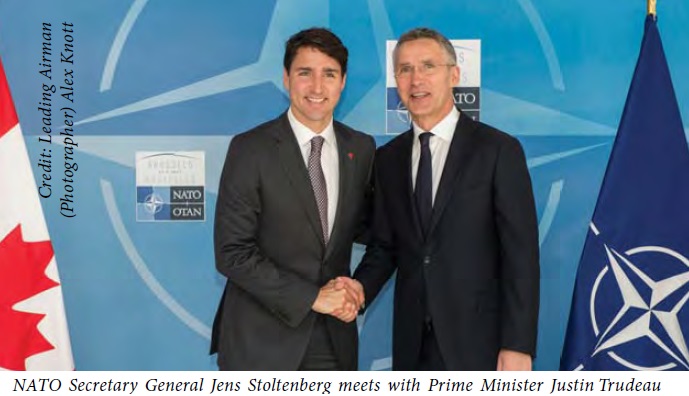
13 July. David Dunlop. Now that the 2018 NATO Summit has apparently passed a referendum to have all NATO countries contribute as a minimum at least 2% GDP to defence, […]
*Editor’s Note: This is an abridged version of an article originally published in the NATO magazine, Cutting the Bow Wave 2013, which has just been released. Consumers and their governments […]
Word is reaching me that two Canadian infantry battalions, 3rd Princess Patricia’s Light Infantry Regiment and 3rd Royal Canadian Regiment, have received ‘warning orders’ to prepare for operations and possible […]
On 23 March, Jeremy Binnie, Jane’s Defence Weekly Middle East/Africa Editor in London, reported that the EU had expanded the area of operations for the EU Naval Force (EUNAVFOR) counter-piracy […]
* Moderator’s Note: This article was originally published in the Halifax Chronicle-Herald on 03 September 2011. It is reprinted here with the permission of the author. Canada’s navy may be […]
The Royal United Services Institute (U.K.) has announced a two-day event to be held on Wednesday and Thursday, 04 and 05 July 2012. The conference, which is entitled “The Use […]
The Libyan Navy’s primary mission was to defend the coast of the country. To accomplish this mission is was equipped with: 2 Koni-class missile frigates; 2 Nanuchka-class missile corvettes; 9 […]
In the 04 October 2011 post by ‘Galrahn’, entitled “Crisis Time for U.S. Seapower”, the author asked this question: “Will the navy also retire the first 8 Ticonderoga-class cruisers because […]
*Moderator’s Note: This article was original published in The Nova Scotian on 11 September 2011. At approximately 9:00 am this morning, the United States Consul-General to Halifax will be joined […]
Social commentary around the F-35 issue is in general acceptance that they are needed, based almost exclusively on the age of the F-18s. There is an interesting comment in the […]
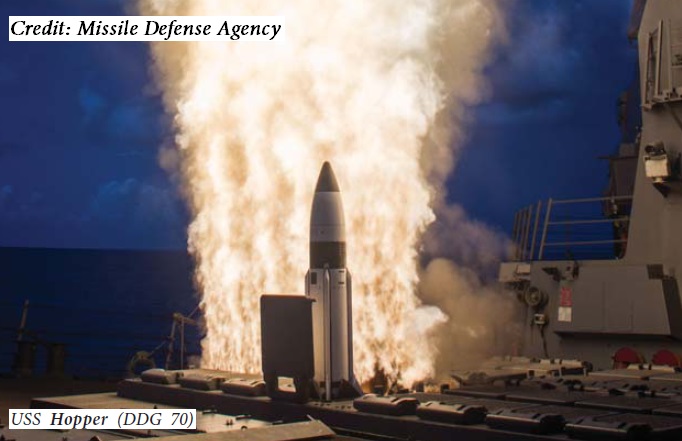
Several years ago Canada took the curious approach of rejecting participation in the North American version of Ballistic Missile Defence while supporting NATO having a BMD capability in Europe. It […]
* Moderator’s Note: Reprinted with permission from Seaways, Journal of the Nautical Institute, September 2009, pp. 30-31. The focused intervention of foreign naval forces off the coast of Somalia raises […]
The size of Canada’s offshore areas of maritime responsibility and the vast distances of our airspace and sea approaches make a blue water navy fundamental to our security and sovereignty […]
As we wonder what the next budget will bring for naval forces in Canada, we might ask if the present fixation on joint and expeditionary warfare is/is not blinding us […]
The navy’s plan to replace the existing fleet on a one-for-one basis plus a couple of extra ships over the next 30 or so years is ambitious and very expensive. […]
Cookie Consent
At Canadian Naval Review (CNR), we are committed to respecting your privacy. When visiting our website for the first time you can either “Accept all” cookies (including ‘non-essential cookies’) or “Customize” your cookie preferences, which allows you to make individual choices and get details on the cookies we use.
Contains information related to marketing campaigns of the user. These are shared with Google AdWords / Google Ads when the Google Ads and Google Analytics accounts are linked together.
90 days
__utma
ID used to identify users and sessions
2 years after last activity
__utmt
Used to monitor number of Google Analytics server requests
10 minutes
__utmb
Used to distinguish new sessions and visits. This cookie is set when the GA.js javascript library is loaded and there is no existing __utmb cookie. The cookie is updated every time data is sent to the Google Analytics server.
30 minutes after last activity
__utmc
Used only with old Urchin versions of Google Analytics and not with GA.js. Was used to distinguish between new sessions and visits at the end of a session.
End of session (browser)
__utmz
Contains information about the traffic source or campaign that directed user to the website. The cookie is set when the GA.js javascript is loaded and updated when data is sent to the Google Anaytics server
6 months after last activity
__utmv
Contains custom information set by the web developer via the _setCustomVar method in Google Analytics. This cookie is updated every time new data is sent to the Google Analytics server.
2 years after last activity
__utmx
Used to determine whether a user is included in an A / B or Multivariate test.
18 months
_ga
ID used to identify users
2 years
_gali
Used by Google Analytics to determine which links on a page are being clicked
30 seconds
_ga_
ID used to identify users
2 years
_gid
ID used to identify users for 24 hours after last activity
24 hours
_gat
Used to monitor number of Google Analytics server requests when using Google Tag Manager