Michael Byers and Stewart Webb have authored an interesting report published by the Canadian Centre for Policy Alternatives and the Rideau Institute entitled “Titanic Blunder: Arctic/Offshore Patrol Ships on Course […]
Dan Leger, writing as a freelance journalist, has an article entitled “Delisle case: We need accountability over expedience,” in the ‘Opinions’ section of the 29 October issue of the Halifax […]
* Moderator’s Note: This article was original published in The Nova Scotian on 21 March 2012. Over the past year I have used this column to discuss the role of […]
While I commend those who look into the future and contemplate interesting concepts like “influence squadrons,” counter piracy operations and humanitarian operations, I think the events of the past several […]
Dave Shirlaw, editor and publisher of the on-line SeaWaves Magazine, wrote this commentary in the December 8th issue: “With the upcoming retirement of USS Enterprise in 2011, [the] Canadian destroyer […]
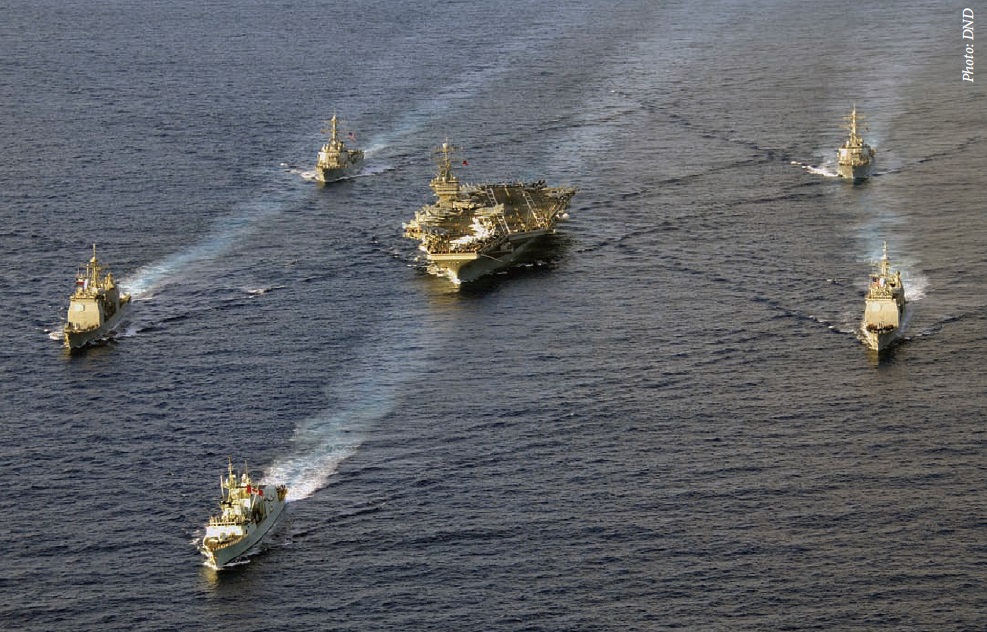
As its operational focal point, the modern Canadian navy uses a “multi-purpose, combat-capable task group.” This policy is consistent with the 1994 Defence White Paper which calls for the navy […]
Cookie Consent
At Canadian Naval Review (CNR), we are committed to respecting your privacy. When visiting our website for the first time you can either “Accept all” cookies (including ‘non-essential cookies’) or “Customize” your cookie preferences, which allows you to make individual choices and get details on the cookies we use.
Contains information related to marketing campaigns of the user. These are shared with Google AdWords / Google Ads when the Google Ads and Google Analytics accounts are linked together.
90 days
__utma
ID used to identify users and sessions
2 years after last activity
__utmt
Used to monitor number of Google Analytics server requests
10 minutes
__utmb
Used to distinguish new sessions and visits. This cookie is set when the GA.js javascript library is loaded and there is no existing __utmb cookie. The cookie is updated every time data is sent to the Google Analytics server.
30 minutes after last activity
__utmc
Used only with old Urchin versions of Google Analytics and not with GA.js. Was used to distinguish between new sessions and visits at the end of a session.
End of session (browser)
__utmz
Contains information about the traffic source or campaign that directed user to the website. The cookie is set when the GA.js javascript is loaded and updated when data is sent to the Google Anaytics server
6 months after last activity
__utmv
Contains custom information set by the web developer via the _setCustomVar method in Google Analytics. This cookie is updated every time new data is sent to the Google Analytics server.
2 years after last activity
__utmx
Used to determine whether a user is included in an A / B or Multivariate test.
18 months
_ga
ID used to identify users
2 years
_gali
Used by Google Analytics to determine which links on a page are being clicked
30 seconds
_ga_
ID used to identify users
2 years
_gid
ID used to identify users for 24 hours after last activity
24 hours
_gat
Used to monitor number of Google Analytics server requests when using Google Tag Manager