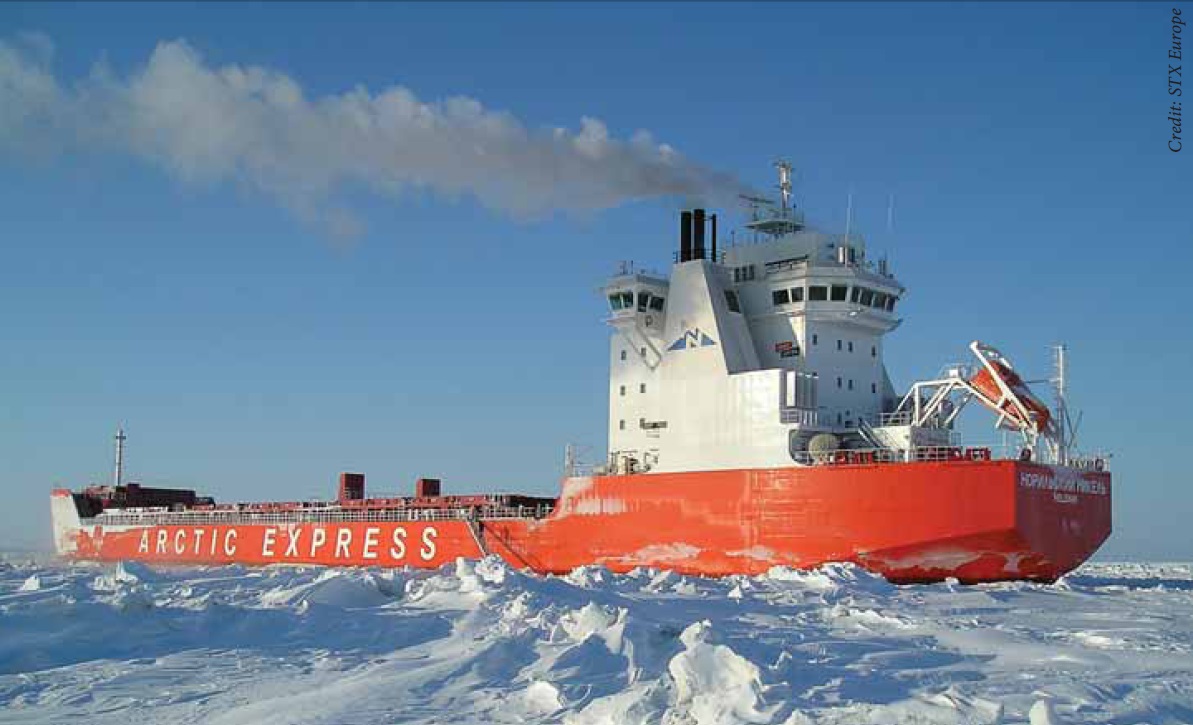
As Yogi used to say, ‘Deja vu all over again!’ As in the late 1980s, the strategic importance of the Arctic rises to near the top of our national concerns. […]
The South China Sea remains one of the world’s potential trouble spots. As this article explains, China is becoming increasingly isolated in this issue. The question for the rest of […]
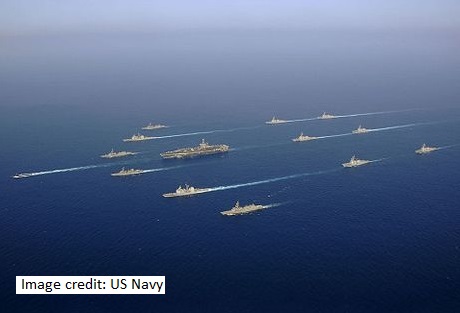
Recent reports indicate that the John C. Stennis Strike Group is conducting “routine operations” in the South China Sea. The Strike Group has been shadowed by Chinese PLAN ships. For […]
The following Reuter’s article sheds some welcome light on the complexity of the South China Seas legal regime and the US Navy’s freedom of navigation operations there. This is needed […]
*RSIS Commentary No. 218/2013 is reprinted here with editorial permission. Synopsis: Regional maritime territorial disputes have expanded beyond the surface of the seas into the airspace above them, marking a […]
Military power is a difficult subject, especially when it comes to discussing the potential power of other countries. China has made news over the past few years for their rapidly […]
David Lague published an article on 17 January with Reuter’s entitled, “China’s military hawks take the offensive.” Lague notes “the increasingly hawkish rhetoric coming from senior officers in the People’s […]
*Moderator’s Note: This article was published by The Center For Strategic & International Studies (CSIS) as part of their short analysis series “Critical Questions” on 11 August 2011. My thanks to CFPS […]
*Moderator’s Note: This article is an executive summary of a monograph by CFPS Resident Research Fellow David Griffiths that was published this summer by the US Naval War College Press. […]
*Moderator’s Note: This article was originally published on the Strategic Forecasts (STRAFOR) forum on 5 November 2010. It is reprinted here with the author’s permission. Colin Clark is editor of […]
Straits Times of Singapore reported on 06 July that the Chinese government has for the first time told Washington that it considers the South China Sea to be part of […]
*Moderator’s Note: Thanks to Dr. Aldo Chircop, CFPS Research Fellow, Professor of Law & Graduate Studies Coordinator Schulich School of Law, Dalhousie University, who has recently returned from China, for […]
Two links to articles from China Brief concerning the rise of Chinese naval ambitions are provided here, and here; both are informative and insightful. The fact that the People’s Liberations […]
On 8 March 2009, according to the Pentagon, “five Chinese vessels shadowed and aggressively maneuvered in dangerously close proximity to USNS Impeccable in an apparent coordinated effort to harass the […]
Mark J. Valencia, a maritime policy analyst based in Kaneohe, Hawaii, has written an important essay that has been published on-line by “Nautilus,” the forum of the Northeast Asia Peace […]
Commander James Kraska’s article provides an accurate description of the various legal views surrounding the maritime incident between China and the United States involving USNS Impeccable, with a necessary focus on […]
Paul Kennedy’s article, “To Rule the Waves: the Rise and Fall of Navies,” is asking all the right questions with regard to the West’s curious shortsightedness in not adequately funding […]
Cookie Consent
At Canadian Naval Review (CNR), we are committed to respecting your privacy. When visiting our website for the first time you can either “Accept all” cookies (including ‘non-essential cookies’) or “Customize” your cookie preferences, which allows you to make individual choices and get details on the cookies we use.
Contains information related to marketing campaigns of the user. These are shared with Google AdWords / Google Ads when the Google Ads and Google Analytics accounts are linked together.
90 days
__utma
ID used to identify users and sessions
2 years after last activity
__utmt
Used to monitor number of Google Analytics server requests
10 minutes
__utmb
Used to distinguish new sessions and visits. This cookie is set when the GA.js javascript library is loaded and there is no existing __utmb cookie. The cookie is updated every time data is sent to the Google Analytics server.
30 minutes after last activity
__utmc
Used only with old Urchin versions of Google Analytics and not with GA.js. Was used to distinguish between new sessions and visits at the end of a session.
End of session (browser)
__utmz
Contains information about the traffic source or campaign that directed user to the website. The cookie is set when the GA.js javascript is loaded and updated when data is sent to the Google Anaytics server
6 months after last activity
__utmv
Contains custom information set by the web developer via the _setCustomVar method in Google Analytics. This cookie is updated every time new data is sent to the Google Analytics server.
2 years after last activity
__utmx
Used to determine whether a user is included in an A / B or Multivariate test.
18 months
_ga
ID used to identify users
2 years
_gali
Used by Google Analytics to determine which links on a page are being clicked
30 seconds
_ga_
ID used to identify users
2 years
_gid
ID used to identify users for 24 hours after last activity
24 hours
_gat
Used to monitor number of Google Analytics server requests when using Google Tag Manager