Here is a ‘brain teaser’ to wrestle with over the Holidays! A recent article in the U.S. press described three different theoretical future fleet plans for the USN. One fleet […]
This is a very good debate, and I also believe it is long overdue. I am a naval reservist on a “Class A” contract, serving as a military occupation advisor […]
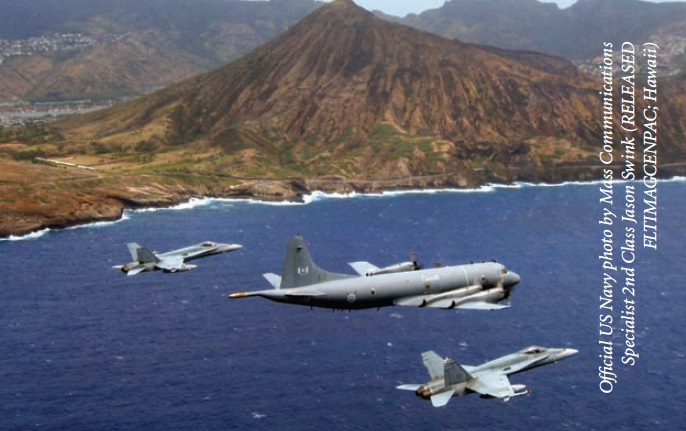
The Canadian Forces took delivery of the first CP-140 Aurora maritime patrol aircraft in May 1980; the 18th and last CP-140 was delivered in August 1981. The original requirement for […]
I agree with my former colleague Ken Hansen that Canada has made a mistake in moving to a fully joint programme with the Command and Staff Course at the Canadian […]
On reading reports and scanning the video of the recent U.S. Navy – Iranian Revolutionary Guard incident in the Straits of Hormuz I was struck by how restrained the American […]
I would like to bring two important news items to the attention of our readers. First, a CBC report indicates that the Canadian government’s self-imposed deadline on a decision to […]
A recent report in the U.K. press describes the return of RN warships to the northern Arabian Gulf following the capture of 15 British sailors and marines in a ‘swarming’ […]
I am the Standards Chief Petty Officer for marine propulsion systems at the Canadian Forces Fleet School in Esquimalt. I find the points made by the contributors to this topic […]
This debate is a pleasure to read, but also somewhat frustrating. In speaking of “relevant” operational tasks, it seems to me that Eric Lerhe misses the whole point of the […]
It seems to me that Airedale is expressing frustration at the lack of a comprehensive explanation by the navy about how the future fleet plans make it any better able […]
*Moderator’s Note: The following statement was made by Senator Hugh Segal in the Debates of the Senate on 14 November 2007, during the 2nd Session of the 39th Parliament of […]
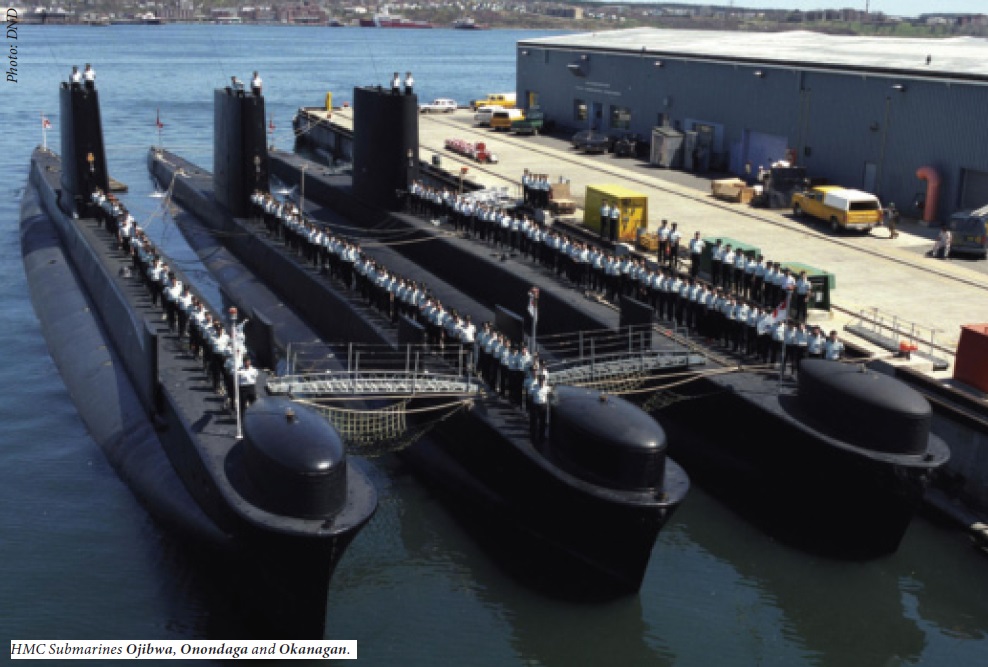
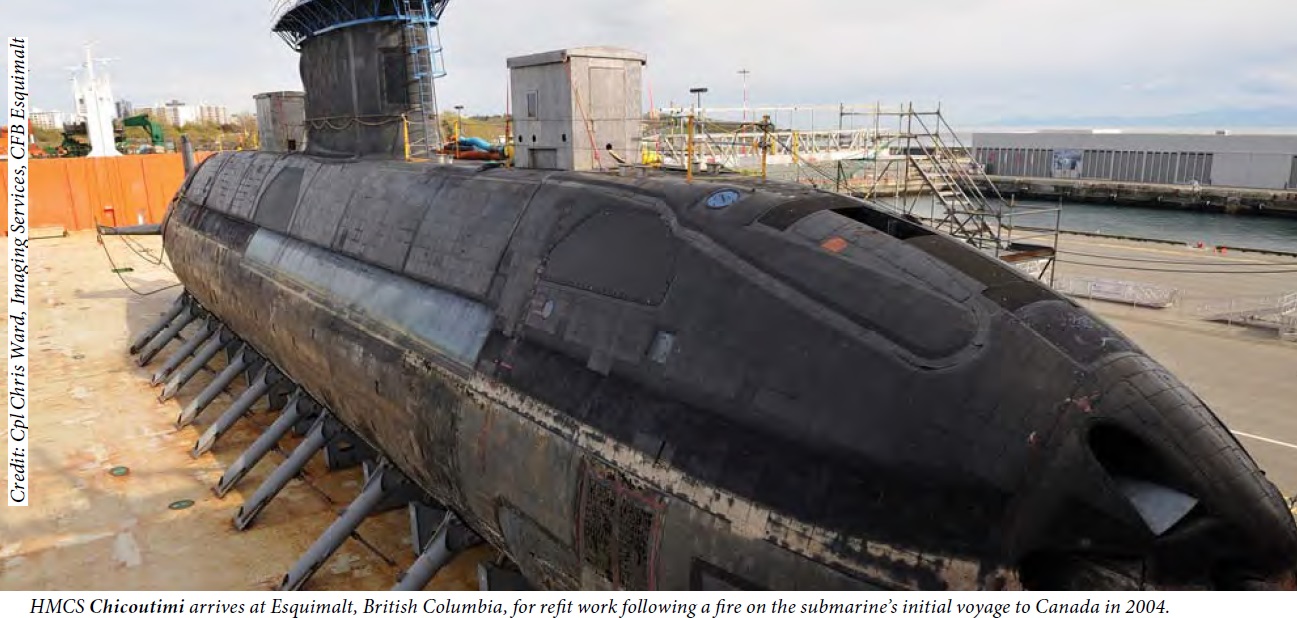
A wide-ranging discussion about the future of Canada’s troubled submarine fleet is taking place at the highest levels of the Conservative government, say political and defence sources. The Privy Council […]
The size of Canada’s offshore areas of maritime responsibility and the vast distances of our airspace and sea approaches make a blue water navy fundamental to our security and sovereignty […]
The U.S. Navy, Coast Guard and Marine Corps announced the first collective declaration of national maritime strategy on 17 October. To date, commentaries on the strategy are mixed. While much […]
I am encouraged that we are starting to have a long overdue discussion of this important subject. I would like to add two points to LCdr. Carroll’s and Cmdre. Lehre’s […]
Airedale presents an argument heard all too often in Canada, not just in academic common rooms or their virtual equivalents such as this forum, where there is a certain expectation […]
The launching of a new maritime studies centre (The Corbett Centre for Maritime Policy Studies) within the Joint Services Command and Staff College, at Shrivenham in Wiltshire, is a fascinating […]
I read Mr. Perry’s Broadside commentary “A Sub Too Far” with attention and interest. In terms of your reflections on public perception vis-à-vis submarines (“there will be little public appetite […]
A recent Canadian Press article regarding Canadian Forces rules for maritime operations in Canada’s arctic region sparked some debate about whether the CF and the navy are reasonable stewards of […]
Murray Brewster’s article [The Globe and Mail, “DND may be shopping for new subs, sources say”] casts an interesting light on the future of Canada’s submarine fleet. The existing four […]
Cookie Consent
At Canadian Naval Review (CNR), we are committed to respecting your privacy. When visiting our website for the first time you can either “Accept all” cookies (including ‘non-essential cookies’) or “Customize” your cookie preferences, which allows you to make individual choices and get details on the cookies we use.
Contains information related to marketing campaigns of the user. These are shared with Google AdWords / Google Ads when the Google Ads and Google Analytics accounts are linked together.
90 days
__utma
ID used to identify users and sessions
2 years after last activity
__utmt
Used to monitor number of Google Analytics server requests
10 minutes
__utmb
Used to distinguish new sessions and visits. This cookie is set when the GA.js javascript library is loaded and there is no existing __utmb cookie. The cookie is updated every time data is sent to the Google Analytics server.
30 minutes after last activity
__utmc
Used only with old Urchin versions of Google Analytics and not with GA.js. Was used to distinguish between new sessions and visits at the end of a session.
End of session (browser)
__utmz
Contains information about the traffic source or campaign that directed user to the website. The cookie is set when the GA.js javascript is loaded and updated when data is sent to the Google Anaytics server
6 months after last activity
__utmv
Contains custom information set by the web developer via the _setCustomVar method in Google Analytics. This cookie is updated every time new data is sent to the Google Analytics server.
2 years after last activity
__utmx
Used to determine whether a user is included in an A / B or Multivariate test.
18 months
_ga
ID used to identify users
2 years
_gali
Used by Google Analytics to determine which links on a page are being clicked
30 seconds
_ga_
ID used to identify users
2 years
_gid
ID used to identify users for 24 hours after last activity
24 hours
_gat
Used to monitor number of Google Analytics server requests when using Google Tag Manager