By Al Vigier, 28 October 2026
At the Vancouver Convention Centre on 19 October, I heard Seaspan announce a venture capital fund for Canadian defence, marine and dual-use companies. It’s a useful move. I’d like to see Irving and Davie put money into it too.
Canada’s National Shipbuilding Strategy has three partners building large vessels: Irving in Halifax; Seaspan in North Vancouver; and Davie in Lévis. For a small company selling equipment or software into those programs, each yard matters. Taking investment from one could make selling to the others more complicated.
Put yourself in a buyer’s chair. A supplier looks promising, but a rival shipyard owns part of it. How much can that rival see? Will it get first call when production is tight? Those questions could cost a supplier business, even without an exclusivity clause in sight.
The following day, I sat on a panel at the same convention centre about the hurdles small firms face in defence procurement. I keep coming back to what I call the prime gate. A company can have a good product and still need a large contractor’s backing to get it into a program. An investment that helps with one customer shouldn’t complicate the next sales call.
The yards have plenty of common needs. Last year, Seaspan signed an agreement with Stigterstaal Canada and Algoma Steel to explore rebuilding a domestic steel supply chain. That kind of capacity could serve more than one shipyard. The same is true of many smaller suppliers that need money to develop products, buy equipment or hire people.
The three yards should back a common fund, managed independently, whose portfolio companies remain free to sell to any customer. No yard should be able to block another’s purchase or insist that a supplier turn down outside work.
Each yard could have a seat on an advisory board. The manager would make the investment decisions, with rules limiting what commercially sensitive information reaches the yards. Buyers would still choose suppliers for themselves. A supplier backed by all three would have less reason to worry about being seen as belonging to one. Oil and gas companies have done something similar. In 2016, 10 of them, including BP and Shell, announced a $1-billion investment fund for low-emissions technology. They had common technical problems and competing businesses. They found a way to invest together.
The financing needs some care. Under the shipbuilding strategy’s Value Proposition, the large yards must reinvest 0.5% of eligible contract values in the wider marine industry. By the end of 2025, their combined obligations exceeded $69 million, with more than $68 million in investments identified or completed. A proposal relying on that money would have to account for the commitments already made.
The larger opportunity lies in the separate industrial benefits rules, which require Canadian business activity equal to the value of the yards’ contracts. Those obligations are not a spare cash reserve. They can, however, give the yards a reason to invest. Seaspan says its fund builds on venture capital provisions under that policy as well as its Value Proposition obligations. A common fund should explore the same route. Ottawa would need to settle the credit rules before anyone wrote a cheque. Each yard should receive credit for its own eligible contribution, with no double counting. Government approval of that arrangement would give the yards a basis for deciding whether to participate.
The hardest sell will be persuading the yards to share access to promising suppliers. I understand the reluctance. But if accepting one customer’s money makes other buyers hesitate, the supplier may never grow large enough to serve anyone properly. Separate funds could also end up paying to assess the same companies.
The fund would need firm boundaries. Ship designs, bid prices and customer terms should stay outside it. Suppliers would still have to earn orders on merit. What they would gain is capital without a single shipyard’s name dominating their ownership. For the yards, the return could include a stronger supplier with enough capacity to serve several programs.
I’ve spent enough time with small Canadian firms trying to enter defence supply chains to know how hard getting picked can be. A valve maker in Ontario needs customers in Halifax, North Vancouver and Lévis. We should make it easier to sell to all three.
Al Vigier is the founder and CEO of Caseway, an AI company that develops products with enterprise partners and shares in the revenue. He served seven years in the Canadian Army, where he was shot.
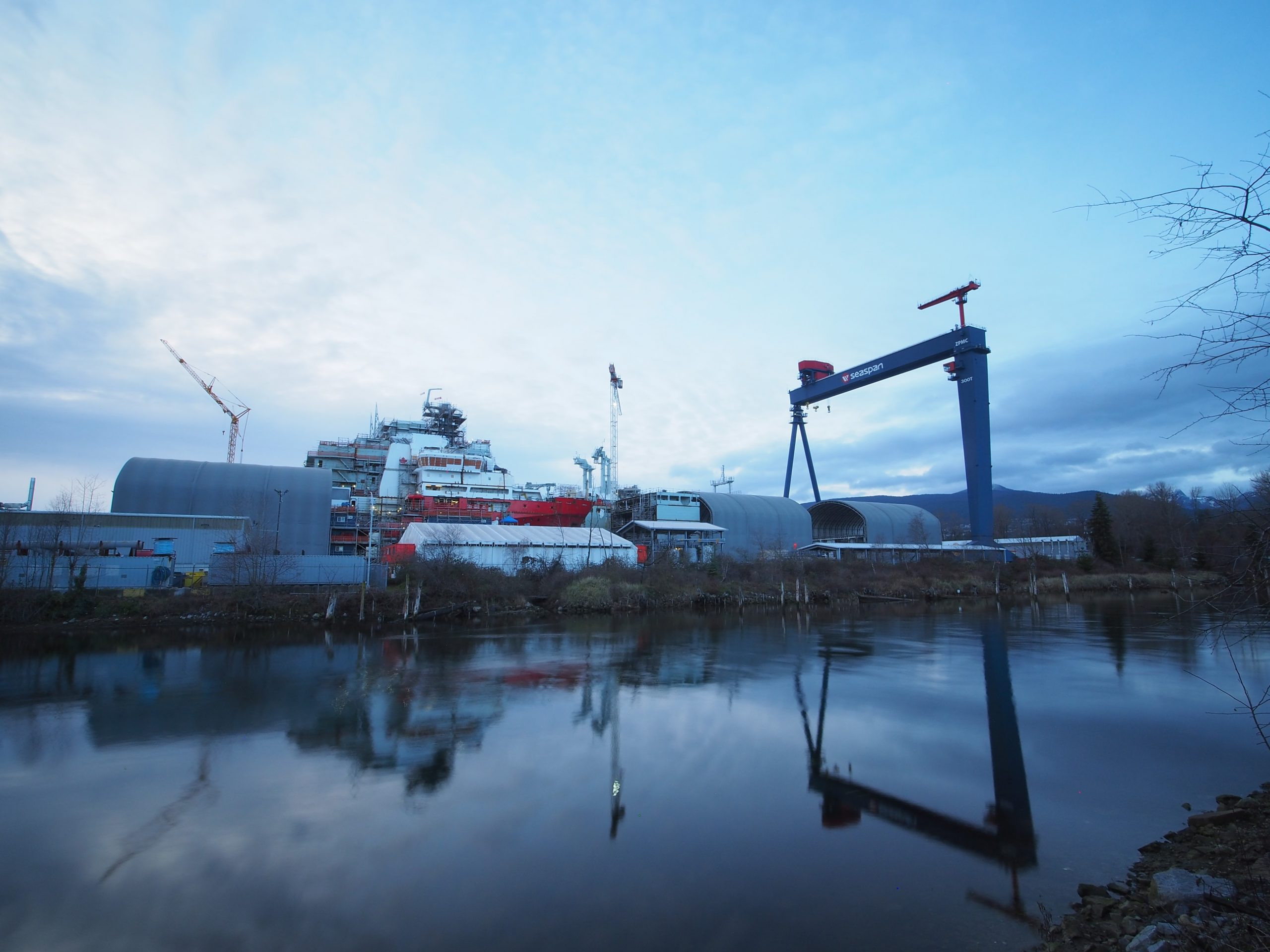
Image: The first Joint Support Ship, future HMCS Protecteur, is seen in construction behind the Offshore Oceanographic Science Vessel at Seaspan Vancouver Shipyards, 26 December 2023. Credit: Timothy Choi