By Moderator, 16 August 2026
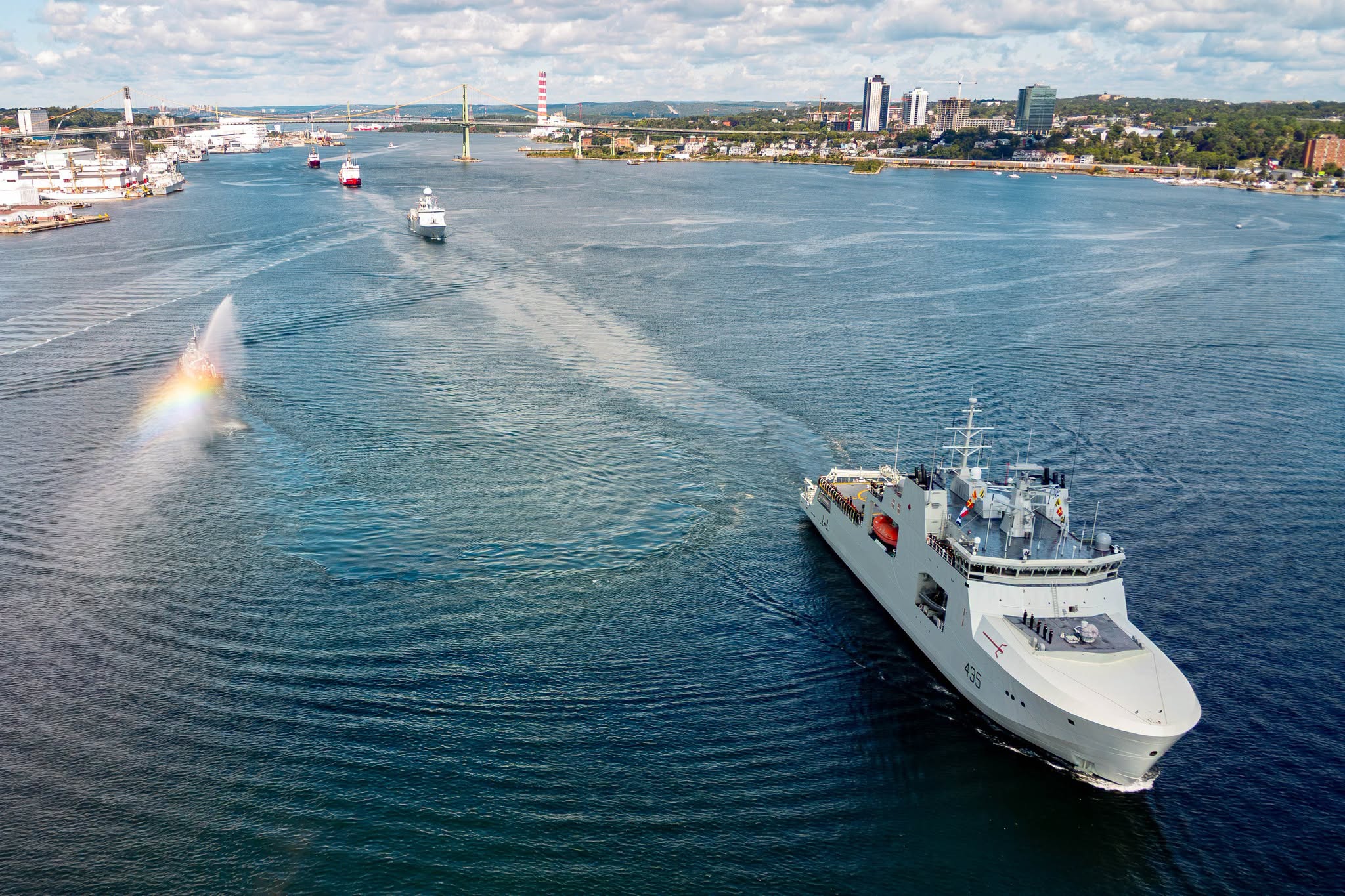
In a news release 14 August, the Department of National Defence announced the launch of Operation Nanook-Tuugaalik 2026, a part of the annual Operation Nanook. The operation will continue until October. HMCS Robert Hampton Gray will be joined by the Canadian Coast Guard, and other Canadian government departments as well as naval forces from France and Denmark. USS Wichita, a Freedom-variant littoral combat ship, departed Naval Station Mayport on 7 August to participate. The ships will transit through waters of the Canadian Arctic Archipelago conducting activities including patrols, surveillance, community engagement and refuelling. [See “Canadian Armed Forces launch
Operation NANOOKTUUGAALIK in Canada’s Arctic”
https://www.canada.ca/en/department-national-defence/news/2026/08/canadian-armed-forces-
launch-operation-nanooktuugaalik-in-canadas-arctic.html]
Meanwhile, on the Pacific coast of the North American Arctic, Canadian and US ships and aircraft are keeping an eye on two Chinese research ships in the waters off Alaska. Both Canada and the United States have been shadowing two Chinese icebreaking research ships over the last couple of weeks. Xue Long (Snow Dragon) and Xue Long (Snow Dragon) 2 sailed north through the US exclusive economic zone in the Bering Sea in July. The ships are outside Canada’s EEZ. In 2025, as part of Operation Latitude, the Canadian military began enhanced efforts to monitor northern waters and coordinate with allies in the Pacific Ocean, including the Bering Sea off Alaska. The air force has committed surveillance aircraft, while at various times the RCN has committed HMCS Ottawa, HMCS Max Bernays and HMCS Robert Hampton Gray. DND says Canadian Special Operations Forces Command personnel and the icebreaker CCGS Des Groseilliers are also taking part. China says the ships are in the region is strictly for peaceful scientific research, environmental monitoring and global climate change studies. There is suspicion, however, that the ships are deploying advanced sonar and telemetry buoys which can track environmental changes and undersea topography, but also submarine activity. [See Murray Brewster,
“Canada, U.S. shadow Chinese research ships in the Arctic as concern grows over Snow Dragons'
presence,”
https://www.cbc.ca/news/politics/china-canada-us-arctic-research-ships-snow-dragons-9.7299939]
Image: Aerial photo of HMCS Robert Hampton Gray departing Halifax, Nova Scotia, Canada on August 14, 2026. Photo: Corporal Mitchell Paquette, Canadian Armed Forces Photo.