Message from CDS and DM, 26 September 2024 A New Era for the Cyber Domain: Launch of the CAF Cyber Command — Originally published by: The Maple Leaf Today, we […]
By Dr. Ann Griffiths, 8 December 2021 Government agencies in both Canada and the United States have both acknowledged publicly for the first time that they are targeting the hackers […]
By Dr. Ann Griffiths, 4 November 2021 We’ve all watched with horror – mixed with anger – the fallout from the cyber-attack on the health care system in Newfoundland and […]
We know that technology affects warfare. How we fight has changed dramatically over the years as technology has developed. We are in the midst of another significant change to warfare […]
CNR Fan, 12 December 2020. Cyber-attacks are all over the news [1][2]. Besides individuals and enterprises [3][4], hackers are now probing security of government servers and the industry [5][6]. Over […]
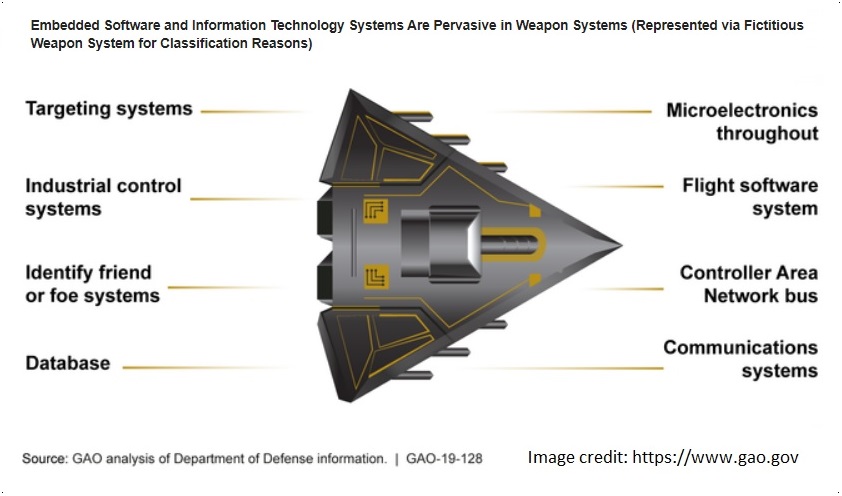
Old Sailor, 21 November 2020. In late 2018 United States (U.S.) Government Accountability Office (GAO) produced an interesting report on cybersecurity in U.S. DOD Weapon Systems. It’s relevant to the […]
An interesting article was published by www.defenseone.com It talks about U.S. Navy’s investigation of the 21 August 2017 collision of USS McCain with a cargo ship off Singapore. That accident […]
Konrad Mech, 14 August 2020 Some readers may be interested in an article I wrote, recently published in SITREP, the Journal of the Royal Canadian Military Institute, titled “Automation, Autonomy, […]
Moderator, 8 March 2020. The United States is trying to address the cybersecurity shortcomings in its defence procurement. It’s concerning not only U.S. Department of Defense [https://www.defense.gov/], but also defence […]
As the Canadian government and the RCN advance in the NSS shipbuilding process, it’s time to stop focusing on the hulls and start thinking about what goes in the ships. […]
25 April 2017. We hear a lot about hacking these days, and security/defense organizations are undoubtedly concerned about the potential for serious breaches of their networked systems. But what about […]
This article raises some good points that make one wonder how effective are Canadian countermeasures. The Diplomat: Japan’s Achilles Heel: Cybersecurity
Moderator’s Note: This article was originally published in the Halifax Chronicle Herald. It is reprinted here with the permission of the author. The Internet is critical to Canadian commerce and […]
Cookie Consent
At Canadian Naval Review (CNR), we are committed to respecting your privacy. When visiting our website for the first time you can either “Accept all” cookies (including ‘non-essential cookies’) or “Customize” your cookie preferences, which allows you to make individual choices and get details on the cookies we use.
Contains information related to marketing campaigns of the user. These are shared with Google AdWords / Google Ads when the Google Ads and Google Analytics accounts are linked together.
90 days
__utma
ID used to identify users and sessions
2 years after last activity
__utmt
Used to monitor number of Google Analytics server requests
10 minutes
__utmb
Used to distinguish new sessions and visits. This cookie is set when the GA.js javascript library is loaded and there is no existing __utmb cookie. The cookie is updated every time data is sent to the Google Analytics server.
30 minutes after last activity
__utmc
Used only with old Urchin versions of Google Analytics and not with GA.js. Was used to distinguish between new sessions and visits at the end of a session.
End of session (browser)
__utmz
Contains information about the traffic source or campaign that directed user to the website. The cookie is set when the GA.js javascript is loaded and updated when data is sent to the Google Anaytics server
6 months after last activity
__utmv
Contains custom information set by the web developer via the _setCustomVar method in Google Analytics. This cookie is updated every time new data is sent to the Google Analytics server.
2 years after last activity
__utmx
Used to determine whether a user is included in an A / B or Multivariate test.
18 months
_ga
ID used to identify users
2 years
_gali
Used by Google Analytics to determine which links on a page are being clicked
30 seconds
_ga_
ID used to identify users
2 years
_gid
ID used to identify users for 24 hours after last activity
24 hours
_gat
Used to monitor number of Google Analytics server requests when using Google Tag Manager