By C.A.M. Al Wahi, 10 November 2026
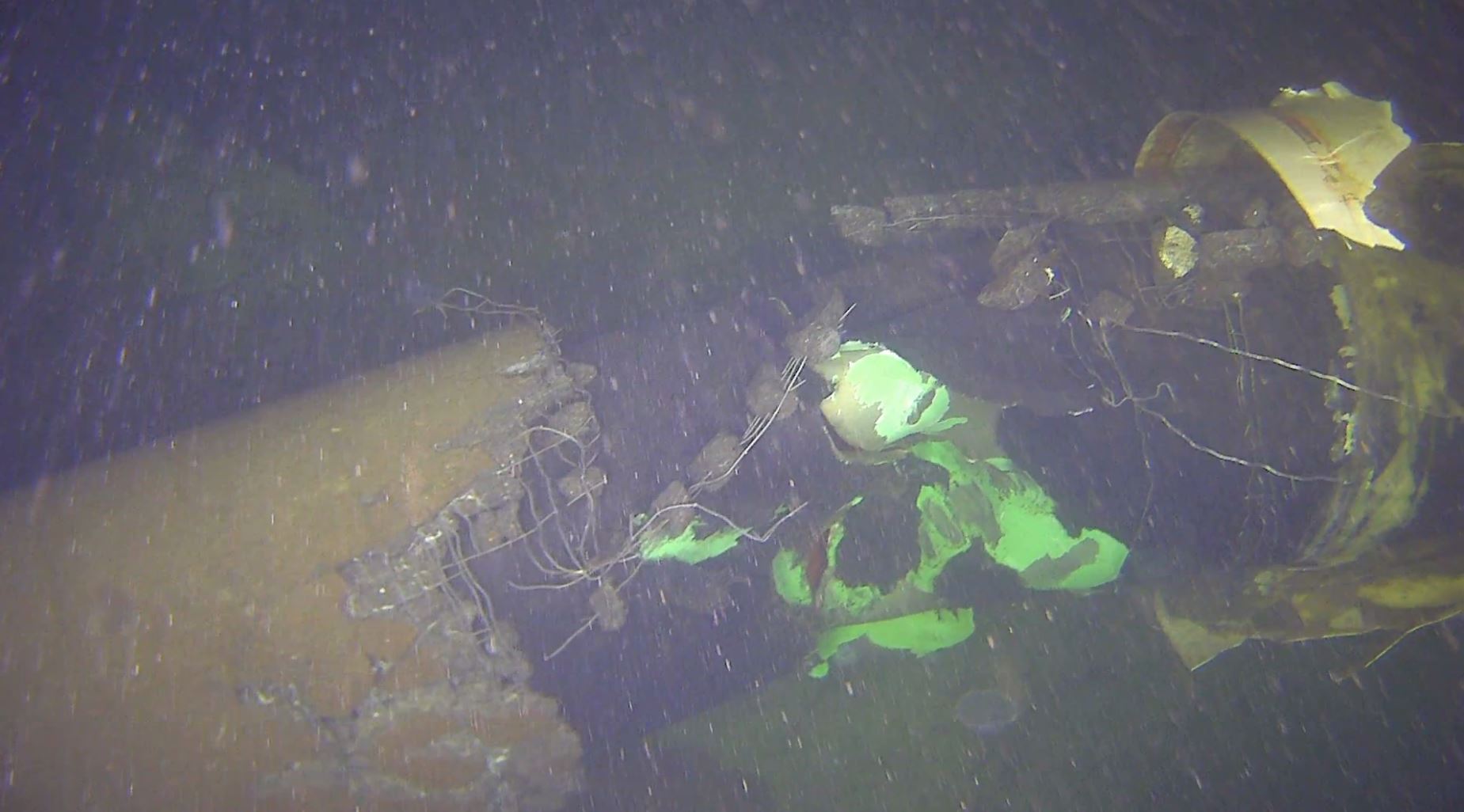
On 8 October 2023 the Balticconnector gas pipeline connecting Finland and Estonia ruptured, simultaneously severing a telecommunications cable running in the same corridor. Finnish investigators established that the Hong Kong-registered cargo vessel NewNew Polar Bear had dragged its anchor across the seabed. Almost three years on, the only criminal proceeding is against the ship’s master in a Hong Kong court, a forum with no connection to the states that suffered the damage.1 A year earlier, explosive charges shattered the Nord Stream 1 and 2 pipelines under the Baltic Sea. German prosecutors charged a Ukrainian national in July 2026, but a Polish court has refused to surrender a second suspect and no state has been held to account.2 These two incidents share a defining characteristic: the actors responsible understood that attacking infrastructure below the surface yields maximum strategic effect at minimum legal and political risk.
These are proof-of-concept examples of a type of infrastructure warfare that is directly relevant to Canada’s maritime approaches, cable corridors and offshore assets – and to a maritime security doctrine that is unprepared. The ocean floor, long treated as a passive substrata beneath the real business of naval power, has become contested geopolitical terrain.
This article argues that Canada must reconceptualize critical subsea infrastructure protection as a primary naval security mission, building an integrated ‘seabed-to-space’ maritime domain awareness framework that combines Royal Canadian Navy (RCN) capabilities, Canadian Coast Guard (CCG) assets, NATO cooperation, advanced underwater surveillance technologies and a coherent grey-zone deterrence doctrine. The argument is not that Canada must achieve undersea dominance, an ambition beyond any middle power, but that it must develop the detection, deterrence and response capacity appropriate to a state the geography of which places it at the intersection of the North Atlantic, the Arctic and the world’s most consequential transatlantic cable corridors. (In the interest of brevity, this article focuses on the Atlantic and Arctic coasts of Canada, but the same arguments apply to the Pacific coast.)
The Strategic Significance of Subsea Infrastructure
Approximately 95% of international internet traffic transits more than 400 undersea cable systems spanning over 1.3 million kilometres (just over 800,000 miles) of ocean floor.3 These cables carry not only commercial data but classified government communications, inter-allied military messaging and financial market operations. This is why the 2022 NATO Strategic Concept, still the alliance’s capstone document, explicitly identified threats to critical infrastructure, including undersea systems, as a collective security challenge requiring an alliance response.4 At the 2025 NATO meeting in the Hague, allies undertook to devote up to 1.5% of Gross Domestic Product (GDP) annually to protecting critical infrastructure and defending networks.5 The disruption of a major trunk route would simultaneously impair NATO command-and-control, civilian emergency communications and continental financial stability.
Canada’s position within this architecture is consequential. Several transatlantic cable systems make landfall from Nova Scotia to Newfoundland, linking North American and European networks through landing stations that are geographically concentrated and inadequately monitored.6 (The Pacific coast repeats the pattern in a different ocean.) The same stretch of Atlantic seabed underlies Canada’s primary maritime approaches, the corridors through which any military threat to the continent would transit. The dual vulnerability, strategic and commercial, is not coincidental: the cables follow navigational geography and both matter for the same reason.
Canada’s offshore energy infrastructure presents a parallel dimension. The Scotian Shelf, the Gulf of St. Lawrence and the Atlantic offshore zones host pipelines, wellheads and subsea production systems the disruption of which would have significant energy security consequences. Protection of this infrastructure has not been systematically integrated into the maritime security framework, leaving a gap between economic exposure and operational readiness.
The Arctic dimension is qualitatively distinct.… Canada is acquiring seabed infrastructure in a theatre where it maintains minimal underwater monitoring capacity. The gap between sovereign aspiration and operational reality in the Arctic is a vulnerability in Canada’s maritime security architecture.
…
For free access to the rest of the article, click https://www.navalreview.ca/wp-content/uploads/public/vol22num2/cnr_vol22_2_Al_Wahi.pdf
Notes
1. Finnish National Bureau of Investigation, press statement identifying the Hong Kong-registered vessel NewNew Polar Bear as the primary suspect, April 2024; Reuters, “Finland Points to Chinese Ship in Baltic Pipeline Probe,” 26 April 2024. Chinese authorities concluded in August 2024 that the damage was accidental; the master pled not guilty in a Hong Kong court, on 11 February 2026.
2. German Federal Public Prosecutor, charges filed against Serhii K. in connection with the September 2022 Nord Stream explosions, July 2026.
3. TeleGeography, Submarine Cable Map (Washington, DC: PriMetrica, 2025). See also International Cable Protection Committee (ICPC), Annual Report on Cable Faults and Statistics (various years).
4. NATO, Strategic Concept 2022, Brussels, June 2022.
5. NATO, “The Hague Summit Declaration,” 25 June 2025, paragraph 3; NATO, “The Ankara Summit Declaration,” 8 July 2026. No new Strategic Concept has been adopted since Madrid in 2022.
6. TeleGeography, Submarine Cable Map.